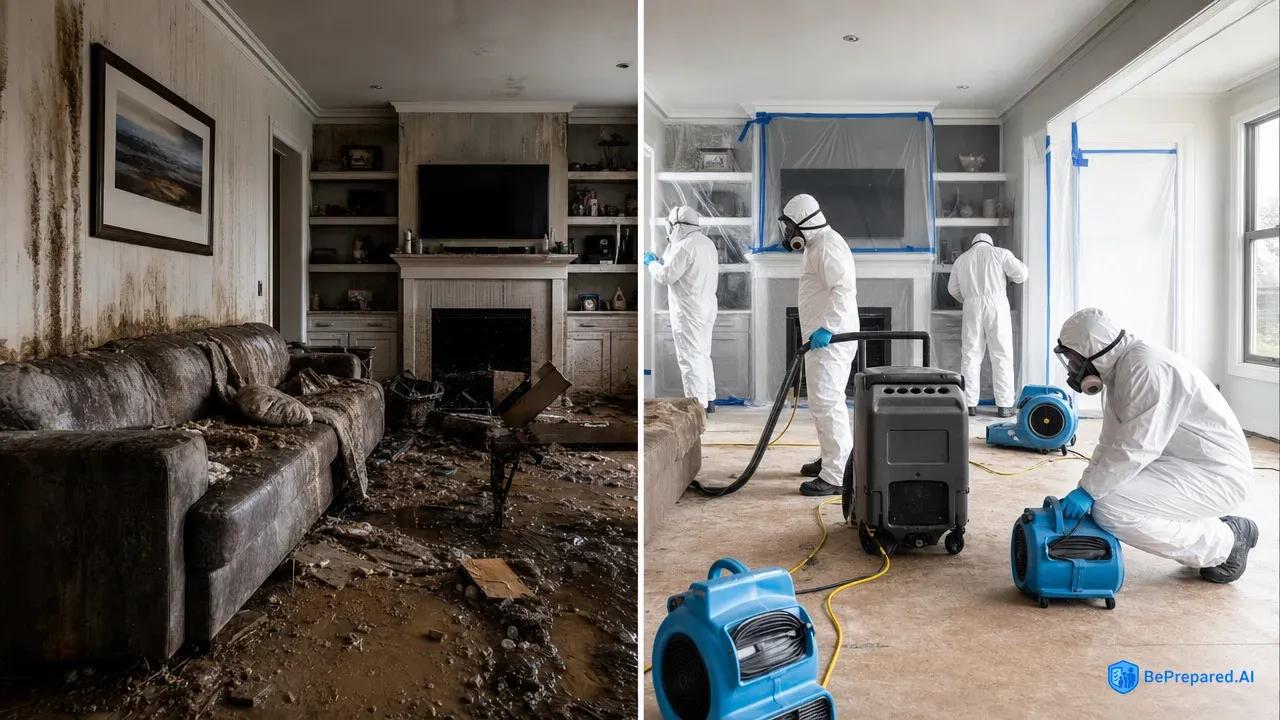
Understanding Flood Damage: When Speed and Safety Matter Most
The water recedes, leaving behind a muddy, waterlogged mess that used to be your finished basement or living room. You stand at the threshold, looking at soaked carpets, water-stained walls, and furniture that may never be the same. The clock is already ticking—not just on your emotional recovery, but on a biological countdown that could determine whether you're dealing with a manageable cleanup or a health hazard that will haunt your home for years.
Understanding what you're actually facing matters more than most homeowners realize. Flood damage isn't just about wet stuff that needs to dry out. The severity of your situation depends entirely on what was in that water before it invaded your home. Water damage professionals categorize flooding into three distinct types, and knowing which one you're dealing with becomes the foundation of every decision you'll make in the coming days.
Water damage categories exist on a contamination spectrum. Category 1 water comes from sanitary sources like broken supply lines, water heaters, or rainwater that hasn't contacted contaminants. Category 2, sometimes called "gray water," carries moderate contamination from sources like washing machine overflow, dishwasher leaks, or toilet bowls containing urine. Category 3 represents the most serious classification—sewage backups, rising floodwater from rivers or streams, and any standing water that has begun supporting bacterial growth.
The health risks escalate dramatically with each category. Floodwater often contains sewage, chemicals, and debris that pose serious health risks, transforming your home into an environment that requires specialized handling rather than just elbow grease and determination . That seemingly innocent-looking water soaking into your drywall might be carrying E. coli, hepatitis A virus, or chemical contaminants from upstream industrial sites and neighborhood garages. The mud it leaves behind isn't just dirt—it's a biological cocktail that professional restoration teams treat with the same caution as a hazardous waste site.
Then there's the mold timeline that should keep you awake at night if you're tempted to wait a few days before starting cleanup. Mold can begin growing within 24-48 hours after flooding, establishing colonies in your walls, under your flooring, and throughout your HVAC system . These aren't the surface molds you can wipe away with bleach. We're talking about systemic contamination that requires professional remediation costing thousands of dollars more than the original flood damage. The 48-hour window isn't a suggestion—it's the difference between a cleanup project and a demolition project.
If you're planning to file an insurance claim, your documentation needs to start before you move a single piece of furniture. Insurance companies require specific evidence of damage extent, affected materials, and loss values. Professional restoration is recommended for Category 2 and 3 water damage, not just because of the health risks, but because insurance companies understand that proper remediation requires equipment and expertise most homeowners don't possess . Taking hundreds of photos, creating detailed inventories, and preserving evidence of water lines on walls might feel like wasted time when you're desperate to start fixing things, but these steps protect your financial recovery as much as the physical cleanup protects your health.
The first 72 hours after flooding are critical—professional services can mobilize faster than most homeowners can organize DIY efforts . While you're researching equipment rentals and protective gear, restoration companies are already extracting water and setting up industrial drying systems. This speed advantage often makes the difference between saving structural materials and replacing them entirely.
- Essential Safety Equipment ✓
- Waterproof boots, N95 masks, safety goggles, heavy-duty gloves, and hard hats for contaminated water protection
- Basic Cleanup Tools ✓
- Submersible pumps, wet/dry vacuums, dehumidifiers, fans, and moisture meters for water extraction and drying
- Documentation & Assessment ✓
- Waterproof camera, measuring tape, flashlights, and notebooks for damage documentation before cleanup begins
- Electrical Safety Warnings ✗
- Never use standard electrical equipment in standing water - ensure power is shut off and use GFCI-protected tools only
- Structural Hazard Alerts ✗
- Avoid entering buildings with visible structural damage, sagging ceilings, or compromised foundations without professional assessment
- Contamination Prevention ✓
- Disinfectants, plastic sheeting, sealed disposal bags, and separate contaminated clothing storage containers
DIY Flood Cleanup: What You Can Safely Handle Yourself
Let's be absolutely clear from the start: DIY cleanup is only safe for clean water (Category 1) flooding that hasn't been sitting long enough to degrade into Category 2 . If there's any possibility that sewage, chemicals, or significantly contaminated water touched your home, stop reading this section and skip ahead to the professional restoration discussion. Your health isn't worth the money you might save, and improper cleanup of contaminated water doesn't just risk your immediate wellbeing—it can create long-term respiratory issues that affect your family for years.
For those situations where DIY makes sense—a broken water heater, a supply line failure, or clean rainwater that entered through a window you forgot to close—you're looking at a project that demands both physical stamina and meticulous attention to detail. DIY cleanup typically costs between $500 and $1,500 in equipment and supplies, but requires substantial labor investment depending on the affected area's size and the materials involved. Those aren't casual hours spread across a few weekends. We're talking about intensive, physically demanding work that needs to happen immediately and continue without significant breaks until the job is complete.
Before you touch anything wet, you need proper protective equipment that goes far beyond rubber gloves and old clothes. Even clean water becomes contaminated as it sits and absorbs materials from your home—drywall dust, insulation fibers, and whatever was on your floors before flooding. At minimum, you need N95 respirators (not simple dust masks), waterproof gloves that extend past your wrists, rubber boots with good tread, and eye protection. If you're working with any materials that might contain mold or if the water has been sitting for more than 24 hours, upgrade to disposable coveralls and consider a full-face respirator. The total investment in safety equipment alone runs $150-300, but these aren't optional accessories—they're the baseline for protecting yourself from contamination that can cause serious illness.
The actual cleanup process follows a specific sequence that you cannot shortcut without risking incomplete drying and eventual mold growth. First, ensure all electrical power to affected areas is shut off at the breaker—water and electricity create lethal combinations, and you cannot assume that outlets above the water line are safe. Second, remove all standing water using a wet-dry vacuum or submersible pump, working from the deepest areas outward. Third, remove all porous materials that absorbed water, including carpeting, padding, upholstered furniture, and drywall that wicked water more than a few inches above the flood line. This is where DIY projects become emotionally difficult—you're not saving waterlogged materials, you're removing them completely and disposing of them as trash.
Fourth, clean all hard surfaces with detergent and water, then disinfect with a solution of one cup of bleach per gallon of water, allowing it to air dry rather than rinsing. Fifth—and this is where most DIY efforts fail—establish thorough drying conditions using commercial air movers and dehumidifiers. The box fans from your garage and the portable dehumidifier you use in your basement during humid summers aren't sufficient. You need to rent industrial equipment that moves hundreds of cubic feet of air per minute and removes gallons of moisture per day. This equipment runs 24/7 for at least three to five days, and you'll need to monitor moisture levels in structural materials using a moisture meter to confirm when drying is actually complete.
Equipment rental costs add up quickly. Commercial air movers typically rent for $50-75 per day, and you'll need at least one for every 100-200 square feet of affected area. Industrial dehumidifiers run $75-100 per day. If you need a submersible pump for significant standing water, add another $50-100 per day. Moisture meters range from $30 for basic pin-type models to $200 for more accurate pinless versions. Cleaning supplies, disinfectants, and disposal fees for damaged materials can easily reach $200-500 depending on volume.
The step where many homeowners need to stop and call professionals is when they discover water damage extends into wall cavities, under flooring systems, or into areas they cannot easily access. If you're cutting into walls and discovering wet insulation, or if you're pulling up flooring and finding wet subfloor that extends beyond the visible water damage, you've moved beyond DIY territory. Similarly, if you're dealing with more than a single room or small area, the equipment and time requirements make professional restoration more practical than trying to do it yourself. The moment you smell mold or see visible growth, your DIY project is over—mold remediation requires containment, specialized cleaning procedures, and verification testing that homeowners cannot safely or effectively perform.
Pros of DIY cleanup:
- Lower upfront costs for small, contained areas
- Immediate action without waiting for contractors
- Complete control over the process and timeline
- Learning experience for future water emergencies
Cons of DIY cleanup:
- Significant time investment during an already stressful period
- Risk of incomplete drying leading to mold growth
- Limited equipment compared to professional tools
- Potential for missing hidden moisture in wall cavities
- Insurance complications if documentation is inadequate
- Physical demands that may exceed your capabilities
Professional restoration has a 95% success rate in preventing secondary damage, compared to 60% for DIY efforts . That 35-point difference represents the gap between proper moisture detection, industrial drying equipment, and systematic monitoring versus homeowner best-efforts with rental equipment and limited experience.
Professional Restoration: When Expertise Becomes Essential
Professional water damage restoration companies operate in a different universe than DIY cleanup, wielding technology and techniques that most homeowners don't even know exist. When you call a reputable restoration service, you're not just hiring someone with bigger equipment—you're accessing a systematic approach developed over decades of research into building science, microbiology, and materials conservation.
Professional water damage restoration follows IICRC S500 standards, which represent the industry's consensus on proper procedures for water damage restoration . These standards cover everything from initial assessment through final verification, ensuring consistent quality regardless of which restoration company you hire. The IICRC certification isn't just a marketing badge—it represents hundreds of hours of training in moisture science, microbial remediation, and structural drying.
The equipment difference alone justifies professional involvement for anything beyond minor Category 1 flooding. Professionals have specialized equipment for proper moisture detection and removal, starting with thermal imaging cameras that see moisture inside walls . These cameras identify hidden water damage that you'd never discover until mold appeared months later. Truck-mounted extraction units remove water far more thoroughly than any shop vacuum, pulling moisture from deep within carpet padding and even from the concrete slab beneath your flooring. Industrial dehumidifiers process hundreds of pints of moisture daily rather than the 30-50 pints that consumer models handle, and they're paired with air scrubbers that filter airborne contaminants and mold spores while drying occurs.
Professional restoration services are required for sewage-contaminated floodwater because the handling, cleaning, and disposal procedures involve hazardous waste protocols . Category 3 water damage requires complete removal of all porous materials that contacted the water—there's no cleaning or salvaging carpet, drywall, or insulation that sewage touched. Restoration professionals arrive wearing hazmat-level protective equipment, establish containment barriers to prevent contamination spread, and follow specific antimicrobial application procedures that address both visible contamination and bacterial loads you cannot see. They don't just clean surfaces—they treat structural materials with EPA-registered antimicrobials designed for sewage remediation, then verify the effectiveness through ATP testing that measures biological contamination levels.
The structural drying process that professionals employ goes far beyond running fans and dehumidifiers. Technicians use moisture meters to map affected areas, taking readings at dozens of points throughout your home and recording them in detailed logs. They create psychrometric calculations—mathematical models of how moisture moves through air and materials—to design optimal drying conditions for your specific situation. They might inject heated air into wall cavities through small holes, use desiccant dehumidifiers that remove moisture through chemical absorption rather than refrigeration, or employ specialized mat systems that draw water from hardwood floors without removing them. Every 24 hours, they return to take new moisture readings, adjusting equipment placement and settings based on how drying is progressing in different materials and areas.
Professional services include proper disposal of contaminated materials, which matters more than most homeowners realize . You cannot simply pile sewage-contaminated drywall at the curb with your regular trash. Depending on your jurisdiction, contaminated materials may require special handling, specific disposal facilities, or documentation of proper disposal methods. Restoration companies maintain relationships with appropriate disposal facilities, carry the insurance required to transport contaminated materials, and document the disposal process in ways that satisfy insurance companies and health departments. They also understand the difference between materials that must be removed and those that can be salvaged—professional assessment often saves homeowners thousands of dollars in unnecessary replacement costs while still ensuring complete safety.
Perhaps most valuable for homeowners navigating the stress of flood recovery, professional restoration companies provide comprehensive documentation that insurance companies accept without question. They photograph every stage of the process, maintain detailed moisture logs, provide certificates of completion, and often guarantee their work against mold growth for months or years after restoration. If your insurance company disputes your claim, restoration professionals provide expert testimony and documentation that carries weight in ways that your iPhone photos and handwritten notes never will.
Pros of professional restoration:
- Industrial equipment that dries structures thoroughly
- Expertise in identifying hidden moisture problems
- Proper handling of contaminated materials and hazardous waste
- Insurance documentation that supports your claim
- Guarantees against mold growth and secondary damage
- Faster completion than DIY efforts
- No personal time investment during a stressful period
Cons of professional restoration:
- Higher upfront costs than DIY approaches
- Scheduling delays during peak flood seasons
- Strangers working in your home during a vulnerable time
- Less direct control over specific decisions
- Potential for unnecessary upselling by unethical contractors
Cost Analysis: Breaking Down the Real Numbers
Money matters when you're standing in a flooded home, trying to decide between doing it yourself and hiring professionals. The numbers need to be realistic, though, because the apparent savings of DIY often evaporate when you account for the full picture.
DIY cleanup costs typically range from $500 to $1,500 in equipment and supplies for a small to medium affected area. That equipment cost includes rental fees for commercial-grade air movers ($50-75 per day, needed for 3-5 days), industrial dehumidifiers ($75-100 per day for the same period), a wet-dry vacuum if you don't own one ($50-150), moisture meters for monitoring drying progress ($30-200), protective equipment ($150-300), cleaning supplies and disinfectants ($50-100), and disposal fees for damaged materials ($200-500 depending on volume). If you need to rent a submersible pump for significant standing water, add another $50-100 per day. These costs assume you own basic tools like utility knives, pry bars, and screwdrivers—if you're starting from scratch, add several hundred more.
The time investment translates to real money even if you're not paying yourself an hourly wage. DIY cleanup typically requires 40-80 hours of intensive labor depending on the scope of damage. Those are hours you're not working, not caring for family, not handling the dozens of other tasks that flood recovery demands. If you're taking unpaid time off work, the opportunity cost alone might exceed the savings. If you're using vacation days for flood cleanup instead of the trip you'd planned, you're paying in quality of life even if the accounting doesn't show it.
Professional restoration costs $3,000-$8,000 for typical residential flooding but includes guarantees and insurance support that DIY cannot provide . That range covers everything from a partially flooded basement to a first-floor flood affecting multiple rooms. The price includes emergency response (often within hours of your call), complete water extraction, structural drying with daily monitoring, antimicrobial treatment, content manipulation (moving and protecting your belongings), detailed documentation for insurance purposes, and a guarantee against mold growth. You're also paying for proper licensing, insurance coverage that protects you from liability, and expertise that prevents costly mistakes.
The hidden costs of incomplete cleanup dwarf any savings from DIY attempts. Incomplete cleanup can lead to $10,000+ in mold remediation costs when colonies establish themselves in wall cavities and HVAC systems . Mold remediation requires containment barriers, negative air pressure systems, complete removal of affected materials, antimicrobial treatment, and verification testing—all performed by licensed specialists. If mold spreads through your HVAC system, you're looking at duct cleaning or replacement adding thousands more. If it reaches your attic or crawlspace, the remediation costs multiply as workers access difficult areas while maintaining containment.
Insurance coverage dramatically affects the real cost comparison. Most flood insurance policies cover professional restoration but may limit reimbursement for DIY expenses . If your policy has a $2,500 deductible and professional restoration costs $5,000, you're paying $2,500 out of pocket regardless. If you attempt DIY, spend $1,500 on equipment, invest 60 hours of labor, and then discover mold growing three months later, you've spent $1,500 plus lost time plus the full cost of mold remediation since the new mold problem represents a separate claim with another deductible.
Some policies require professional restoration for coverage to apply, particularly for claims exceeding certain dollar thresholds. Call your insurance company before making any decisions—the conversation takes 15 minutes and might save you from voiding coverage by attempting DIY. Ask specifically whether DIY cleanup affects your coverage, what documentation they require, and whether they have preferred restoration contractors.
Document your flood damage with photos and contact your insurance company before beginning any cleanup to protect your coverage and ensure proper restoration decisions. Many policies require notification within specific timeframes, and starting cleanup before documentation can void coverage for certain damages. Insurance adjusters need to see the full extent of damage before you remove materials—once you've hauled waterlogged drywall to the dump, you've eliminated evidence that might support a larger claim.
- Contamination Risk Categories
- Classification system for floodwater hazards: Category 1 (clean water), Category 2 (gray water with contaminants), and Category 3 (black water with sewage, chemicals, and pathogens)
- DIY Protection Limitations
- Standard household gear (rubber gloves, dust masks, rain boots) provides insufficient protection against Category 2-3 contamination and airborne pathogens
- Decision Framework for Protection Selection
- Step-by-step guide for assessing flood category, identifying present contaminants, and selecting appropriate protective equipment based on exposure duration and risk level
Safety Considerations: Protecting Your Health and Family
The health risks lurking in floodwater and water-damaged materials deserve more attention than the financial considerations, because money is replaceable but your respiratory health is not. Understanding what you're actually exposed to during flood cleanup transforms the decision from "Can I do this myself?" to "Should I risk my family's health to save money?"
Contamination risks in floodwater:
Floodwater often contains sewage, chemicals, and debris that pose serious health risks . Sewage carries E. coli, Salmonella, hepatitis A, and other pathogens that cause serious illness through skin contact or inhalation. Chemical contamination from petroleum products, pesticides, and industrial materials creates toxic exposures that simple protective gear cannot prevent. Heavy metals from soil, paint, and industrial sources accumulate in flood sediment and remain dangerous even after water recedes. Agricultural runoff introduces pesticides and fertilizers that pose both acute and chronic health risks.
Even Category 1 water becomes contaminated as it sits and absorbs materials from your home. Drywall contains gypsum and paper that support bacterial growth. Insulation traps moisture and provides ideal conditions for microbial amplification. Whatever was on your floors before flooding—pet waste, cleaning chemicals, tracked-in contaminants—dissolves into the water and spreads throughout affected areas.
Electrical and structural hazards:
Electrical systems must be professionally inspected before restoration begins because water creates conductivity paths that energize unexpected surfaces . A wall that looks dry might have wet wiring inside, turning the entire surface into a shock hazard. Outlets above the water line can still be dangerous if water wicked up through wall cavities. Circuit breakers don't always trip when water creates ground faults, leaving energized circuits that appear safe.
Structural damage from water infiltration may not be visible—weakened floor joists, compromised foundations, and unstable walls can collapse during cleanup. Water adds tremendous weight to building materials. A waterlogged ceiling can collapse without warning. Floor systems designed to support normal loads may fail under the weight of saturated materials.
Gas leaks from damaged supply lines create explosion risks that you cannot safely assess without proper detection equipment. Flooding can shift appliances, breaking gas connections. Sediment can clog pilot lights and safety valves. The distinctive mercaptan odor that warns of gas leaks can be masked by the overwhelming smell of floodwater and mold.
Contaminated HVAC systems spread pathogens throughout your home every time the system runs, requiring professional cleaning or replacement. Floodwater that reaches ductwork deposits sediment and biological contamination throughout the system. Running your HVAC before proper cleaning aerosolizes these contaminants, spreading them to areas that weren't even flooded.
Respiratory protection requirements:
N95 respirators represent the minimum protection for clean water damage, but they're only effective if properly fitted and worn continuously. The seal around your face must be complete—facial hair, improper sizing, or gaps from talking all compromise protection. N95 masks filter 95% of airborne particles, but that remaining 5% can still cause problems with heavy exposure.
Mold spores become airborne during cleanup activities, and a single breath of concentrated spores can trigger allergic reactions or asthma attacks. Disturbing moldy materials releases thousands of spores per square inch. These microscopic particles remain airborne for hours, settling throughout your home and re-aerosolizing with any air movement.
Respiratory issues can develop from exposure to water-damaged environments. Studies document increased rates of asthma, chronic sinusitis, and hypersensitivity pneumonitis in people who lived in water-damaged buildings. These conditions may persist long after exposure ends, requiring ongoing medical treatment.
Children, elderly family members, and anyone with compromised immune systems should not be present during cleanup regardless of protective equipment. Their developing or weakened immune systems cannot handle the same contamination loads that healthy adults might tolerate. Respiratory systems that are still developing or already compromised face permanent damage from exposures that might only cause temporary symptoms in healthy adults.
When to evacuate during cleanup:
Any visible mold growth covering more than ten square feet requires professional remediation . That's roughly a 3-foot by 3-foot area—smaller than most people imagine. Once mold colonies reach this size, they're releasing enough spores that containment and professional removal become necessary for safety.
Sewage contamination makes living areas unsafe until professional cleaning and antimicrobial treatment are complete. The pathogens in sewage remain viable for days or weeks, continuing to pose infection risks long after visible contamination is cleaned. Airborne particles from dried sewage can cause illness through inhalation.
Strong odors indicating bacterial growth or chemical contamination signal air quality problems that exceed safe exposure levels. Your nose detects volatile organic compounds at concentrations that can cause health effects. If the smell is strong enough to notice from outside the affected area, the air quality inside is definitely unsafe.
If anyone in your household develops respiratory symptoms, skin rashes, or gastrointestinal illness during cleanup, evacuate immediately and consult medical professionals. These symptoms indicate that exposure has already exceeded safe levels. Continuing to work in contaminated environments while symptomatic can lead to severe illness requiring hospitalization.
The long-term health implications extend far beyond the cleanup period. Families who remain in inadequately dried homes may develop chronic respiratory conditions years later, long after they've forgotten about the flood. Mold exposure during childhood correlates with lifelong asthma and allergies in some studies. Chemical exposures from contaminated floodwater can cause neurological effects that don't manifest for months or years.
Making Your Decision: A Practical Framework
So you're standing in your flooded home, trying to make a decision that balances safety, cost, time, and peace of mind. The framework for making this choice isn't complicated, but it requires honest assessment of your situation rather than wishful thinking about what you can handle.
Start with the water category because this single factor should make the decision for you in many cases. Any sewage contamination requires professional restoration—there's no safe DIY option, no amount of money savings that justifies the health risks, and no realistic way to properly clean and dispose of contaminated materials yourself . If floodwater came from outside your home (rising groundwater, river flooding, or storm surge), assume it's Category 3 regardless of how clean it looks. If water came from toilet overflows, washing machine drain backups, or sump pump failures, you're dealing with Category 2 or 3 depending on what was in the water. Only clean water from supply lines, water heaters, or uncontaminated rainwater qualifies as Category 1 suitable for potential DIY cleanup.
The extent of damage matters almost as much as water category. Small areas of Category 1 water damage may be suitable for DIY with proper precautions—think a bathroom floor from a supply line leak or a small section of basement from a water heater failure. Once you're dealing with multiple rooms, water that migrated into wall cavities, or affected areas exceeding a single room, the equipment requirements and time investment make professional restoration more practical. If water reached your HVAC system, affected hardwood floors, or damaged finished spaces with significant furniture and belongings, professional help becomes essential regardless of water category.
Timeline considerations force urgent decisions because mold prevention depends on starting proper drying within 24-48 hours . If you're reading this article three days after flooding occurred, DIY is probably no longer an option—you're likely already dealing with mold growth that requires professional remediation. If flooding happened within the past 24 hours and you're confident about water category and extent, you have a brief window for DIY if you can start immediately and work continuously until drying is complete. If you need to wait for equipment rental stores to open, or if you can only work evenings and weekends, you don't have the timeline that successful DIY requires.
Insurance requirements influence your decision in ways that aren't always obvious. Some insurance companies may require professional documentation for larger claims, and certain policies explicitly require professional restoration for coverage to apply. Call your insurance company before making any decisions—the conversation takes 15 minutes and might save you from voiding coverage by attempting DIY. Ask specifically whether DIY cleanup affects your coverage, what documentation they require, and whether they have preferred restoration contractors. Many policies provide better coverage for professional restoration than for DIY expenses, making the choice financially obvious once you understand your actual out-of-pocket costs.
Hybrid approaches work for some situations where you can handle initial steps while professionals manage specialized tasks. You might remove standing water and dispose of obviously damaged materials yourself, then bring in professionals for structural drying, antimicrobial treatment, and final verification. This approach can reduce costs while ensuring critical steps are handled properly. However, coordinate with your insurance company and potential restoration contractors before starting—some professionals won't take responsibility for partial projects where initial work was performed incorrectly.
Red flags that absolutely require professional help include any situation where you discover more damage than initially visible, any mold growth beyond tiny spots on hard surfaces, any electrical or structural concerns, any health symptoms developing during cleanup, or any situation where you simply feel overwhelmed. Calling for professional help after starting DIY isn't failure—it's recognizing that your family's safety and your home's long-term condition matter more than pride or money. Most restoration companies gladly take over partial projects, though they'll need to assess what you've already done and potentially redo some work to ensure proper standards.
The practical framework ultimately comes down to three questions you need to answer honestly. First, is this definitely Category 1 clean water affecting a limited area? If not, call professionals immediately. Second, do you have the time, equipment, and physical capability to complete intensive cleanup within the next 24-48 hours? If not, DIY won't succeed regardless of water category. Third, does your insurance coverage actually save you significant money through DIY, or does it cover professional restoration with minimal out-of-pocket cost? If insurance covers professionals, you're risking health and home condition to save money you wouldn't actually save.
Most homeowners facing these questions honestly discover that professional restoration makes sense for their situation. The scenarios where DIY truly works are narrower than most people initially believe—small areas, definitely clean water, immediate availability to work continuously, and insurance situations where you're genuinely paying out of pocket for everything. If you're reading this article trying to talk yourself into DIY because you're worried about cost, step back and make sure you're not letting financial stress override safety judgment. The money you save on restoration today could cost you ten times as much in health problems and mold remediation tomorrow.
Your flooded home represents a crisis that demands quick decisions, but those decisions don't have to be made alone. Restoration professionals provide free assessments that help you understand what you're actually facing. Insurance companies have representatives who explain your coverage and requirements. Public health departments offer guidance on safety considerations. Use these resources before committing to a course of action that you might regret when you're 40 hours into a DIY project that's spiraling beyond your capacity, or when you're facing a mold problem that could have been prevented by professional drying.
The right decision isn't always the cheapest decision in the moment—it's the decision that protects your family's health, preserves your home's condition, and lets you sleep at night knowing you handled a terrible situation as well as it could be handled. Professional restoration has a 95% success rate in preventing secondary damage, compared to 60% for DIY efforts . That difference represents real outcomes—homes that remain healthy versus homes that develop chronic mold problems, families that recover quickly versus families dealing with respiratory issues for years.
Take the time to assess your situation honestly. Call your insurance company before you start. Get professional assessments even if you think you'll do the work yourself. The few hours you invest in proper planning will save you weeks of problems and potentially thousands of dollars in mistakes. Your home deserves proper restoration, and your family deserves a safe environment. Make the decision that serves both those goals, not just the one that seems cheapest in the immediate crisis.