The idea
Most people hear about a local emergency too late to do much with the warning. Live monitoring watches your specific places and speaks up the moment something changes, while there is still time to act.
Using it day to day
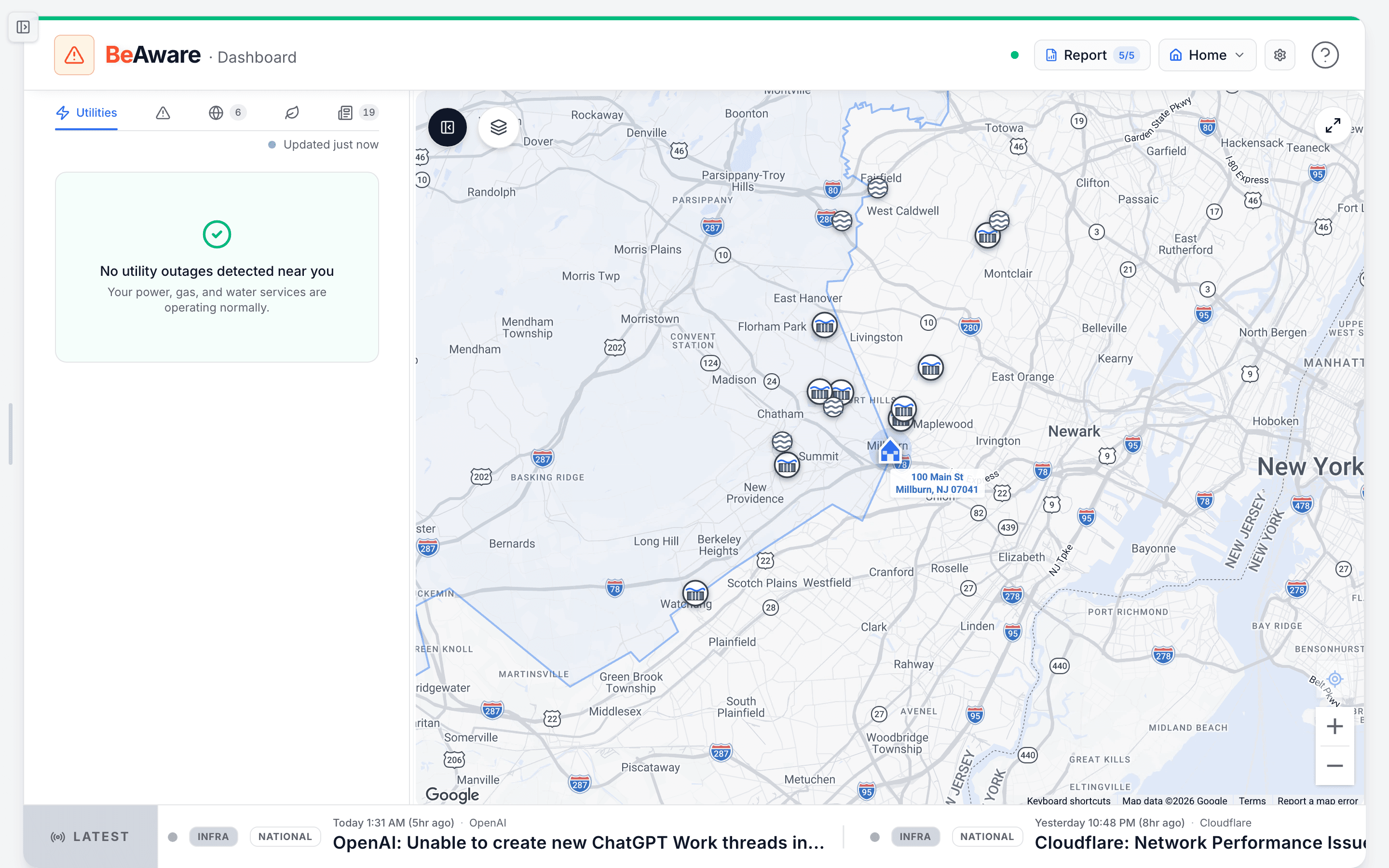
- Open this address's full risk report. The count is how many fresh reports you have left this month.
- The address you are watching. Tap to switch saved locations or add a new one.
- Pick what you are watching: outages, emergency, digital, environment, or news. The number is how many.
- The ticker: breaking local alerts and headlines for this address, scrolling along the bottom.
- Add the places you want watched. Your home, a parent's house, a second property. Each one is monitored on its own.
- Check the dashboard. Every location shows a single status, so you can read it in a second. A calm status means nothing needs you.
- Know what the statuses mean. A location moves from normal to above normal, caution, or danger as conditions change. Caution is a heads-up; danger means act now.
- Set how and when alerts reach you. Pick email or text and set quiet hours, so routine changes stay quiet but a real emergency still gets through.
- When an alert fires, open it. You will see what is happening, which of your locations it affects, and, for outages, an estimated restoration time.
What to do when a status changes
- Caution: charge phones and battery packs, fill a few water containers, top off the car, and skim your plan so the first day is fresh in your mind.
- Danger: follow your plan. Monitoring already bought you the head start; the plan tells you the steps.
- All clear: note anything that ran low so you can restock before the next one.
How people actually use it
A family near the foothills checks the dashboard for about ten seconds each morning through fire season, then forgets about it the rest of the year.
A caregiver keeps a parent's address two states away on their list. When a storm shows up in the forecast there, they see it first and call ahead while the power is still on.
Where this fits
Monitoring is the trigger; your plan is the response. An alert tells you something is changing, and your BeReady plan tells you what to do about it.