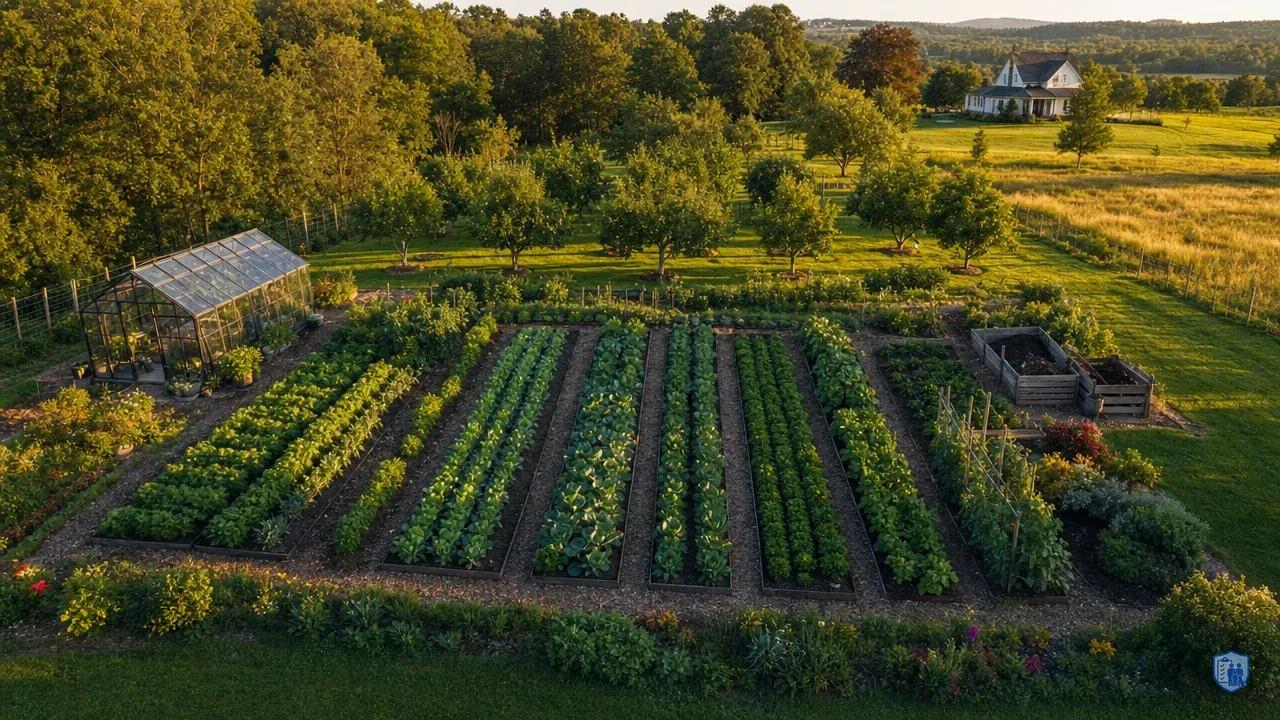
Why one acre can feed your family through crisis
The morning you walk into a grocery store and find empty shelves, or worse, find them full but realize your money won't stretch far enough, changes everything. During the 2008 financial crisis, food prices climbed while incomes dropped. Families with gardens maintained their standard of living. Those without faced brutal choices between rent and groceries.
Economic collapse doesn't announce itself with sirens. It creeps in through bank closures, currency devaluation, and supply chain disruptions that turn routine shopping trips into anxiety-inducing expeditions. When the financial system fractures, food becomes the most valuable currency. The question isn't whether you can afford to grow your own food, it's whether you can afford not to.
One acre of strategically planned land can produce between 8,000 and 15,000 pounds of food annually . That's not subsistence living, that's abundance. A family of four technically needs only 600-800 square feet of garden space for fresh eating during the growing season , but one acre provides 43,560 square feet to work with. The difference between minimum survival and genuine food security lies in that surplus. You're not just feeding your family; you're creating preservation stores for winter and building a bartering economy with neighbors facing the same crisis.
The transformation happens through strategic zoning. Random planting, throwing seeds wherever space exists, yields mediocre results and frustration. Zone-based planning increases productivity by 150% over scattered approaches , where you organize crops by maintenance needs, sun exposure, and water requirements. Farmers and serious homesteaders have proven these numbers season after season. The one-acre food system described here divides your land into five distinct zones, each serving specific purposes while working together as an integrated whole. When grocery stores become unreliable or unaffordable, this system keeps producing regardless of what's happening in the broader economy.
Zone 1: High-intensity production area
Your first zone sits closest to your house and water source for a practical reason: you'll visit it daily. This approximately half-acre section becomes your calorie engine, the foundation that prevents hunger when everything else fails. Economic collapse makes one thing brutally clear, calories matter more than variety. While fresh tomatoes taste wonderful, potatoes keep you alive through winter.
Dedicate roughly 8,000 square feet to potatoes. With proper spacing of 12 inches between plants in rows 30 inches apart, you can fit approximately 2,600 plants in this space. University extension data suggests each plant can produce substantial tubers when grown in loose, well-composted soil . Conservative estimates put your potato harvest at enough to feed a family of four for an entire year with substantial surplus for trading. Potatoes can store several months in cool, dark conditions without refrigeration, making them an excellent crisis crop.
Allocate 4,000 square feet to dried beans, kidney, pinto, navy, or black varieties. Beans serve double duty as both calorie source and protein powerhouse. Plant them 4 inches apart in rows 24 inches apart, allowing approximately 6,000 plants. Research from agricultural extension offices indicates bean plants can yield significant dried beans per plant, potentially giving you 1,500 pounds annually. That's complete protein for your family plus trading stock. Dried beans store indefinitely when kept dry and pest-free.
Another 3,000 square feet goes to winter squash varieties, butternut, acorn, and hubbard. These sprawling plants need 36-inch spacing in all directions, accommodating about 275 plants. Each plant can produce substantial squash that stores for months in ambient temperatures . Your harvest may reach 3,000-4,000 pounds of vitamin-rich, sweet flesh that makes winter meals bearable when fresh vegetables disappear.
The remaining space accommodates corn for both fresh eating and grinding into meal, plus root vegetables like carrots, beets, turnips, and parsnips. Root vegetables offer unique advantages during economic crisis, they can store for months without refrigeration when kept in damp sand or sawdust in a cool location . Succession planting can extend your harvest window by weeks or even months, meaning you're not overwhelmed with 500 pounds of carrots in one week but instead have continuous harvests from July through October .
This zone requires intensive management. You'll water daily during dry spells, weed weekly, and monitor constantly for pest pressure. The proximity to your house makes this feasible. Walking 300 feet multiple times daily to maintain a garden burns energy and motivation. Walking 50 feet becomes routine.
- Fresh Eating Priority Area
- Lettuce, spinach, radishes (succession planted every 2 weeks) providing continuous harvest for immediate consumption
Zone 2: Fresh eating and preservation garden
Your second zone sits at moderate distance from the house, perhaps 100-150 feet away, where you'll visit every few days rather than daily. This quarter-acre section focuses on vegetables that enhance nutrition and provide preservation opportunities, the foods that make eating pleasurable rather than merely survivable during extended crisis.
Start with 2,000 square feet dedicated to tomatoes. Plant determinate varieties for canning and paste production, plus indeterminate types for fresh eating throughout the season. Space plants 24 inches apart with 36-inch row spacing, accommodating roughly 300 plants. Agricultural research suggests each plant can produce significant yields in optimal conditions , potentially yielding 3,000-4,500 pounds of tomatoes. That translates to hundreds of quarts of canned tomatoes, pasta sauce, salsa, and juice, vitamin C and flavor for winter meals when fresh produce becomes memory.
Dedicate 1,500 square feet to peppers, both sweet bell types and hot varieties. Peppers space similarly to tomatoes and can produce substantial yields per plant when conditions favor them. Beyond fresh eating, peppers dehydrate beautifully, concentrating their flavor and reducing storage volume by 90%. A single dehydrator running continuously during harvest season can process your entire pepper crop into jars that require no refrigeration and last years.
Allocate 2,000 square feet to leafy greens using succession planting and cut-and-come-again methods. Plant lettuce, spinach, kale, chard, and collards every two weeks from early spring through fall. These crops can be harvested multiple times per season, cut leaves above the crown and they typically regrow within weeks . This continuous harvest approach means fresh greens from April through November in most climates. Extend this further with cold frames, simple structures of wood and recycled windows or plastic sheeting. Cold frames can extend your growing season by 4-6 weeks on both ends .
Reserve 1,500 square feet for cucumbers, summer squash, and melons. These high-water-content crops don't store well but provide fresh eating during abundance and pickle into preserved foods that last years. Fermented pickles require only salt, water, and time, no electricity, no canning equipment, no dependency on infrastructure that might fail.
The remaining space incorporates medicinal herbs and multi-use plants. Calendula flowers make healing salves. Chamomile and mint provide calming teas. Comfrey produces biomass for composting and medicinal poultices. During economic crisis, when medical care becomes unaffordable or unavailable, these plants provide basic healthcare options. A 500-square-foot herb section seems small until you need it.
Plan this zone with preservation in mind. Cluster crops by processing method, canning vegetables together, dehydrating crops together, fermentation candidates together. This organization streamlines your preservation work during the frantic harvest season when hundreds of pounds of food ripen simultaneously and you're racing against spoilage.
Zone 3: Perennial food forest and orchard
The third zone represents long-term thinking, the investment that pays dividends for decades. This quarter-acre section, positioned where daily access isn't necessary, becomes your perennial food system, fruit trees, nut trees, berry bushes, and perennial vegetables that produce year after year with minimal intervention.
Standard fruit trees require 20-foot spacing, allowing roughly 50 trees in this zone. Prioritize apples, pears, plums, and cherries suited to your climate. Choose varieties with different ripening times, early, mid, and late season, to spread harvest over months rather than weeks. Mature fruit trees can produce substantial yields annually , meaning your 50-tree orchard may generate thousands of pounds of fruit once established. That's fresh eating, canning, drying, and cider production. Dried apples store indefinitely and provide concentrated calories and sweetness when fresh fruit becomes distant memory.
Include at least 10 nut trees, walnuts, pecans, hazelnuts, or chestnuts depending on your region. Nut trees typically take several years to reach production, but then produce for decades with minimal care. They provide high-calorie protein and fat, nutritional elements difficult to obtain from vegetables alone. A mature walnut tree can produce significant nut yields annually . Ten trees may give you hundreds of pounds of nuts, enough for your family plus substantial trading surplus. Nuts can store for months in cool conditions, bridging the gap between growing seasons.
Dedicate 2,000 square feet to berry bushes, raspberries, blackberries, blueberries, and currants. These plants typically produce within 2-3 years and require minimal maintenance once established. Berries provide vitamin C, antioxidants, and fresh eating during early summer when last year's stored food is depleted but main garden crops haven't ripened. They also freeze, can, and dry for year-round use.
Incorporate perennial vegetables throughout this zone, asparagus, rhubarb, walking onions, and Jerusalem artichokes. These plants emerge each spring without replanting, requiring significantly less annual labor than annual crops . Asparagus beds can produce for 20+ years. Jerusalem artichokes multiply aggressively, providing starchy tubers that store in-ground all winter, ready to dig whenever needed.
The brilliance of perennial systems emerges during extended crisis. When you're exhausted from maintaining annual gardens, when resources for replanting become scarce, when motivation flags after years of hardship, perennials keep producing. They represent food security that doesn't depend on your annual labor, your access to seeds, or your emotional state. They simply grow, year after year, regardless of economic conditions.
Design this zone using companion planting and guild principles. Nitrogen-fixing plants like comfrey and clover feed fruit trees. Aromatic herbs repel pests. Flowers attract pollinators and beneficial insects. This creates a self-regulating ecosystem requiring minimal intervention, critical when your time and energy focus on survival rather than garden maintenance.
Zone 4: Grain production and livestock support
The fourth zone sits furthest from your house, where you'll visit weekly rather than daily. This quarter-acre section handles extensive crops that require minimal maintenance during the growing season but provide essential carbohydrates and livestock support.
Dedicate 4,000 square feet to wheat or oats. Agricultural data suggests wheat can produce meaningful yields per square foot when grown with reasonable care . Your 4,000-square-foot plot may yield enough grain annually for bread, pasta, and porridge to supplement your potato-based carbohydrate supply. Small grains can be harvested and processed without machinery using hand tools. Scythes cut standing grain. Flails thresh seeds from stalks. Wind winnows chaff from kernels. These ancient techniques require practice but no electricity, no fuel, no dependence on infrastructure that might fail during crisis.
Allocate 2,000 square feet to field corn for cornmeal and animal feed. Corn typically produces higher yields than wheat and processes easily with hand-crank mills. Dried corn stores indefinitely when protected from moisture and pests.
If you're keeping chickens, rabbits, or goats for protein and dairy, dedicate 2,000 square feet to fodder crops and pasture. Chickens need supplemental feed beyond kitchen scraps, a laying hen typically consumes substantial feed annually. Six chickens may require hundreds of pounds of grain and fodder. Growing your own becomes essential when commercial feed disappears or becomes unaffordable. Plant mangel beets, fodder radishes, and comfrey specifically for livestock. These crops produce enormous biomass with minimal care.
The remaining space becomes your composting and waste management area. Proper composting can significantly reduce household organic waste while building soil fertility . During economic crisis, when commercial fertilizers become unavailable or unaffordable, compost becomes your primary soil amendment. Build three-bin systems that allow continuous composting, one bin actively receiving materials, one bin decomposing, one bin finished and ready for use. Add garden waste, kitchen scraps, livestock manure, and bedding. Turn piles monthly. Within months, waste transforms into black gold that keeps your gardens productive year after year without external inputs.
Consider this zone your self-sufficiency insurance. Grains provide carbohydrates independent of potato success or failure. Livestock converts garden waste and forage into protein, eggs, and dairy. Composting closes the nutrient loop, making your system regenerative rather than extractive. These elements seem optional during normal times but become essential during extended crisis when supply chains stay broken for years rather than months.
- Rainwater Collection Systems
- Roof catchment areas, gutters, downspouts, and first-flush diverters that capture and filter initial rainfall for maximum water quality
- Storage Infrastructure
- Tank sizing calculations, material comparisons (polyethylene, concrete, fiberglass), and placement strategies for optimal capacity and gravity flow
- Backup & Overflow Management
- Overflow routing, backup water sources, emergency shutoffs, and seasonal storage strategies to ensure continuous irrigation capability
Zone 5: Water management and infrastructure
The most productive garden plan fails without reliable water. Economic crisis often disrupts municipal water supplies through infrastructure neglect, power outages affecting pumping stations, or simply unaffordable utility bills. Your one-acre food system requires independent water security.
Start with rainwater collection. Basic physics tells us that one inch of rain falling on 1,000 square feet of roof surface can collect over 600 gallons of water . A typical home with 2,000 square feet of roof area captures substantial water per inch of rainfall. If your region receives 30 inches of annual rainfall, that's tens of thousands of gallons available for collection. Your one-acre garden needs roughly 1 inch of water weekly during growing season. Rainwater collection can provide most or all of your irrigation needs if you have adequate storage.
Install 2,500-5,000 gallons of storage capacity using food-grade IBC totes, repurposed tanks, or purpose-built cisterns. Position storage at the highest point on your property to enable gravity-fed irrigation. Every foot of elevation provides measurable water pressure , sufficient for drip irrigation systems without pumps. This gravity-fed approach works during power outages and requires no fuel, no electricity, no dependence on functioning infrastructure.
Implement drip irrigation throughout your intensive production zones. Drip systems can reduce water usage significantly compared to overhead sprinklers by delivering moisture directly to root zones rather than wetting leaves and bare soil. During extended drought or when water becomes scarce, this efficiency difference determines whether crops survive or die. Install simple systems using mainline tubing, drip tape, and manual valves. Avoid electronic timers and controllers, they fail during crisis. Manual operation requires more attention but maintains functionality regardless of power availability.
Supplement rainwater with well water if available, or identify nearby streams, ponds, or springs. During severe crisis, you might need to haul water manually. Position water storage near Zone 1, your highest-intensity production area, minimizing hauling distances for daily watering needs. More distant zones should feature drought-tolerant perennials requiring minimal irrigation once established.
Apply 3-4 inches of organic mulch around all plants. Proper mulching can reduce watering needs substantially by preventing evaporation, moderating soil temperature, and suppressing weeds that compete for moisture. Use straw, leaves, grass clippings, or wood chips, whatever's locally available. Mulch also builds soil organic matter as it decomposes, improving water retention long-term.
Designate space for tool storage and food processing areas within your one-acre system. A 200-square-foot shed near Zone 2 houses hand tools, harvesting equipment, and preservation supplies. Position processing areas near zones producing crops requiring immediate handling, tomato canning near tomato plantings, grain threshing near grain fields. This organization reduces wasted motion during harvest season when efficiency determines how much food you save versus how much spoils.
Create a personalized preparedness plan based on your location and family needs to adapt your food-security priorities before a crisis.
Implementation timeline and crisis adaptation
The gap between planning and producing determines whether your one-acre system provides food security during crisis. Starting immediately with quick-producing crops while simultaneously building long-term infrastructure creates both immediate and future food security.
Year 1 focuses on immediate production and basic infrastructure. Begin in early spring by establishing Zone 1, your high-intensity production area. Even if you can't prepare the entire 15,000-20,000 square feet initially, start with 2,000 square feet dedicated to potatoes, beans, and squash. These emergency food gardens can produce meaningful harvests within several months . Plant potatoes in March or April, beans in May, and winter squash in June. By October, you may harvest 2,000-3,000 pounds of storable food from this modest beginning, enough to feed your family through winter if crisis strikes suddenly.
Simultaneously install basic water collection, at minimum, one 275-gallon IBC tote connected to a downspout. This provides immediate irrigation capacity while you plan larger systems. Establish a small composting area and begin building soil fertility for future expansion.
Plant fruit trees and berry bushes during Year 1 even though they won't produce immediately. These long-term investments need time to establish. Every year you delay planting represents another year before harvest. Purchase bare-root stock in early spring when prices are lowest and selection is best. Water them through the first summer, then let them fend for themselves, this stress creates stronger, more resilient trees.
Years 2-3 expand and optimize your system. With Year 1 experience informing your decisions, expand Zone 1 to full size, establish Zone 2 completely, and increase water storage capacity to 2,500+ gallons. Begin grain production in Zone 4 even if you start small, 1,000 square feet of wheat teaches you harvesting and processing techniques before you depend on those skills for survival.
Implement proper crop rotation during Years 2-3. Crop rotation maintains soil fertility without external inputs by alternating heavy feeders with light feeders . A simple four-year rotation, legumes, leafy greens, fruiting crops, root vegetables, prevents pest buildup and disease cycles while maintaining productivity. This becomes critical during extended crisis when you can't purchase fertilizers or pesticides.
Develop seasonal planning rhythms that become automatic. Start seeds indoors 6-8 weeks before last frost. Transplant after frost danger passes. Succession plant every two weeks through summer. Plant fall crops 10-12 weeks before first frost. Harvest and preserve continuously from July through October. Store properly for winter use. These rhythms, practiced over several years, become instinctive, you know what needs doing without consulting calendars or guides.
Crisis adaptation requires flexibility built into your plan. Diversified plantings can significantly reduce total crop failure risk . Don't plant only potatoes, include multiple varieties of potatoes plus sweet potatoes, Jerusalem artichokes, and other starchy staples. If late blight destroys your potatoes, you still eat. If drought stresses your tomatoes, your peppers and squash might thrive. Diversity creates resilience.
Adjust planting dates based on actual weather rather than traditional schedules. Climate instability during crisis periods might shift frost dates, alter rainfall patterns, or create unexpected heat waves. Watch your specific microclimate. Plant when soil temperature and moisture conditions are right, not when the calendar says you should.
Save seeds from your best-performing plants. During extended crisis, commercial seed becomes unavailable or unaffordable. Seed-saving ensures continued production regardless of external supply chains. Start with easy crops, beans, peas, tomatoes, peppers, then expand to more challenging varieties as you gain experience.
Pros and cons of the one-acre food system
Advantages:
The one-acre approach provides genuine food security independent of supply chains and economic conditions. A well-planned one-acre garden can produce 15,000-20,000 pounds of vegetables annually when using intensive growing methods . This abundance creates surplus for preservation, trading, and sharing with community members.
Zone-based planning maximizes efficiency by grouping crops with similar needs. You're not walking across your entire property multiple times daily. High-maintenance crops sit near your house. Low-maintenance perennials occupy distant areas. This organization saves hundreds of hours annually compared to scattered planting.
Perennial zones provide long-term security with minimal annual labor. Once established, fruit trees, nut trees, and berry bushes produce for decades. They represent food security that survives personal hardship, resource scarcity, and motivation loss.
Diversification across five zones reduces total crop failure risk. If one zone underperforms due to weather, pests, or disease, other zones continue producing. You're never dependent on a single crop or growing method.
Disadvantages:
One acre requires significant initial investment in infrastructure, water storage, irrigation systems, fencing, tools, and soil amendments. Budget $3,000-$8,000 for basic setup depending on existing conditions and how much work you can do yourself.
The learning curve is steep. Expect mistakes, crop failures, and wasted effort during your first 2-3 years. You're learning soil management, pest control, preservation techniques, and seasonal timing simultaneously. This education costs time and money.
Physical labor demands are substantial, especially during spring planting and fall harvest. Even with efficient zone planning, maintaining one acre requires 10-20 hours weekly during peak season. Families with physical limitations may need to scale down or recruit help.
Time to full production spans 3-5 years. Quick-producing annuals yield within months, but fruit trees take 3-7 years to bear, nut trees take 5-10 years, and soil fertility builds gradually. This system rewards long-term thinking, not immediate gratification.
Climate and soil variations affect results dramatically. The production estimates here assume decent soil, adequate rainfall, and moderate growing season. Extreme climates, desert heat, short northern summers, heavy clay soil, require significant adaptation and may reduce yields 30-50%.
Maximizing production through season extension
The growing season in most climates spans 120-180 days between last spring frost and first fall frost. This limitation restricts production to roughly half the year. Season extension techniques can dramatically increase annual yields by adding 60-120 growing days.
Cold frames represent the simplest extension method. These bottomless boxes with transparent tops create microclimates 10-20 degrees warmer than ambient temperature. Build them from scrap lumber and old windows, recycled greenhouse panels, or clear corrugated plastic. Position cold frames over Zone 2 crops, lettuce, spinach, kale, and other greens that tolerate cool temperatures but need frost protection.
Plant cold-hardy crops in late summer for fall and winter harvest. Spinach, kale, mache, claytonia, and certain lettuce varieties survive temperatures into the teens when protected by cold frames. Cold frames and season extension techniques can provide fresh vegetables 10-12 months per year . This extends your fresh eating period and reduces dependence on stored food during late winter when preservation stores run low.
Row covers provide mobile frost protection without permanent structures. Lightweight fabric draped over wire hoops protects plants from frost while allowing light, air, and water penetration. Use row covers to protect tender crops during unexpected late spring frosts or extend fall harvests by 3-4 weeks. They store compactly when not needed and cost less than permanent structures.
Succession planting maximizes production from limited space by keeping soil continuously occupied. As soon as you harvest spring lettuce, plant summer squash in the same bed. When summer squash finishes in September, plant fall greens. This continuous cropping can increase annual production per square foot by 40-60% compared to single plantings.
Interplanting fast and slow crops uses space efficiently. Plant quick-maturing radishes between slow-growing tomatoes. The radishes harvest before tomatoes need the space. Plant lettuce under trellised beans, the lettuce benefits from afternoon shade while beans climb overhead. These companion planting strategies increase yields without expanding garden size.
Vertical growing multiplies production in small spaces. Trellised beans, peas, cucumbers, and squash produce 2-3 times more per square foot than ground-sprawling plants. Build simple trellises from bamboo poles, wire fencing, or wooden stakes. Position trellises on the north side of beds to avoid shading other crops.
Building soil fertility for long-term production
Soil quality determines success or failure more than any other factor. Poor soil produces weak plants, low yields, and constant pest problems. Rich soil grows vigorous plants that resist disease and produce abundantly.
Start with soil testing through your local extension office. Basic tests cost $10-$30 and reveal pH, nitrogen, phosphorus, potassium, and organic matter levels. This information guides amendment decisions. Guessing wastes money and time.
Build organic matter aggressively during your first 2-3 years. Organic matter improves every soil type, it loosens clay, helps sand retain moisture, feeds beneficial microorganisms, and provides slow-release nutrients. Target 5-8% organic matter in vegetable growing areas. Most soils start at 1-3%.
Add compost liberally, 2-4 inches spread across beds and worked into the top 6 inches of soil. Compost provides organic matter, nutrients, and beneficial microbes. Make your own using the three-bin system described in Zone 4, or purchase bulk compost from local suppliers. Budget $200-$500 annually for purchased compost if you can't produce enough yourself.
Cover crop empty beds during fall and winter. Plant annual rye, crimson clover, hairy vetch, or winter peas after summer crops finish. These plants prevent erosion, suppress weeds, and add organic matter when you till them under in spring. Legume cover crops fix atmospheric nitrogen, reducing fertilizer needs. Cover cropping can add 1-2% organic matter annually while providing nitrogen equivalent to 50-100 pounds of synthetic fertilizer per acre.
Mulch heavily around all plants. Organic mulches, straw, leaves, grass clippings, wood chips, decompose slowly, feeding soil life and building organic matter. Apply 3-4 inches initially and replenish as it decomposes. Permanent mulch systems can eliminate tilling entirely, preserving soil structure and beneficial organisms.
Avoid synthetic fertilizers and pesticides when possible. These products provide short-term results but damage soil biology long-term. Beneficial bacteria, fungi, and soil organisms die from chemical exposure. Once soil biology collapses, you become dependent on continuous chemical inputs. Build biological soil health instead through compost, mulch, and cover crops. This creates self-sustaining fertility that survives crisis when commercial products become unavailable.
Food preservation and storage infrastructure
Growing food solves only half the equation. Preservation determines whether summer abundance feeds you through winter or rots in piles while you watch helplessly. Plan preservation infrastructure before your first major harvest.
Dedicate space for canning operations, a large table, propane burner or electric stove, water bath canner, pressure canner, and storage for hundreds of jars. Budget $300-$500 for basic canning equipment. Position this area near Zone 2 where tomatoes, peppers, and other canning crops grow. Hauling 200 pounds of tomatoes across your property gets old quickly.
Install dehydrators for drying herbs, peppers, fruits, and vegetables. Electric dehydrators cost $50-$300 depending on capacity. Solar dehydrators cost less but depend on weather. Build simple versions from scrap lumber, window screens, and clear plastic. Dried foods reduce storage volume by 80-90% and require no refrigeration.
Create root cellaring space for potatoes, carrots, beets, turnips, winter squash, and apples. Ideal conditions are 32-40 degrees Fahrenheit with 85-95% humidity. Basements, buried containers, or purpose-built underground cellars work. Even a corner of an unheated garage provides better storage than heated living space. Root cellaring requires no energy input and preserves food for 3-8 months depending on crop.
Set up fermentation stations for sauerkraut, kimchi, pickles, and other preserved vegetables. Fermentation requires only salt, water, and anaerobic conditions. Fermented foods store 6-12 months without refrigeration and provide beneficial probiotics. Basic equipment costs under $50, glass jars, weights, and airlocks.
Build freezer capacity if you have reliable electricity. A 20-cubic-foot chest freezer holds 300-400 pounds of food and costs $200-$400. Freeze berries, blanched vegetables, meat, and prepared meals. Recognize that freezing depends on functioning electrical grid, it's convenient during normal times but vulnerable during extended crisis.
Store dried goods, beans, grains, flour, nuts, in food-grade buckets with gamma seal lids. Add oxygen absorbers to prevent insect damage and oxidation. Properly stored dried goods last 5-20 years. This long-term storage bridges multi-year crises when gardens fail due to weather or other factors.
Starting now: First steps for different situations
Your starting point determines your initial actions. A suburban quarter-acre requires different strategies than rural five acres. Limited budgets demand different priorities than well-funded projects.
Suburban small lot (under 1/4 acre): Focus on Zone 1 high-intensity production and Zone 2 fresh eating gardens. Skip grain production and extensive livestock. Maximize vertical growing with trellises and cages. Use containers for additional space. Build soil aggressively with purchased compost. Install rain barrels for basic water security. Plant dwarf fruit trees that fit small spaces. Budget $500-$1,000 for first-year setup.
Rural large lot (1+ acres): Implement the full five-zone system over 3-5 years. Start with Zone 1 for immediate production. Add Zone 2 in year two. Plant Zone 3 perennials immediately even though they won't produce for years. Develop Zone 4 grain and livestock areas in years 3-4. Install comprehensive water systems with 5,000+ gallon storage. Budget $3,000-$8,000 for complete infrastructure.
Limited budget (under $500): Start with 500-1,000 square feet of Zone 1 crops, potatoes, beans, and squash. Build soil with free materials, leaves, grass clippings, manure from local farms. Make compost from kitchen scraps and yard waste. Collect rainwater in repurposed food-grade barrels. Save seeds from purchased vegetables. Build trellises from found materials. Expand gradually as budget allows.
Adequate budget ($2,000+): Purchase quality tools that last decades, broadfork, wheel hoe, stirrup hoe, quality shovels and rakes. Install proper irrigation infrastructure immediately. Buy bulk compost and amendments to build soil quickly. Purchase bare-root fruit trees, berry bushes, and perennials in quantity. Invest in preservation equipment, pressure canner, large dehydrator, chest freezer. This upfront investment accelerates progress dramatically.
Physical limitations: Design for minimal bending and kneeling. Build raised beds 24-30 inches high for standing or seated work. Install permanent mulch systems that eliminate tilling. Focus on perennial crops requiring less annual labor. Use drip irrigation with timers to reduce watering labor. Grow crops in containers near the house. Recruit family or friends to help with heavy tasks like bed building and compost turning.
Renters or temporary situations: Focus on annual crops that produce within one season. Use containers and raised beds you can take when you move. Avoid permanent infrastructure and perennial plantings. Build soil in containers rather than ground beds. Grow high-value crops that maximize return on limited space and time investment.
The one-acre food system described here isn't theoretical. Families worldwide have fed themselves from similar spaces for centuries. What makes this approach different is the strategic zoning that maximizes productivity while minimizing labor and resource inputs. During economic crisis when time, energy, and money become scarce, this efficiency determines success or failure.
Start now. Don't wait for crisis to force action. Begin with 500 square feet this spring. Learn what grows well in your soil and climate. Make mistakes while grocery stores still provide backup. Build skills, infrastructure, and soil fertility during stable times so they're ready when stability disappears. The family that starts today eats tomorrow. The family that waits starves while planning.
Get our seasonal planting calendar and crop rotation schedules for maximum year-round production. These detailed guides provide month-by-month planting schedules customized for your USDA hardiness zone, with crop rotation plans that maintain soil fertility indefinitely without external inputs, essential tools for long-term food security during extended economic crisis.