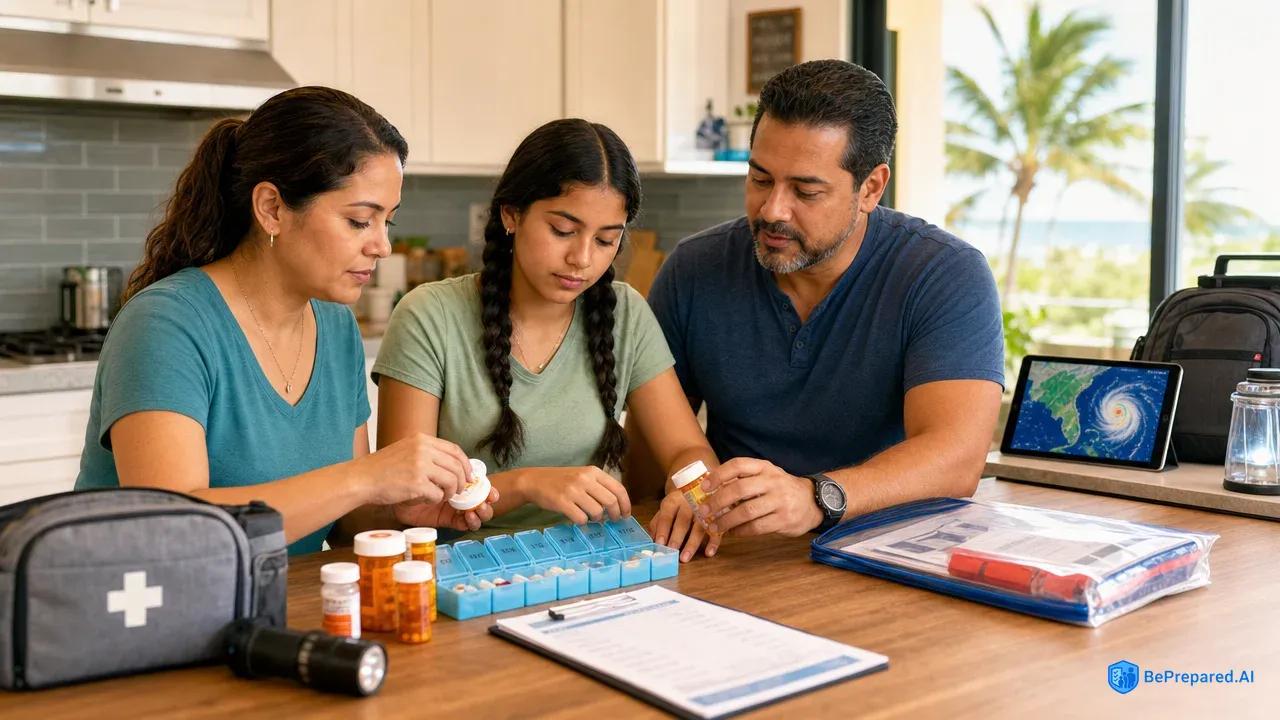
Essential Medication Storage for Hurricane Preparedness
The power went out at 3 AM when Hurricane Laura's outer bands hit the Louisiana coast. Maria Santos woke to darkness, listening to wind howl through the boards covering her windows. She'd evacuated for previous storms, but this time she'd stayed—and now she realized with growing panic that her insulin was in the refrigerator, and her blood pressure medications were somewhere in the bathroom cabinet. She had no idea if she had enough to last, or how she'd get more if the storm damage was as bad as forecasters predicted.
Maria's situation plays out in countless households every hurricane season. The difference between weathering a storm safely and facing a medical crisis often comes down to a single factor: advance medication planning. When pharmacies flood, when roads become impassable, when power grids fail for weeks, your prescription medications become as critical as food and water—yet they're often the last item people think about until it's too late.
The Centers for Disease Control and Prevention recommends maintaining at least a 7-day supply of all prescription medications in waterproof containers specifically for disaster preparedness . This isn't arbitrary—hurricane conditions can disrupt pharmacy operations for extended periods, sometimes weeks in severely affected areas. The reality on the ground proves this repeatedly: pharmacy access becomes severely limited or completely unavailable for substantial periods after major hurricanes strike.
The challenge extends beyond simply having pills on hand. Hurricane-specific storage demands waterproof protection against flooding, temperature control when power fails, and organization systems that work in high-stress situations. You need to coordinate with healthcare providers before storm season begins, as legal restrictions on prescription stockpiling can complicate last-minute preparation efforts. However, many insurance plans recognize disaster preparedness as legitimate grounds for early refills, particularly during hurricane season . Your pharmacist can typically process these requests with proper documentation and advance notice.
The key is transforming medication management from an afterthought into a systematic component of your hurricane preparedness plan. This means understanding not just what medications you need, but how to store them, rotate them, protect them from environmental damage, and replace them if disaster strikes. It means building relationships with your healthcare providers and pharmacists before June 1st—before the first tropical depression forms in the Atlantic. The time to prepare isn't when the storm is three days offshore; it's now, when you can make thoughtful decisions and secure necessary supplies without panic.
- Waterproof Hard Case with Foam Insert
- Military-grade protection with custom foam cutouts for prescription bottles, gasket seals, and pressure release valve
- Sealed Plastic Container with Desiccant
- Airtight food-grade container with moisture-absorbing packets and secure latching lid system
- Insulated Cooler Bag
- Soft-sided thermal protection with water-resistant zippers, suitable for temperature-sensitive medications
- Standard Ziplock Bag
- Basic moisture barrier with limited durability and no impact protection for prescription bottles
Waterproof Storage Systems and Container Selection
Not all waterproof containers are created equal, and hurricane flooding presents unique challenges that standard "water-resistant" products cannot handle. When storm surge pushes six feet of contaminated water through your home, when your medication kit floats in debris-filled floodwater for hours, only properly engineered waterproof storage will protect your supply.
The gold standard for medication storage is hard-sided waterproof cases with O-ring seals, specifically those rated for submersion rather than mere splash protection. Look for cases rated to IP67 or IP68 standards—these designations indicate the container can withstand complete immersion in water for extended periods . Pelican cases, Otterbox containers, and similar military-grade options provide this level of protection. These cases feature pressure-equalization valves that prevent vacuum lock while maintaining waterproof integrity. Their rigid construction protects medications from crushing forces in debris-laden floodwater.
Proper sealing technique matters as much as container quality. Before sealing your medication container, ensure the O-ring gasket is clean, undamaged, and properly seated in its groove. Even microscopic debris—a grain of sand, a hair, a fragment of lint—can compromise the seal. Wipe the O-ring with a clean, dry cloth before each closure. Inspect it monthly for cracks, compression set, or deterioration. Many waterproof cases include replacement O-rings; keep spares with your emergency supplies.
Moisture control inside sealed containers presents a paradox: you need waterproof protection from external flooding, but you must also manage internal humidity. Silica gel packets are essential for this purpose, absorbing moisture that enters when you open the container or that migrates through microscopic imperfections . Use indicating silica gel that changes color when saturated—typically from blue or orange to pink or green—so you know when to replace it. Use enough silica gel to adequately protect your container volume, and replace packets every three to six months, or immediately after the indicator shows saturation.
Temperature considerations vary dramatically by medication type. Most solid medications—tablets and capsules—tolerate normal household temperature ranges without special accommodation. However, many liquid medications, suppositories, and certain capsules require cooler storage. Original prescription bottles provide essential dosage information, safety warnings, and identification details that become critical during emergencies . Never consolidate multiple prescriptions into a single container to save space. Instead, keep medications in their original bottles, then place multiple bottles together in a larger waterproof container.
Labeling and organization within containers can mean the difference between calm medication management and dangerous confusion during a stressful storm. Create a master medication list on waterproof paper (or laminated standard paper) that includes medication names, dosages, prescribing physicians, and administration schedules. Place this list on top of your medication bottles, immediately visible when you open the container. For households with multiple family members taking medications, use color-coded waterproof labels or separate smaller containers within the main case to prevent mix-ups when stress levels run high and lighting may be poor.
Test your waterproof containers before you need them. Fill a case with paper towels, seal it properly, and submerge it in a bathtub for 24 hours. If the paper towels remain dry, your seal is effective. If moisture penetrates, identify and correct the problem—whether it's technique, O-ring damage, or an inadequate container—before hurricane season arrives.
Pros of Hard-Sided Waterproof Cases:
- Complete submersion protection for extended periods
- Rigid construction prevents crushing damage
- Pressure-equalization valves maintain seal integrity
- Reusable for multiple hurricane seasons
- Clear visibility of contents in transparent models
Cons of Hard-Sided Waterproof Cases:
- Higher upfront cost ($30-$150 depending on size)
- Bulkier than soft-sided alternatives
- Heavier to transport during evacuation
- Requires proper O-ring maintenance
- May be overkill for medications stored on upper floors
Temperature-Sensitive Medications and Refrigeration Alternatives
When the power grid fails—and in major hurricanes, it will fail—refrigerated medications face an immediate crisis. Insulin, certain antibiotics, injectable medications, and various biologics require consistent temperature control that most households lose within hours of an outage. Understanding which medications are temperature-sensitive and having concrete alternatives ready can prevent medical emergencies during the chaotic post-storm period.
Identifying Your Temperature-Sensitive Medications
Start by reviewing every medication in your household and identifying which require refrigeration. Insulin is the most common temperature-sensitive medication, but many others share this requirement: certain eye drops, injectable biologics for autoimmune conditions, some liquid antibiotics, hormone preparations, and various specialty medications. Check each medication's package insert or consult your pharmacist to determine storage requirements. Some medications list "refrigerate" as preferred storage but actually tolerate room temperature for limited periods—this distinction becomes crucial during emergencies.
Insulin specifically can remain viable for up to 28 days at room temperature (approximately 77°F or 25°C), though this varies by formulation . Rapid-acting insulins like Humalog and NovoLog generally tolerate room temperature better than NPH or mixed insulins. However, higher temperatures can degrade insulin more rapidly, and exposure to extreme heat can render insulin ineffective within days. During summer hurricanes in the Gulf Coast, ambient temperatures regularly exceed comfortable thresholds, making passive cooling strategies essential.
Clay Pot Evaporative Cooling Systems
One of the most effective low-tech cooling methods is the clay pot cooler, also called a zeer pot, which uses evaporative cooling to maintain temperatures below ambient without electricity . This ancient technology has been adapted for modern medication storage with remarkable effectiveness. To construct a medication-appropriate clay pot cooler, you need two unglazed terra cotta pots of different sizes (one fitting inside the other with about two inches of space between them), clean sand, and water.
Place the larger pot on a waterproof surface and add a two-inch layer of sand at the bottom. Set the smaller pot inside, centered, and fill the gap between the pots with sand. Pour water into the sand until saturated, and cover the inner pot with a damp cloth. As water evaporates through the porous clay, it draws heat from the inner chamber, creating a cooling effect. This evaporative process can reduce internal temperatures significantly below ambient conditions—within the safe range for many insulin formulations.
The clay pot method requires consistent attention: you must add water every 8-12 hours to maintain evaporation, and the system works best in low-humidity conditions. During humid post-hurricane weather, effectiveness decreases, but even modest temperature reduction can extend medication viability significantly. Place the cooler in the shadiest, most ventilated area available—never in direct sunlight or enclosed spaces where evaporation cannot occur.
Insulated Storage and Ice Management
High-quality coolers with thick insulation provide another option for maintaining medication temperatures during power outages. However, direct ice contact can freeze medications, causing crystallization or separation that renders them ineffective. The FDA specifically warns against allowing medications to freeze, as this typically causes irreversible damage . Instead, create a barrier system: place ice or ice packs in sealed containers at the bottom of the cooler, add a layer of cardboard or foam, then place medications in waterproof containers on this barrier layer.
Monitor internal cooler temperature with a waterproof thermometer, aiming for 36-46°F (2-8°C) for refrigerated medications. This requires careful ice management—too little ice and temperatures rise too high, too much or improperly placed ice and medications freeze. Replace melted ice promptly, but during hurricane aftermath when ice supplies are scarce, this becomes increasingly difficult. Plan for 72 hours of ice-based cooling maximum, with alternative strategies prepared for longer outages.
Duration Limits and Decision Points
FDA guidelines allow certain refrigerated medications to be stored in cool, dark places during emergencies . Most insulin formulations remain effective for 28 days at room temperature , but this clock starts immediately when refrigeration ends. Mark the exact time and date when power fails, and track cumulative unrefrigerated time even if power is temporarily restored. If insulin has been unrefrigerated for 20 days, then refrigerated for a week, then loses power again, you only have 8 days remaining in the 28-day window.
For other temperature-sensitive medications, consult the package insert or your pharmacist before hurricane season to establish specific temperature tolerance and duration limits. Some medications tolerate brief temperature excursions (a few hours above recommended storage temperature) without degradation, while others lose potency rapidly. Document these limits for each medication in your household and include this information in your emergency medication kit.
Pros of Clay Pot Cooling:
- No electricity or fuel required
- Inexpensive materials (under $30)
- Silent operation
- No moving parts to break
- Works indefinitely with water supply
Cons of Clay Pot Cooling:
- Requires water every 8-12 hours
- Less effective in high humidity
- Limited cooling capacity
- Fragile terra cotta construction
- Requires ventilated placement area
- Emergency Supply Management
- Separate storage protocol with rotation dates, expiration tracking, and quantity guidelines for maintaining 7-14 day backup supply
- Multi-Medication Coordination
- Cross-reference system for managing multiple prescriptions, identifying potential interactions, and synchronizing refill schedules
Medication Rotation Systems and Expiration Management
Stockpiling medications for hurricane season creates a management challenge: how do you maintain an emergency supply without wasting medications that expire before you need them? The solution lies in systematic rotation that integrates your emergency supply with your regular medication use, ensuring nothing expires while maintaining constant readiness.
First-In-First-Out Rotation Principles
The pharmaceutical industry uses first-in-first-out (FIFO) rotation to manage inventory, and this same principle applies to home medication stockpiles. The concept is straightforward: when you obtain a new prescription refill, it goes to the back of your storage system, and you consume medications from the front—the oldest medications get used first, preventing any from reaching expiration.
Implementing FIFO at home requires a dedicated storage system. Use a small container or designated shelf space for your emergency medication supply, separate from daily-use medications. When you pick up a prescription refill, take the oldest bottle from your emergency supply and move it to your daily-use location. Place the new refill in the emergency supply. This continuous rotation ensures your emergency supply contains the newest medications with the longest remaining shelf life, while you consume medications before they expire.
Rotate medications every 6 months and check expiration dates regularly . This systematic approach can extend your usable supply significantly beyond what simple stockpiling would achieve. Instead of maintaining separate "emergency" medications that sit unused until they expire, rotation integrates emergency preparedness with routine medication use, eliminating waste while maintaining readiness.
Tracking Systems for Multiple Medications
Households with multiple family members taking several medications each need systematic tracking to manage rotation effectively. Create a medication inventory spreadsheet or use a simple tracking template with the following information for each medication:
- Medication name and strength
- Prescribing physician and pharmacy
- Current quantity in emergency supply
- Refill date and prescription number
- Expiration date
- Next rotation date
Update this inventory monthly, checking expiration dates and rotating medications as needed. Set calendar reminders for rotation dates—typically 30-60 days before expiration for most medications. This advance warning gives you time to use medications before they expire or, if you've accumulated excess supply, to donate unexpired medications to appropriate programs.
For visual learners, a physical rotation board can be more effective than digital tracking. Mount a small whiteboard in your medication storage area and list each medication with its next rotation date. Color-code entries—green for medications with 6+ months until rotation, yellow for 3-6 months, red for medications requiring immediate rotation. This visual system provides at-a-glance status without opening spreadsheets or checking lists.
Safe Disposal of Expired Medications
Replace emergency medication supplies before they expire, typically every 12-24 months depending on the medication . When medications do expire, proper disposal protects both environmental and public health. Never flush medications down toilets or drains unless specific disposal instructions indicate this method. Pharmaceutical contamination of water supplies is a growing environmental concern.
Instead, use DEA-authorized medication take-back programs, which provide safe disposal options for expired controlled substances and other medications . Many pharmacies, police stations, and hospitals host permanent take-back boxes where you can deposit expired or unwanted medications year-round.
If take-back programs aren't accessible, the FDA recommends mixing medications with unpalatable substances (coffee grounds, kitty litter, or dirt), sealing the mixture in a plastic bag, and disposing of it in household trash. Remove or obscure personal information from prescription bottles before disposal. This method prevents accidental ingestion by children or pets and makes medications less attractive to individuals seeking to misuse them.
Coordination with Regular Prescription Refills
The most elegant rotation systems align with your regular prescription refill schedule. Most insurance plans allow refills when 75-80% of the previous prescription is consumed. If you take a medication daily and receive 90-day supplies, you can refill at day 67-72. This built-in buffer provides the foundation for emergency stockpiling.
Request refills at the earliest allowable date, and immediately rotate the new supply into your emergency storage. Over several refill cycles, this gradually builds a 7-14 day emergency buffer while staying within insurance and legal guidelines. Communicate with your pharmacist about your disaster preparedness goals—most are supportive and can help optimize refill timing to build emergency supplies legally and efficiently.
Pros of FIFO Rotation Systems:
- Eliminates medication waste from expiration
- Maintains fresh emergency supply continuously
- Works within insurance and legal constraints
- Simple to implement with basic organization
- Reduces long-term medication costs
Cons of FIFO Rotation Systems:
- Requires consistent monthly attention
- More complex with multiple family members
- Initial setup takes planning time
- Easy to forget without calendar reminders
- Doesn't work well for rarely-used medications
Building Your 7-Day Hurricane Medication Kit
Creating an effective medication kit requires more than throwing pill bottles in a waterproof container. You need precise quantity calculations, comprehensive documentation, backup pharmacy contacts, and over-the-counter essentials that complement your prescription medications. FEMA recommends a 7-day minimum supply with a 14-day supply preferred for hurricane-prone zones , reflecting the reality that pharmacy access often remains disrupted for extended periods after major storms.
Calculating Exact Quantities Needed
Start by documenting every prescription medication taken by every household member. For each medication, calculate the exact quantity needed for your target timeframe—7 days minimum, 14 days preferred. If you take levothyroxine 100mcg once daily, you need 7 tablets for a one-week supply, 14 for two weeks. If you take metformin 500mg twice daily, you need 14 tablets for one week, 28 for two weeks.
This calculation becomes more complex for medications with variable dosing or "as needed" use. For pain medications, anxiety medications, or other PRN (pro re nata, as needed) prescriptions, estimate based on your maximum typical use rather than average use. Hurricane situations create stress, potential injuries, and circumstances that may increase your need for these medications. If you typically use a rescue inhaler twice weekly but have used it four times daily during high-stress periods, plan for the higher usage rate.
Don't forget medications taken on non-daily schedules. If you take alendronate once weekly, you need one or two tablets depending on your supply duration. If you use a weekly insulin pen, calculate total units needed per day, multiply by 7 or 14, and ensure you have adequate pens or vials. Round up calculations rather than down—having extra medication is inconvenient, but running short during a disaster can be dangerous.
Including Over-the-Counter Essentials
Prescription medications are only part of a comprehensive medication kit. Over-the-counter medications and medical supplies become critical when pharmacies close and minor health issues can't access routine medical care. Your kit should include:
Pain relievers and fever reducers form the foundation. Include both acetaminophen and ibuprofen, as they work through different mechanisms and can be alternated for more effective symptom control. Calculate quantities based on maximum daily dosing for your target duration—for a 7-day supply, that's approximately 42 tablets of regular-strength ibuprofen (assuming 200mg every 6 hours) per person.
Antihistamines address allergic reactions, which can worsen during hurricanes due to mold, debris, and environmental disruption. Include both non-sedating options (loratadine, cetirizine) for daytime use and sedating options (diphenhydramine) for nighttime symptom control or as a sleep aid when stress disrupts normal sleep patterns.
Gastrointestinal medications become essential when stress, disrupted routines, and potentially contaminated water or food cause digestive issues. Include anti-diarrheal medication (loperamide), anti-nausea medication (meclizine or dimenhydrinate), antacids, and laxatives for constipation that often results from dietary changes and dehydration during disasters.
First aid supplies complement your medication kit: adhesive bandages in various sizes, antibiotic ointment, hydrocortisone cream for skin irritation, antiseptic wipes, tweezers for splinter removal, and medical tape and gauze for larger wounds. Include any specialized supplies for chronic conditions—glucose tablets for diabetes, EpiPens for severe allergies, or rescue inhalers for asthma even if you have prescription inhalers in your kit.
Documentation and Prescription Information
When disaster strikes, having physical documentation of your medications can be lifesaving. Create a comprehensive medication list that includes generic and brand names, dosages, frequencies, prescribing physicians with contact information, and pharmacy details. Include information about drug allergies, adverse reactions you've experienced, and any special administration instructions.
Make multiple copies of this list. Keep one in your medication kit, one in your wallet or purse, one in your vehicle, and one in your important documents file. Laminate copies or place them in waterproof sleeves to protect against moisture damage. Include copies of actual prescriptions when possible—these can expedite emergency refills if your medication kit is lost or damaged.
Photograph prescription bottle labels with your smartphone and store these images in cloud storage accessible from any device. This provides backup documentation even if physical copies are destroyed. Include photos of medical devices like insulin pumps, inhalers, or nebulizers, as these can help healthcare providers understand your needs if you're separated from your equipment.
Backup Pharmacy and Provider Contacts
Multiple pharmacy locations increase access during disaster recovery, when your primary pharmacy may be flooded, without power, or simply overwhelmed . Identify at least two alternative pharmacies—preferably in different directions from your home—and transfer prescriptions there before hurricane season. Many chain pharmacies share electronic records across locations, allowing you to fill prescriptions at any branch, but confirming this capability before you need it prevents unpleasant surprises during emergencies.
Document contact information for all healthcare providers: primary care physicians, specialists, and pharmacists. Include office phone numbers, after-hours emergency numbers, and email addresses when available. Many medical practices now offer patient portal access—ensure you have login credentials documented and accessible from multiple devices.
Consider establishing a relationship with a mail-order pharmacy as an additional backup. Many insurance plans offer mail-order options with 90-day supplies at reduced cost. Having prescriptions on file with a mail-order pharmacy provides another avenue for emergency refills if local pharmacies remain inaccessible for extended periods.
Pros of Comprehensive Medication Kits:
- All essential medications in one location
- Waterproof protection prevents loss
- Documentation speeds emergency replacement
- OTC supplies address minor health issues
- Reduces panic during high-stress situations
Cons of Comprehensive Medication Kits:
- Requires upfront time investment to assemble
- Needs regular maintenance and rotation
- Can be expensive to duplicate supplies
- Bulky to transport during evacuation
- May give false sense of security without proper planning
- Visual Contamination Indicators
- Water stains, discoloration, swelling, or visible mold on packaging or tablets indicate immediate disposal required
- Packaging Integrity Assessment
- Sealed, waterproof containers (unopened bottles, blister packs) may be safe if no water penetration occurred
- Critical Medication Categories
- Insulin, liquid medications, and compounded drugs require immediate replacement even with minimal water exposure
- Documentation Protocol
- Photograph damaged medications before disposal for insurance claims and replacement prescription requests
- Emergency Replacement Prioritization
- Life-sustaining medications (cardiac, diabetes, seizure) require immediate pharmacy or emergency services contact
- Safe Storage Verification
- Medications stored above flood level in sealed containers with intact desiccant packets likely remain viable
Post-Hurricane Medication Safety and Replacement
The storm has passed, water has receded, and you're assessing damage to your home and belongings. Among the debris and waterlogged possessions, you find your medication supply—or what's left of it. The decisions you make in these critical hours can mean the difference between continued health and serious medical complications.
Assessing Medication Integrity After Flooding
The FDA's guidance on this matter is unambiguous: medications exposed to floodwater should be discarded immediately . This isn't a precautionary overreaction—floodwater contains sewage, chemicals, bacteria, and countless contaminants that can penetrate medication containers and compromise drug safety. Even if bottles appear sealed, even if tablets look undamaged, even if the medication is expensive or difficult to replace, contaminated medications pose serious health risks.
Floodwater exposure is obvious when medications are found submerged or in visibly wet areas, but water damage can be subtler. Check for water stains on medication labels, dampness in pill bottles, or changes in medication appearance. Tablets that have absorbed moisture may appear swollen, cracked, or discolored. Capsules may be stuck together or show signs of gelatin dissolution. Liquid medications may show separation, cloudiness, or color changes. Any of these signs indicates potential contamination requiring disposal.
Compare this situation with medications that remained dry but were exposed to temperature extremes during power outages. Medications stored properly in waterproof containers that maintained seal integrity throughout the storm may still be usable despite temperature fluctuations, though this requires careful assessment. Many solid medications tolerate brief temperature excursions without significant degradation. However, if you have any doubt about whether medications remained sealed and protected, err on the side of caution and replace them.
Temperature-sensitive medications like insulin present a more complex assessment. Insulin exposed to high temperatures for extended periods should be discarded, as heat damage can reduce effectiveness even if the insulin appears normal . Unfortunately, there's no reliable way to test insulin potency at home. If you're uncertain about temperature exposure duration, monitor your blood glucose levels closely when resuming insulin use, and consult your healthcare provider about replacement if glucose control seems compromised.
Emergency Prescription Replacement Procedures
Replacing lost or contaminated medications after a hurricane is more straightforward than many people assume, though it requires knowing the right procedures. Emergency prescription refills can be obtained without original bottles using pharmacy records, and most pharmacists are trained to assist disaster survivors with medication replacement .
Start by contacting your regular pharmacy as soon as communication systems are restored. Many pharmacies prioritize disaster-related prescription replacements, and your prescription records remain in their computer system even if the physical location was damaged. If your pharmacy is inaccessible or destroyed, contact the chain's customer service line or visit any other location within the same pharmacy system—most can access your prescription history and process emergency refills.
If your regular pharmacy's records are unavailable, contact your prescribing physicians. Most can call or electronically send new prescriptions to any pharmacy you specify. Having backup pharmacy contacts and provider phone numbers in your emergency documentation (as discussed in the previous section) makes this process much faster when you're already dealing with storm recovery stress.
Insurance complications often arise during disaster recovery, particularly if you recently filled prescriptions and are requesting early replacement. However, many insurance companies have disaster override protocols that allow emergency refills without the usual timing restrictions. Contact your insurance company's customer service line, explain the disaster situation, and request a disaster override for prescription replacement. Document the representative's name and any authorization numbers provided—this information helps if you encounter problems at the pharmacy.
For uninsured individuals or those facing insurance delays, many pharmacies offer emergency supplies (typically 3-7 days) of maintenance medications while you work through replacement procedures. Disaster relief organizations often establish temporary clinics providing free medications in severely affected areas.
FEMA Assistance for Medication Costs
FEMA disaster assistance may cover prescription medication replacement costs when medications were lost or destroyed due to a federally declared disaster . This assistance isn't automatic—you must apply through FEMA and document your losses—but it can provide significant financial relief when you're replacing multiple expensive medications.
To qualify for FEMA medication assistance, register with FEMA as soon as possible after the disaster declaration. You can register online at DisasterAssistance.gov, through the FEMA mobile app, or by calling 1-800-621-FEMA. When documenting losses, include all prescription medications destroyed by the disaster, their approximate value, and whether insurance covered any portion of replacement costs. Keep receipts for all medication purchases made during the recovery period, as these document your expenses for FEMA reimbursement.
FEMA assistance typically covers medication costs not reimbursed by insurance, including deductibles and co-pays. Processing times vary depending on the disaster scope and application volume, but many applicants receive assistance within a few weeks of applying. This assistance can be particularly valuable for individuals taking multiple expensive medications or those with limited insurance coverage.
Preventing Mold Contamination in Storage Areas
After flooding, mold growth can become a serious concern rapidly, and mold-contaminated medications must be discarded. Even medications that survived initial flooding can become unsafe if stored in areas where mold develops during the recovery period. Preventing mold contamination requires addressing moisture issues immediately after water recedes.
Remove medications from any storage areas that experienced flooding, even if the medications themselves remained dry. Mold spores become airborne and can settle on medication containers, creating contamination risk when you open bottles. Store medications in the driest, most well-ventilated area available during recovery—even if this means keeping them in a waterproof container in your vehicle temporarily.
If you're using temporary housing or shelters during recovery, maintain your medication kit in its waterproof container and keep it with you rather than storing it in potentially damp areas. Monitor for condensation inside storage containers, which indicates humidity problems requiring additional silica gel packets or container ventilation.
The contrast between proactive prevention and reactive crisis management couldn't be clearer: medications protected by proper waterproof storage before the storm remain safe and available throughout recovery, while medications exposed to floodwater or stored inadequately require costly, time-consuming replacement during the most stressful period of disaster recovery. The investment in proper storage systems and advance planning pays dividends when you're dealing with home repairs, insurance claims, and family needs in the storm's aftermath.
Pros of Advance Medication Planning:
- Medications remain safe and accessible
- Avoids emergency replacement costs
- Reduces stress during recovery period
- Maintains health continuity after disaster
- Provides peace of mind before storms
Cons of Inadequate Medication Preparation:
- Expensive emergency replacements needed
- Potential health complications from gaps
- Time-consuming insurance and FEMA processes
- Limited pharmacy access delays treatment
- Increased stress during already difficult recovery
Taking Action: Your Hurricane Medication Preparedness Checklist
You've read the strategies, understood the risks, and learned the techniques. Now comes the critical part: implementation. Hurricane season doesn't wait for perfect timing, and the difference between reading about preparation and actually being prepared is action.
Start today by taking inventory of every medication in your household. List prescription medications, over-the-counter essentials, and specialized medical supplies. Calculate the quantities needed for a 7-day minimum supply, preferably 14 days. Contact your healthcare providers and pharmacists to discuss early refill options for disaster preparedness—most will work with you to build an emergency supply within legal and insurance constraints.
Invest in proper waterproof storage rated for submersion, not just splash protection. Test your containers before hurricane season begins. Set up a rotation system that integrates your emergency supply with regular medication use, preventing waste while maintaining readiness. Create comprehensive documentation with multiple copies stored in different locations, including cloud-based digital backups.
Identify backup pharmacies in different directions from your home. Establish relationships with these pharmacies before you need them. Document all provider contact information, including after-hours emergency numbers. Research your insurance company's disaster override procedures so you know exactly who to call if you need emergency refills.
For temperature-sensitive medications, prepare multiple cooling strategies: understand your clay pot cooler options, secure high-quality insulated containers, and know your medications' specific temperature tolerances and duration limits. Mark these limits clearly in your emergency documentation.
The time to prepare is now—before the National Hurricane Center issues the first watch of the season, before grocery stores run out of water, before plywood disappears from hardware stores. Your medications are as essential as any other disaster supply, and they require the same systematic planning and preparation.
Don't let Maria Santos's 3 AM panic become your reality. Take control of your medication preparedness today, and when the next hurricane threatens your community, you'll face it with confidence, knowing your health needs are secured regardless of what the storm brings.
Use BeReady to create a personalized preparedness plan based on your location and family needs.
References:
Centers for Disease Control and Prevention - Disaster Preparedness Medication Guidelines
U.S. Food and Drug Administration - Medication Storage and Safety
Federal Emergency Management Agency - Emergency Supply Recommendations
Disaster Preparedness and Recovery Resources - Medication Management
American Diabetes Association - Insulin Storage Guidelines