Pet Evacuation Carriers: Your Lifeline When Wildfire Strikes
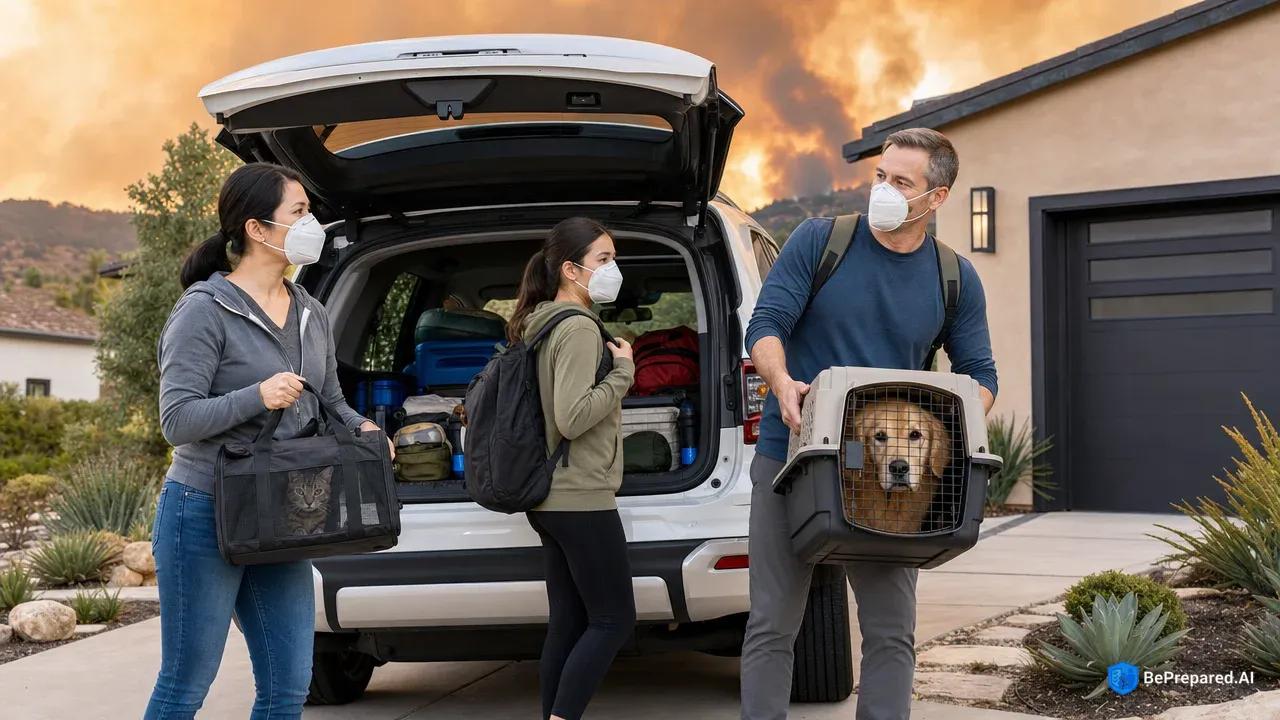
The first wisps of smoke appeared on the horizon just after dawn. Maria Rodriguez had maybe thirty minutes—the emergency alert said evacuate immediately. She grabbed her go-bag, her phone, her documents. Then she turned to find her two cats, Luna and Shadow, already hiding under the bed, sensing danger in the air. Without their carriers ready and accessible, those precious minutes would have evaporated into a frantic search that could have cost them everything.
Wildfire evacuations strip away the luxury of time. Unlike hurricanes that give days of warning, wildfires can shift direction in minutes, driven by unpredictable winds and terrain. In these critical moments, your pet carrier transforms from a simple transport tool into a genuine lifeline. The difference between a successful evacuation and a heartbreaking decision to leave pets behind often comes down to having the right carrier, properly sized, and immediately accessible.
The stress factors affecting pets during wildfire evacuations are profound and often underestimated. Smoke irritates their sensitive respiratory systems. The smell of burning vegetation triggers their flight instincts. The chaos of panicked humans rushing around amplifies their anxiety exponentially. According to FEMA, pets must be secured in appropriate carriers to prevent escape due to stress and smoke during wildfire evacuations . A frightened cat or dog can bolt from your arms in seconds, disappearing into smoke-filled neighborhoods where finding them becomes impossible.
Proper carriers serve multiple critical functions beyond simple containment. They protect pets from smoke inhalation by creating a semi-controlled environment. They prevent injury during the rapid loading of vehicles and the potentially rough terrain of evacuation routes. They provide a familiar, den-like space that can reduce anxiety for pets trained to associate their carrier with safety rather than just vet visits. Most importantly, they ensure that when seconds count, you can secure your pet and move without hesitation.
Understanding carrier types and sizing isn't just about pet comfort—it's about ensuring your entire household can evacuate efficiently when wildfire threatens. The wrong carrier creates delays, increases stress, and can fail during transport, turning an already dangerous situation into a catastrophe.
- Protection & Durability
- Hard-sided carriers offer superior impact resistance and structural integrity, while soft-sided carriers provide basic protection with lightweight flexibility
- Weight & Portability
- Soft-sided carriers are significantly lighter and more comfortable for extended carrying, while hard-sided carriers add substantial weight but offer rolling options
- Storage & Space Efficiency
- Soft-sided carriers can compress and fold for compact storage, while hard-sided carriers maintain fixed dimensions requiring dedicated storage space
- Travel Compliance
- Hard-sided carriers meet strict airline cargo requirements and crash-test standards, while soft-sided carriers are ideal for in-cabin travel with flexible sizing
- Cost & Maintenance
- Soft-sided carriers offer lower upfront costs with machine-washable fabrics, while hard-sided carriers require higher investment but provide long-term durability
Hard-Sided vs Soft-Sided Carriers: Which Type Fits Your Evacuation Plan
The carrier debate among pet owners typically centers on convenience and aesthetics during normal times. Wildfire evacuation demands a different calculus entirely. Both hard-sided and soft-sided carriers have distinct advantages, but their performance under extreme conditions reveals critical differences that could affect your pet's survival.
Hard-sided carriers provide superior protection during chaotic evacuations . Picture the scene: you're loading your vehicle in near-darkness, smoke reducing visibility, ash falling like snow. You're moving fast, perhaps too fast, and the carrier bumps against the car door frame or gets stacked beneath other emergency supplies. A hard-sided carrier maintains its structural integrity, protecting your pet from crushing forces and impacts. The rigid construction also prevents collapse if other items shift during transport on rough evacuation routes—a real concern when you're navigating debris-strewn roads or unpaved fire access routes.
These carriers meet airline-approved IATA standards for maximum safety . The door mechanisms on quality hard-sided carriers feature multiple locking points that won't spring open if the carrier is dropped or jostled. During wildfire evacuations, when you might need to set the carrier down quickly to open gates or move obstacles, this security is invaluable. Hard-sided carriers also offer protection from embers—those wind-borne burning fragments that can travel miles ahead of the main fire front. While no carrier is completely fireproof, hard plastic provides a barrier that soft fabric simply cannot match.
The ventilation design of hard-sided carriers typically features multiple sides with ventilation slots or holes, creating cross-flow that helps filter some smoke particles while maintaining airflow. The rigid structure ensures these ventilation openings remain unobstructed even when carriers are stacked or positioned against vehicle seats.
Pros of Hard-Sided Carriers:
- Superior structural protection during impacts and rough handling
- Better protection from embers and heat exposure
- Secure locking mechanisms that resist stress-induced failures
- Maintained ventilation even when stacked or compressed
- Long-term durability spanning multiple years of use
Cons of Hard-Sided Carriers:
- Heavier weight complicates carrying for extended distances
- Bulkier storage requirements in space-limited homes
- Less flexible ventilation compared to mesh designs
- Higher initial purchase cost in most cases
Soft-sided carriers offer better ventilation but less structural protection . The mesh panels that dominate most soft-sided designs provide maximum airflow, which becomes critical during extended evacuations in hot conditions. If you're stuck in evacuation traffic for hours, that enhanced ventilation can help prevent dangerous overheating.
The collapsible nature of soft-sided carriers solves a significant storage challenge. In homes where space is limited, the ability to fold a carrier flat and store it in a closet or under a bed makes the difference between having it accessible and having it buried in the garage where it's useless during rapid evacuation. They're also significantly lighter, which matters when you're carrying multiple carriers or dealing with mobility limitations.
Pros of Soft-Sided Carriers:
- Maximum airflow through extensive mesh panels
- Lightweight construction eases carrying burden
- Collapsible design minimizes storage space requirements
- Lower purchase price for budget-conscious households
- Easier to fit into tight vehicle spaces
Cons of Soft-Sided Carriers:
- Vulnerable to claw damage from panicked pets
- Minimal protection from embers or heat
- Can be crushed if other items shift during transport
- Zipper failures possible under stress conditions
- Shorter lifespan requiring more frequent replacement
For wildfire-prone regions, many emergency preparedness experts recommend hard-sided carriers as the primary choice, with soft-sided carriers serving as backup options for specific situations like extended shelter stays where the pet is under direct supervision. The cost difference is often minimal when considering longevity—a quality hard-sided carrier can last a decade or more with proper care, while soft-sided carriers typically need replacement every few years with regular use.
Size Requirements: Ensuring Comfort and Safety During Transport
Walking into a pet store and grabbing any carrier that looks about right is a gamble that could have serious consequences during a wildfire evacuation. Undersized carriers increase stress and can cause injury during emergency transport . Understanding precise sizing requirements isn't just about following guidelines—it's about ensuring your pet can survive hours of confinement without physical or psychological harm.
FEMA and major animal welfare organizations agree on the fundamental sizing principle: pet carriers should be large enough for your pet to stand, turn around, and lie down comfortably . This isn't about luxury—it's about basic physiology and safety. A pet that cannot stand fully upright experiences muscle cramping and circulation problems within an hour. A pet that cannot turn around becomes increasingly panicked as confinement continues. A pet forced into a hunched position for extended periods can develop respiratory difficulties, especially problematic when smoke exposure is already compromising breathing.
Carriers should be at least 1.5 times the length of your pet from nose to tail base . This measurement provides adequate space without excessive room that could allow the pet to be thrown around during sudden stops or rough roads. The measurement process requires precision, not guesswork.
For dogs, measure from the tip of the nose to the base of the tail (not including the tail itself) for length. For height, measure from the top of the head or ears (whichever is taller) to the ground while the dog is standing naturally. For width, measure the widest part of the dog's shoulders. This formula ensures adequate space for the animal to move naturally within the confined space.
Cats require similar careful measurement, though their flexibility means they can tolerate slightly more compact spaces than dogs of equivalent weight. Measure length from nose to base of tail, height from floor to top of head while sitting naturally (cats rarely stand at full height when confined), and width at the widest point of the body. For cats and small dogs, use a sturdy carrier that can be carried by one person .
Breed-specific considerations add complexity but are essential for safety. Brachycephalic breeds—dogs like Bulldogs, Pugs, and Boston Terriers, or cats like Persians and Himalayans—have compromised respiratory systems that require larger carriers with enhanced ventilation. These breeds benefit from carriers with more interior space because their breathing difficulties intensify under stress and in warm conditions. During wildfire evacuations, when smoke and heat compound respiratory challenges, the extra space becomes critical for survival.
Long-bodied breeds like Dachshunds and Basset Hounds need carriers that accommodate their extended spine without forcing them to curl excessively. Tall, lean breeds like Greyhounds and Whippets need extra height even though their body mass might suggest a smaller carrier. Giant breeds present special challenges—a Great Dane or Mastiff requires carriers that many vehicles simply cannot accommodate, necessitating alternative transport plans like truck beds with secured crates or specialized emergency transport arrangements.
The growth factor matters for households with young pets. A six-month-old Labrador puppy will double in size over the next six months. Buying a carrier sized for current dimensions means replacing it soon, but buying for adult size means the puppy slides around dangerously in an oversized carrier during the critical months when wildfires are most likely. The practical solution involves either purchasing two carriers—one current-sized and one adult-sized—or selecting an adjustable carrier with divider panels that can be repositioned as the pet grows.
Weight limits deserve attention beyond just size dimensions. Carriers rated for pets up to 25 pounds are structurally different from those rated for 50-pound pets, even if the interior dimensions seem similar. The handle reinforcement, door hinge strength, and base stability all vary by weight rating. Exceeding the manufacturer's weight limit risks catastrophic failure—handles tearing off, doors springing open, or bases cracking—during the worst possible moment of an evacuation.
Multi-pet households sometimes consider housing multiple small pets in one large carrier to reduce the number of items to transport. This approach is dangerous during evacuations. Pets confined together under extreme stress often fight, causing injuries that complicate an already difficult situation. Multi-pet households require one carrier per animal for safe evacuation .
- Essential Ventilation Requirements
- Minimum airflow specifications, vent placement patterns, and cross-ventilation design principles for optimal air circulation
- Temperature Monitoring Guidelines
- Safe temperature ranges, measurement locations, and environmental factors that affect carrier internal climate
- Early Overheating Warning Signs
- Progressive symptoms in pets including behavioral changes, physical indicators, and breathing pattern alterations
- Critical Distress Symptoms
- Emergency-level indicators requiring immediate intervention, including severe panting, lethargy, and heat stroke signs
- Preventive Design Features
- Carrier modifications and accessories that enhance ventilation, including fan systems, reflective materials, and shade options
Ventilation and Overheating Prevention: Critical for Wildfire Evacuations
Wildfire evacuations present a deadly convergence of heat, smoke, and stress that can turn a pet carrier from a safety device into a death trap if ventilation is inadequate. Proper ventilation prevents overheating during transport , and the added burden of smoke inhalation makes adequate airflow even more critical.
Understanding Ventilation Requirements During Smoke Exposure:
Cross-flow ventilation design matters during wildfire evacuations. Carriers need ventilation openings on at least three sides to create airflow that helps dilute smoke concentration inside the carrier. Single-sided ventilation creates a pocket of stagnant air where smoke accumulates to dangerous levels.
The ventilation openings must balance competing needs—they should be small enough to prevent ember entry but large enough for airflow. Smaller openings help protect against wind-borne burning fragments that can travel miles ahead of the main fire front, while adequate opening size ensures your pet receives sufficient fresh air even in smoky conditions.
Position carriers thoughtfully in vehicles. Place them near air conditioning vents when possible, but never directly in the airflow stream, which can be too intense and cold. Angle carriers so ventilation openings face away from direct sunlight streaming through windows.
Temperature Regulation in Vehicles:
Vehicle climate control alone doesn't guarantee pet safety. Even with air conditioning running, carriers positioned poorly can become significantly hotter than the ambient vehicle temperature. The plastic or fabric absorbs heat, radiating it inward. Use sunshades or position carriers in shaded areas of the vehicle.
The rear cargo area of SUVs, the floor behind front seats, and areas near the rear window often trap heat. The safest positions are on rear seats with seatbelt securing the carrier, where cabin airflow is strongest and you can monitor your pet more easily.
Wildfire evacuations often involve hours-long traffic jams. Check your pet every 15-20 minutes for signs of distress. Excessive panting, drooling, lethargy, or unusual quietness indicate overheating requiring immediate intervention.
Air Filtration Considerations:
The towel moisture technique can help during heavy smoke exposure. Lightly dampening (not soaking) a thin towel and draping it over one side of the carrier creates evaporative cooling and helps filter larger smoke particles. Replace every 30-45 minutes as it dries or becomes saturated with ash.
Some pet owners modify carriers by attaching small battery-powered fans near ventilation openings. While not necessary for short evacuations, this adaptation can help during extended transport through heavy smoke.
Avoid covering too much of the carrier. The instinct to protect pets from smoke by covering the carrier with blankets is dangerous. This eliminates ventilation and causes rapid overheating. Balance smoke protection with the critical need for airflow.
Recognizing and Responding to Overheating Signs:
Excessive panting with bright red tongue and gums indicates early stages of heat stress. Increase ventilation immediately, offer water if safely possible, and use damp cloths on the carrier exterior to promote cooling through evaporation.
Drooling or foaming at the mouth suggests heat stress is advancing. Pull over safely when possible, move the carrier to shade, and use cool (not cold) water on paw pads and groin area through ventilation openings.
Lethargy or unresponsiveness signals a veterinary emergency. Seek emergency veterinary care immediately while continuing cooling measures. Time is critical when heat stroke occurs.
Vomiting or diarrhea in the carrier indicates severe distress beyond the obvious cleanup issues. The pet needs immediate cooling and veterinary attention as soon as you reach safety.
The combination of wildfire heat and vehicle confinement creates conditions that can overwhelm even healthy pets. Active monitoring and adjustment throughout the evacuation aren't optional—they demand constant vigilance until you reach safety.
Carrier Accessibility and Storage: Ready for Rapid Deployment
The most expensive, perfectly sized carrier is worthless if you can't reach it in the two minutes you have before evacuation becomes impossible. Pet evacuation carriers should be stored in easily accessible locations for quick wildfire evacuations . Emergency preparedness experts emphasize that deployment speed often determines whether pets evacuate with their families or get left behind.
Step 1: Identify Your Primary Evacuation Route and Exit Points
Walk through your home and identify which door you'll most likely use during different wildfire approach scenarios. If fire typically threatens from the east, your western exit becomes primary. Your carrier storage should be positioned along the path from where your pet typically stays to that primary exit. This isn't about convenience during normal times—it's about creating muscle memory for crisis moments when cognitive function narrows under stress.
Step 2: Designate Primary Storage Location
The ideal carrier storage location meets three criteria: accessible within seconds from the pet's typical location, visible enough that you won't forget it in panic, and protected from becoming blocked by daily household items. For most homes, this means a dedicated spot in the main living area—beside the coat closet, in a mudroom, or in a garage entry area. Avoid attics, basements, or spare bedrooms that require navigating multiple rooms or stairs.
Step 3: Prepare the Carrier for Instant Deployment
Hard-sided carriers should be fully assembled with all door pins in place and latches checked monthly for function. Store them with doors open and a familiar-scented blanket or worn t-shirt inside—this reduces the time needed to coax frightened pets inside. Soft-sided carriers that collapse should be stored in their deployed state during wildfire season, even though this takes more space. The time needed to unfold and assemble a collapsed carrier could be the difference between evacuating with your pet or without them.
Step 4: Create a Carrier Staging System
If you have a garage, designate one section as your evacuation staging area. Carriers go here first, alongside go-bags and important documents. Mark the floor with tape to show exactly where each carrier belongs. This visual system helps other household members or emergency responders locate carriers if you're not home when evacuation orders come. Label each carrier with the pet's name, your phone number, and any critical medical information using permanent marker or laminated tags.
Step 5: Establish Multiple Exit Route Plans
Wildfire can block your primary evacuation route in minutes. Identify at least two alternative exits and position carriers accordingly. Some households with extensive resources keep duplicate carriers at different locations in the home. For most families, the practical solution involves identifying which carrier you'll grab first (the pet most difficult to catch or most medically vulnerable) and planning the sequence for collecting others.
Step 6: Practice Deployment Drills
Practice getting your pets into carriers regularly so they're comfortable during actual emergencies . Once monthly during wildfire season, practice your carrier deployment. Time yourself from the moment you decide to evacuate until all pets are secured in carriers and positioned by your exit door. Most people discover their first attempt takes three to four times longer than expected. Repeated practice cuts this time dramatically and reveals problems with your system—carriers that don't fit through doorways, pets that hide in inaccessible locations, or staging areas that don't work as planned.
The assembly time for collapsible carriers deserves special attention. Manufacturers claim quick setup times, but these assume calm conditions, good lighting, and familiarity with the mechanism. In smoke-filled rooms with adrenaline spiking, that time extends considerably. If you choose collapsible carriers for space reasons, practice assembly in low-light conditions to simulate realistic scenarios. If you can't consistently deploy the carrier quickly without looking, choose a different storage solution or a different carrier type.
Multi-Pet Households: Coordinating Multiple Carriers
Living with multiple pets multiplies every aspect of evacuation planning. The logistics shift from "grab the carrier and go" to orchestrating a complex operation where timing, sequence, and coordination determine success or failure. Multi-pet households require one carrier per animal for safe evacuation —there are no shortcuts that don't risk injury or loss.
The first challenge hits before you even purchase carriers: how many do you actually need? The obvious answer seems straightforward—one per pet. But practical considerations add complexity. If you have five cats, do you need five carriers accessible simultaneously? The answer depends on your specific situation, but most emergency preparedness experts recommend having at least 75% of your total carrier needs in primary staging areas, with the remainder in secondary locations or vehicles.
Matching carrier sizes can simplify storage and transport logistics, but this recommendation requires nuance in multi-pet households. If you have three cats of similar size, three identical carriers stack neatly, fit predictably in your vehicle, and simplify replacement if one becomes damaged. But if you have a Great Dane, a Corgi, and two cats, uniform sizing isn't possible. The strategy then shifts to modular sizing—selecting carriers whose dimensions work together efficiently, allowing smart use of vehicle space without wasted gaps.
The transport logistics in multi-pet households often prove more challenging than the carriers themselves. A sedan might accommodate two medium carriers on the back seat, but where do the third and fourth go? The trunk often seems like the solution, but ventilation and temperature control become serious concerns, especially during wildfire evacuations when you're driving through smoke and heat. SUVs and minivans offer more flexibility, but even these have limits. Map out your vehicle space before wildfire season, using the actual carriers to test different configurations. Discover now that five carriers won't fit, not when you're in the driveway with smoke approaching.
The sequence of pet collection matters more than most people realize. Start with the most difficult pet to catch—usually cats, especially those who hide when stressed. If you chase the easy-to-catch dog first, your movements and stress signals alert the cats to danger, sending them into hiding spots you'll never reach in time. Create a collection sequence list and post it near your carrier storage. Under stress, you'll forget your own plan without a visual reminder.
Stress reduction through familiar scents provides a significant advantage in multi-pet households. Pets take comfort from each other's presence, even when individually confined. Store carriers near each other so they absorb shared scent. During evacuations, position carriers in the vehicle where pets can see or smell each other. This proximity reduces vocalization and anxiety-driven behaviors that can distract drivers navigating dangerous evacuation routes.
The question of who loads which carrier matters in households with multiple adults. Assign specific pets to specific people. This prevents the dangerous "I thought you had the cat" scenario that has resulted in pets being left behind in real emergencies. Practice your assignments until they become automatic. If you have children old enough to help, assign them roles too—even if it's just opening doors or carrying supplies so adults can focus on securing pets in carriers.
Food and water considerations multiply with each pet. While short evacuations might not require feeding, extended situations do. Label each carrier with the pet's feeding schedule and any dietary restrictions. Store a three-day supply of food for each pet in a clearly labeled container in your evacuation staging area. Don't assume you'll remember that Fluffy needs grain-free food or that Max requires medication with meals—write it down and attach it to the carrier.
The financial investment in multiple carriers can seem daunting. Quality carriers range from $40 to $150 each, meaning a four-pet household faces $160 to $600 in carrier costs alone. But consider the alternative: leaving pets behind because you couldn't transport them safely. Most multi-pet households find that purchasing one or two carriers per month spreads the cost manageably while building their evacuation capability before wildfire season peaks.
Some multi-pet households maintain a carrier rotation system. Periodically, carriers come out for positive experiences—treats inside, short pleasant car rides, or comfortable napping spots. This conditioning means pets don't associate carriers exclusively with vet visits or stress. When evacuation comes, pets trained this way enter carriers more readily, saving precious minutes. The rotation also ensures you regularly inspect carriers for damage, test latches and hinges, and confirm that growing pets still fit properly.
- Size & Weight Specifications
- Measure your pet and compare to carrier dimensions, weight limits, and airline regulations to ensure proper fit and compliance
- Construction & Safety Features
- Evaluate materials, ventilation systems, locking mechanisms, and crash-test ratings for maximum protection during transport
- Accessibility & Handling
- Assess ease of loading/unloading, carrying options, visibility windows, and access points for stress-free pet management
- Storage & Portability
- Consider collapsible design, storage space requirements, and weight for long-term emergency preparedness planning
- Budget & Value Analysis
- Compare costs against features, durability ratings, warranty coverage, and long-term investment value for your specific needs
Making Your Final Decision: Carrier Selection Checklist
After absorbing information about carrier types, sizing, ventilation, and logistics, you face the actual decision: which specific carrier do you purchase? This choice deserves careful consideration because the right carrier serves you through multiple fire seasons, potentially multiple evacuations, and countless drills and preparations.
Budget vs. Safety Features:
Don't compromise on IATA-approved construction, secure latching mechanisms, and adequate ventilation. These are non-negotiable features that protect your pet's life during the chaos of wildfire evacuation.
Premium features worth considering include carrying handles with comfort grips, which matter when you're carrying a 40-pound dog in a carrier for any distance. Top-loading doors provide easier pet loading when animals resist. Wheels on larger carriers can be invaluable for people with mobility limitations or when navigating longer distances to vehicles.
Features you can skip include decorative elements, designer fabrics, and aesthetic upgrades that don't contribute to evacuation success. Save money here and invest in functional features instead.
Calculate long-term value rather than just initial price. A carrier that lasts ten years with proper care costs less annually than a cheaper option that fails after two years and requires replacement.
Specific Breed Requirements:
Brachycephalic breeds benefit from carriers with maximum ventilation and extra interior space. The enclosed feeling of carriers with solid sides rather than all-mesh construction provides security for anxiety-prone breeds who find visual stimulation stressful.
Escape-artist breeds need double-latch mechanisms and reinforced door frames to prevent determined pets from forcing their way out during stressful evacuations. Senior pets benefit from carriers with front and top loading options to minimize the physical manipulation needed to get arthritic pets inside.
Local Evacuation Route Factors:
Consider your specific evacuation scenarios when selecting carriers. If your evacuation path includes unpaved roads, prioritize hard-sided carriers with reinforced bases that won't crack under stress. If safe zones are hours away, invest in carriers with better ventilation and consider models that accommodate water bottle attachments.
If you'll be in traffic for extended periods on urban evacuation routes, carriers that fit securely on seats with seatbelt anchors protect pets during sudden stops. If you have several potential evacuation paths, choose carriers versatile enough for all scenarios rather than optimizing for one specific route.
Maintenance and Replacement Planning:
Check latches, hinges, ventilation openings, and structural integrity monthly during wildfire season. Establish a regular cleaning routine that removes odors and debris without degrading materials. Harsh chemicals can weaken plastic and fabric over time, so use mild soap and water for most cleaning tasks.
Cracks in hard plastic, tears in mesh, bent door frames, or failing latches all signal immediate replacement needs. Don't wait for complete failure during an actual emergency. Quality manufacturers offer warranties ranging from one to five years. Factor warranty coverage into your purchase decision—it indicates manufacturer confidence in durability and provides protection for your investment.
Use our pet emergency kit checklist to organize carriers, supplies, documentation, and family evacuation needs for wildfire season.
The final decision comes down to matching carrier specifications with your unique situation—your specific pets, your vehicle capacity, your likely evacuation routes, and your budget. There's no single "best" carrier for everyone, but there is a best carrier for your circumstances. Take the time to measure accurately, research thoroughly, and test practically. Your pet's survival during wildfire evacuation depends on the quality of this decision made now, in calm conditions, when you have time to get it right.
Wildfire season returns every year. The carrier you choose today will serve you through multiple fire seasons, potentially multiple evacuations, and countless drills and preparations. Choose wisely, store strategically, and practice regularly. When smoke appears on the horizon and minutes count, you'll have the confidence that comes from thorough preparation and the right equipment, ready to deploy.