Why Pet-Friendly Shelters Matter During Hurricanes
Picture this: the hurricane warning has been issued, and you're frantically packing essentials into your car. Your dog watches you with anxious eyes, sensing something's wrong. Your cat has already hidden under the bed. As you grab your keys, a terrible thought crosses your mind—where can you go that will accept your pets?
This scenario plays out in thousands of homes every hurricane season, and the stakes couldn't be higher. When pet owners can't find shelter options for their animals, they face an impossible choice: leave their beloved companions behind or stay in a dangerous situation. Tragically, many people choose to ride out storms rather than abandon their pets, putting their own lives at risk. Do not leave pets behind because they may be injured, lost, or killed .
The good news is that help exists, thanks in large part to the PETS Act (Pets Evacuation and Transportation Standards Act). The PETS Act (Pets Evacuation and Transportation Standards Act) requires state and local emergency authorities to include pets and service animals in their disaster plans . This means communities must now consider pet-friendly options when establishing evacuation shelters. However, there's an important distinction to understand: while the PETS Act mandates planning for pets, individual shelters operated by organizations like the Red Cross cannot accept pets except service animals due to health regulations . This is why knowing your options before a hurricane threatens becomes absolutely critical for pet owners.
The path forward doesn't need to feel overwhelming. You can build a solid plan one simple step at a time, starting with understanding what options exist in your community. Let's break down everything you need to know into manageable pieces.
- 1. Pet-Friendly Hotels/Motels
- Book early - many hotels accept pets during emergencies but fill up quickly
- 2. Friends & Family Outside Storm Path
- Stay with trusted people in safe areas away from the hurricane's projected route
- 3. Official Pet-Friendly Shelters
- Government-run shelters that specifically accommodate pets and their owners
- 4. Veterinary Clinics/Boarding
- Some vet offices and pet boarding facilities offer emergency shelter services
- 5. Animal Rescue Organizations
- Local rescue groups may provide temporary foster care during disasters
- 6. Last Resort: Secure Indoor Space
- If evacuation isn't possible, choose the safest room in your home with supplies
Know Your Pet Shelter Options
When hurricane warnings sound, you'll need to move quickly. Understanding your shelter options beforehand transforms panic into purposeful action. Let's walk through your choices, starting with the most comprehensive solutions.
Pet-friendly evacuation shelters represent your best option if you need public assistance. These specially designated facilities can house you and your pets together, though animals typically stay in a separate area from human sleeping quarters. Some communities have established pet-friendly emergency shelters or have agreements with local animal shelters to house pets during disasters . Your local emergency management office maintains information about these locations, but remember that most public shelters do not allow pets inside due to health and safety concerns, except for service animals . Public shelters may not allow animals inside except service animals—pets usually stay in kennels or crates in designated pet areas .
Hotels and motels with pet-friendly policies offer more comfort and privacy than public shelters. Contact hotels and motels outside your immediate area to check policies on accepting pets . Some properties may adjust their policies during declared emergencies, making this option more accessible than you might expect. The challenge comes during evacuations when pet-friendly rooms can fill up quickly once a hurricane warning is issued. This option works best when you book accommodations early in the season or the moment a storm enters the Gulf.
Friends and family networks outside evacuation zones provide the most comfortable option for both you and your pets. Your animals stay in a familiar home environment with people they know, reducing stress for everyone. The key is having these conversations now, not when a major hurricane is bearing down on your community. Reach out to relatives or friends who live inland or in areas less vulnerable to hurricane impacts.
Boarding facilities and veterinary clinics sometimes open their doors during emergencies, offering safe shelter for animals even when they can't accommodate human family members. This option means separating from your pets temporarily, but it keeps them safe in facilities designed for animal care. Call your veterinarian now to ask about their emergency protocols and whether they accept animals during disasters.
Animal rescue organizations in your region often coordinate emergency fostering programs, matching pets with temporary caregivers during disasters. Organizations like local humane societies maintain lists of volunteers willing to shelter animals during evacuations. These groups understand the bond between pets and their owners, and they work hard to keep families together or reunite them quickly after the storm passes.
How to Find Pet-Friendly Evacuation Shelters
Finding pet-friendly shelters before you need them transforms a frantic search into a simple phone call. Let's walk through the specific steps that will build your knowledge base. Take these one at a time—you don't need to complete everything in one day.
Step 1: Start with your local emergency management office. Every county has an emergency management department responsible for disaster planning. Call them directly—not during an emergency, but on a quiet Tuesday afternoon when staff have time to provide detailed information. Ask specifically about pet-friendly shelter locations, their policies, and what documentation they require. Local emergency management offices maintain lists of pet-friendly shelters and update this information regularly . Write down the name of the person you speak with and the date, so you have a reference point for future calls.
Step 2: Navigate to your county and city government websites. Most municipalities now include pet evacuation information in their emergency preparedness sections. Look for pages titled "Hurricane Preparedness," "Emergency Management," or "Disaster Planning." Bookmark these pages on your phone and computer. Many counties post maps showing evacuation zones alongside lists of pet-friendly shelter locations. Download these maps and print copies—when cell service fails during disasters, that printed map becomes invaluable.
Step 3: Call 211 for comprehensive disaster assistance information. This free service connects you with local resources and can help you identify options in your area . The 211 system may provide information about pet-friendly shelter locations, and operators can often share more current details than websites. Save 211 in your phone contacts right now. During evacuations, 211 operators receive real-time updates about which shelters have opened and which still have capacity.
Step 4: Use the Red Cross shelter finder with awareness of its limitations. The American Red Cross operates a shelter finder tool on their website and mobile app . While Red Cross shelters themselves cannot accept pets except service animals due to health regulations, the finder tool can help you locate all open shelters in your area. Staff at those locations can direct you to nearby pet-friendly alternatives or provide information about where animals can be safely housed.
Step 5: Ask your veterinarian for local resources. Veterinary clinics often maintain networks of pet-friendly emergency resources. During your pet's next checkup, ask the vet or front desk staff about emergency shelter options they recommend. Many veterinary practices partner with boarding facilities or know which local shelters have good reputations for animal care during disasters. Your vet may also know about emergency fostering networks or temporary housing programs for pets.
Research Pet-Friendly Hotels and Motels
Let's talk about a common mistake many pet owners make. They assume they'll find a pet-friendly hotel somewhere along the evacuation route without advance planning. This approach can leave you driving for hours with stressed animals, only to discover that available rooms are scarce or already booked.
Don't let this happen to you. Many hotels maintain pet-friendly policies year-round, and understanding these options ahead of time gives you a significant advantage. However, pet-friendly accommodations can become limited during evacuations, sometimes filling up quickly once a hurricane warning is issued for a region. The solution lies in advance planning and early action.
Start your research now, during the quiet months before hurricane season. Create a list of pet-friendly hotels at various distances from your home: 50 miles, 100 miles, 150 miles, and 200 miles away. Call each property to confirm their pet policy, understand any weight restrictions (some hotels only accept small dogs), and ask about their procedures during emergencies. Get the names of the managers you speak with and note the date of your conversation.
When hurricane season arrives and a storm enters the Gulf or Atlantic, don't wait for a warning to be issued for your specific area. Consider booking a refundable reservation as soon as the storm becomes a potential threat to your region. Yes, you might cancel that reservation if the storm turns away. But that refundable deposit could mean the difference between a safe hotel room and scrambling for alternatives with frightened animals. Keep all confirmation numbers in both digital and written formats—when your phone dies, that paper confirmation might be your only proof of reservation.
Look for hotel chains that are known for accepting pets. Call properties directly rather than relying solely on website information, because policies can vary by location and may change during emergency situations. Ask specific questions: What is the pet fee? Is there a weight limit? How many pets can you bring? Do they have any restrictions on breeds or types of animals? Getting clear answers now prevents surprises later.
Consider booking a room for one night during the off-season just to test the arrangement. This trial run helps you understand how your pets handle hotel stays, what supplies you really need, and whether the property is truly pet-friendly in practice, not just in policy. You'll also become a known customer, which can help when you need to make emergency reservations during hurricane season.
- Family & Friends Network
- Connect with relatives and trusted friends who can temporarily care for your pets or provide transportation during evacuations
- Pet-Friendly Shelters
- Research and maintain a list of nearby shelters, hotels, and boarding facilities that accept pets during emergencies
- Veterinarian Contacts
- Keep your vet's contact info and identify backup veterinary clinics in evacuation areas for medical emergencies
- Neighbor Support System
- Build relationships with nearby pet owners to create mutual assistance agreements for emergency pet care
- Pet Rescue Organizations
- Connect with local animal rescue groups and pet fostering networks that activate during disasters
- Multiple Transportation Options
- Arrange backup transportation methods including pet carriers, friend's vehicles, or pet transport services
Build Your Pet Emergency Network
The strongest hurricane preparedness plan doesn't rely on a single option—it weaves together multiple safety nets that catch you if one option fails. Think of your pet emergency network as a web of connections, each strand adding strength to your overall security. Building this network might sound complicated, but you can start small and expand over time.
Start close to home by identifying friends and family members who live outside hurricane evacuation zones. Have honest conversations with them about sheltering together during emergencies. Maybe your sister lives 100 miles inland and has a fenced yard perfect for your dogs. Perhaps your college roommate moved to another state but would welcome you and your pets for a week if needed. These relationships require reciprocity—offer to help them during their regional emergencies, whether that's tornado season or winter storms. Having multiple options increases your chances of finding safe shelter for pets when disaster threatens.
Connect with other pet owners in your community to create mutual aid arrangements. Join local pet owner groups on social media platforms like Facebook or Nextdoor. These communities share real-time information during emergencies about which shelters have space, which evacuation routes remain clear, and which veterinary clinics still have power. More importantly, you can establish reciprocal arrangements with other pet owners—you help shelter their animals if they can't evacuate, and they do the same for you. This works especially well when you own different types of pets. Maybe you're comfortable caring for dogs but your neighbor has experience with cats or small animals.
Establish relationships with boarding facilities before you need them. Visit local kennels and boarding facilities during non-emergency times. Tour their facilities, meet the staff, and ask about their emergency protocols. Some facilities prioritize existing clients during disasters, so boarding your pet once or twice before hurricane season might secure you a spot when you need it most. Keep business cards from multiple facilities in your emergency contact list. Even if these facilities fill up during an evacuation, staff members often know about other options or can recommend alternatives.
Create backup plans for your backup plans. If your first choice is a pet-friendly hotel, your second might be staying with family, your third could be a boarding facility, and your fourth might be a pet-friendly evacuation shelter. This redundancy matters because disasters create unpredictable situations—roads flood, facilities reach capacity, and plans change rapidly. Having four or five options means you're never stuck without a solution.
Document your network in writing. Create a simple chart that lists each option, the contact information, any special requirements, and notes about capacity or limitations. Share this document with family members so everyone knows the full range of options available. Update it whenever circumstances change—a friend moves, a boarding facility closes, or you discover a new resource.
Create Your Pet Shelter Contact List
Information saves lives during disasters, but only if you can access it when you need it. A well-organized pet shelter contact list becomes your roadmap to safety when hurricane warnings arrive. Think of this list as your personal emergency directory—simple to create and invaluable when you need it.
Step 1: Organize contacts by priority and distance from your home. List your first-choice options at the top, followed by alternatives. Include distance from your home—during evacuations, you'll need to calculate drive times and fuel requirements quickly. For each contact, record the full name of the facility or person, complete address with zip code, primary phone number, and at least one alternate contact method. Note any special requirements like vaccination records, crate sizes, or advance reservation policies.
Step 2: Store information in multiple formats. Create a digital version in your phone's notes app, email a copy to yourself and family members, and print physical copies. Written contact lists remain accessible when phones lose power or cell service fails . Laminate your printed list or store it in a waterproof bag inside your emergency kit. This redundancy ensures you'll have access to critical information regardless of circumstances. Keep one copy in your car's glove compartment, another with your emergency supplies, and a third in your wallet or purse.
Step 3: Include details beyond basic contact information. Note which hotels have confirmed pet-friendly policies, which boarding facilities require advance deposits, and which friends have specific pet size limitations. Record any special instructions like "enter through back gate" or "call cell phone first, not office number." These details save precious time during stressful evacuations. Add notes about what each option offers—does the hotel have a grassy area for walking dogs? Does your friend's house have a secure fence? Is the boarding facility climate-controlled?
Step 4: Update your contact list annually before hurricane season begins. Businesses close, phone numbers change, and friends relocate. Every April or May, spend an hour calling each contact to verify information remains current. Annual updates ensure accuracy of shelter information when you need it most. Mark your calendar with a recurring reminder so this task doesn't slip through the cracks. This yearly check-in also keeps you connected with your network and reminds people that you might need their help during hurricane season.
Step 5: Share your complete list with all family members. If you're separated when a hurricane warning is issued, everyone needs access to the same information. Send copies to your spouse, adult children, and anyone else who might need to evacuate with your pets. Make sure everyone knows where the printed copies are stored at home. Consider sharing your list with a trusted friend or family member who lives out of state—they can serve as a central contact point if local communications become difficult during a disaster.
Add emergency numbers to your list beyond just shelter contacts. Include your veterinarian's office and emergency after-hours number, local animal control, nearby 24-hour veterinary emergency clinics, and your pet's microchip registration company. Having all pet-related emergency contacts in one place streamlines your response when every minute counts.
Test Your Plan Before Hurricane Season
You wouldn't wait until a hurricane warning to learn how to board up your windows, so why wait to test your pet evacuation plan? Practice transforms theoretical plans into practical knowledge. Testing your plan might feel unnecessary when the weather is calm, but these trial runs reveal problems you can fix now rather than discovering them during an actual emergency.
Call shelters to verify pet policies and current information. That pet-friendly shelter you researched last year might have changed policies or closed entirely. A quick phone call confirms your information remains accurate. Ask whether they've made any updates to their pet acceptance procedures, capacity limits, or required documentation. This conversation also reminds staff that community members are thinking ahead, which can encourage facilities to maintain their pet-friendly services.
Drive routes to potential shelter locations during good weather. You'll discover which roads flood easily, where construction might slow you down, and how long the journey actually takes with pets in the car. This reconnaissance helps you estimate fuel needs and identify rest stops along the way. Pay attention to gas stations, pet supply stores, and veterinary clinics along your route—you might need these resources during an actual evacuation. Note alternate routes in case your primary path becomes blocked or congested.
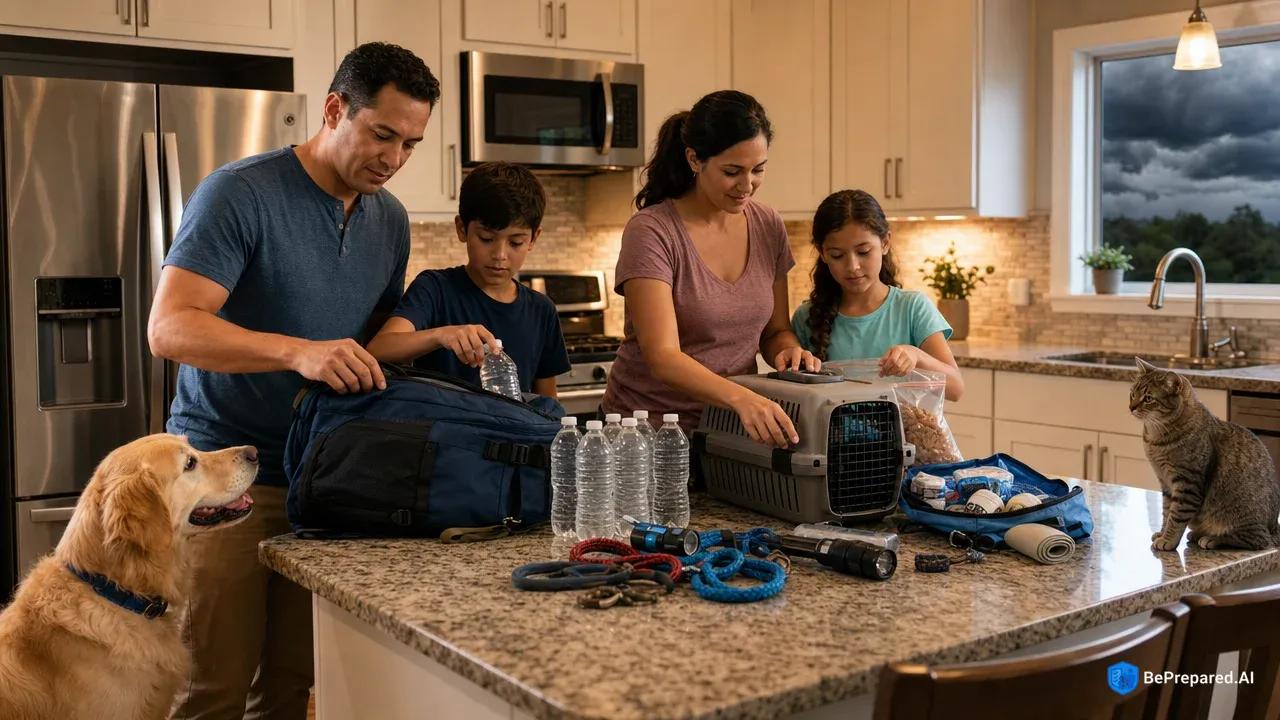
Pack and practice with your pet emergency kit. Gather your pets' supplies—food, water, medications, vaccination records, leashes, and carriers—and actually load them into your vehicle. You'll quickly discover what fits, what doesn't, and what you forgot. Practice runs reduce stress for both pets and owners during actual evacuations . Time yourself to see how long it takes to gather everything and load your car. This exercise often reveals that you need more time than expected, which helps you plan when to start evacuating once a warning is issued.
Discuss the plan with all family members. Everyone should know which family member is responsible for which pets, where supplies are stored, and what the evacuation triggers are. Walk through scenarios: What if the hurricane warning comes while you're at work? What if one family member is out of town? Who grabs the cat carrier? Who loads the dog food? Clear assignments prevent confusion and ensure nothing gets forgotten in the rush to leave.
Update your plan based on lessons learned. Maybe you discovered your cat's carrier won't fit in your packed car, or the drive to your sister's house takes longer than expected. Adjust your plan accordingly, because small problems identified during practice won't become big problems during real emergencies. Write down what worked well and what needs improvement. Share these insights with family members and update your written plan to reflect new information.
Consider doing a partial practice run where you actually drive to a hotel or friend's house with your pets, even if you don't stay overnight. This full-scale rehearsal shows you exactly what the experience will be like and helps your pets become more comfortable with car travel. Some animals get anxious during long drives, and discovering this during a practice run gives you time to talk with your vet about solutions like calming supplements or training exercises.
Taking Your First Step Today
Building a complete pet evacuation plan might seem like a big project, but you don't need to finish everything today. Start with just one action—maybe that's calling your local emergency management office, or perhaps it's having a conversation with a friend who lives inland. Each small step builds your confidence and moves you closer to being fully prepared.
Your pets depend on you to keep them safe when hurricanes threaten. The time you invest now in research, relationship-building, and planning will pay dividends in safety and peace of mind when the next storm threatens your community. You're not just preparing for a disaster—you're building a safety net that protects the animals who trust you completely.
Remember, the PETS Act changed how communities plan for disasters, but the law only works if you know how to access the resources it created. Local emergency management offices maintain lists of pet-friendly shelters and update this information regularly , but you need to reach out and get that information before you need it.
Start building your pet emergency contact list today. Your furry family members are counting on you to have a plan ready before the next hurricane warning. The good news is that thousands of pet owners have successfully evacuated with their animals, and you can too with the right preparation. Take it one step at a time, and before you know it, you'll have a solid plan that brings peace of mind throughout hurricane season.