Power Outage Survival Kit + Preparedness Checklist
A power outage lasting more than a few hours can cut off heat, cooling, refrigeration, and medical devices at once. This is the calm, complete power outage preparedness checklist we built for real families: check outages at your exact address, build a 72-hour survival kit matched to your season and your medical needs, and wire up alerts so you see the grid go down before your fridge does. No doom language, no prepper theater. Just the steps that matter, in the order that matters.
Updated
Many utilities publish a real-time outage map, but your electric, gas, and water service may come from different utilities, and each posts its own map on its own website. On the day you actually need this information, that is several tabs and logins.
BeAware aggregates utility outage feeds for your exact address into one view, alongside WEA alerts and FEMA risk data for your property. You see what is out, how long it has been out, and whether a restoration estimate has been issued, all without leaving one page.
Check outages at my addressBuild your power outage survival kit
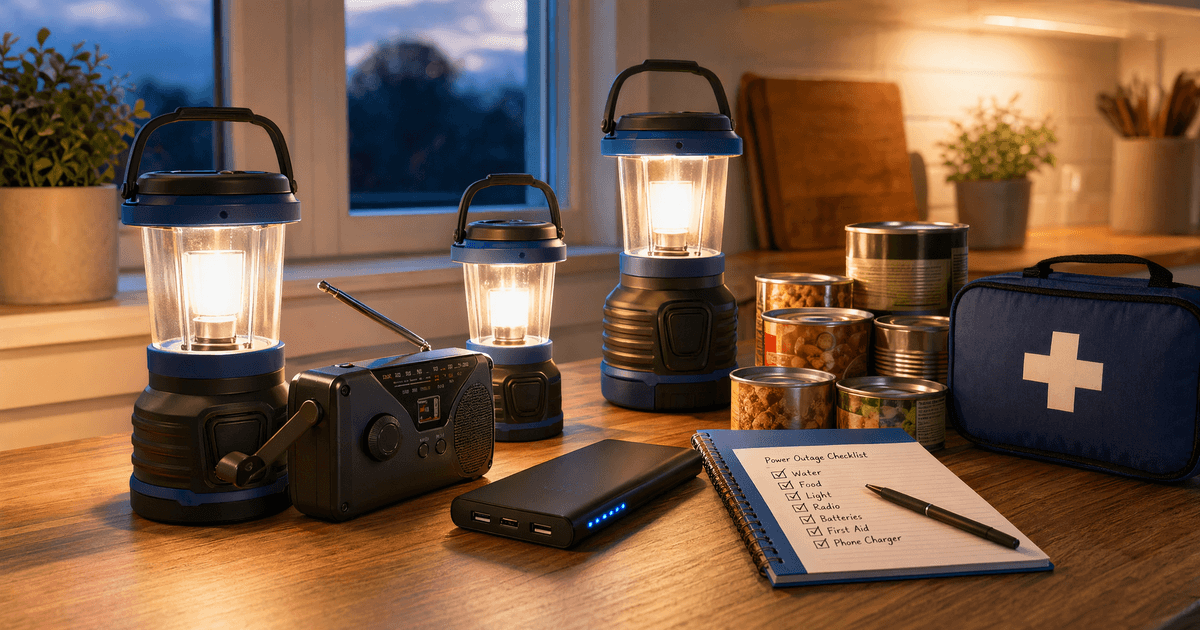
A power outage survival kit keeps your household self-sufficient for 72 hours, the planning window this guide uses. Tap each item as you gather it, or print the list; this device keeps track of what you have.
Power Outage Survival Kit Checklist
BePrepared Solutions · bepreparedsolutions.co/power-outage-preparedness
Check off each item as you go.
0 of 23 checked
Light (no candles)
Backup power
Food and the "keep the fridge closed" rule
Water
Medical and cold-chain prescriptions
Communication and alerts
Want the kit picked out for you, sized for your household, with the right lanterns and battery packs already chosen? BeEquipped curates power outage kits where every item is chosen for the outage length and season you are planning for.
A checklist tells you what to own; a plan says who does what when the lights go out - who checks on the neighbor with the oxygen concentrator, where the medical-device batteries live, which room the household consolidates into to conserve heat or cooling. BeReady turns this checklist into that per-household plan, with a printable sheet for every family member.
Build my household outage planWhat to do in a power outage: hour 1 through restoration
The first hour sets up everything after it, and the moment power returns can bring surges that damage appliances left plugged in. The steps in between are straightforward if you know them ahead of time.
First 5 minutes
Verify the outage is not just your home: check a breaker, look at a neighbor’s porch light. Report the outage to your utility by phone, text, or its outage page. Note the time. Enable phone battery saver mode now, not later.
First hour
Turn off major appliances that were running (dishwasher, oven, AC) so they do not all surge when power returns. Move the most perishable food into a pre-chilled cooler. Keep the fridge and freezer closed otherwise. Check on neighbors who rely on medical equipment or are elderly.
First 24 hours
Use your lights, not candles. Use your phone sparingly, not as a flashlight. If the outage is expected to last, follow the fridge rule: with the doors closed, food stays safe up to 4 hours in the fridge and 48 hours in a full freezer. Start non-electric temperature management for the season (layers in winter, shaded rooms and hydration in summer).
Day 2 to day 3
Discard refrigerated perishables (meat, poultry, seafood, milk, eggs, leftovers) that have been above 40°F for 4 hours or more. If conditions at home become too hot or too cold, the CDC’s advice is to seek shelter with friends or at a community shelter; check with local officials for open warming or cooling centers. Keep monitoring WEA and your utility’s restoration estimate.
When power returns
Plug appliances back in one at a time; Ready.gov notes that power may return with momentary surges or spikes that can cause damage. Check every refrigerator and freezer item individually: when in doubt, throw it out. Reset clocks, the WiFi router, and the modem. Document any damage from power surges for insurance.
Hot weather outage vs cold weather outage
Season changes the stakes as much as outage length does. A 24-hour outage in mild weather is an inconvenience. A 24-hour outage in a heat dome or a deep freeze is a medical emergency for vulnerable household members. Our extreme heat guide covers cooling a home without power and spotting heat illness.
Move vulnerable household members (infants, elderly, anyone with a chronic heart or lung condition) to the coolest room in the house or to a relative with power. Hydrate aggressively. Keep south-facing curtains closed during the day.
Take cool showers if water pressure allows. Do not rely solely on fans: the CDC notes that when temperatures are really hot, fans might provide some comfort but will not prevent heat-related illness. Identify your nearest cooling center in advance.
Close off unused rooms and concentrate the household in one space. Layer clothing rather than trying to heat the air. Insulate pipes in unheated areas, open sink cabinets so warmer air reaches the plumbing, and let faucets drip slowly to keep unheated pipes from freezing.
Never heat your home with a gas stove, charcoal grill, or camping stove. Know your nearest warming center and the route to it. A fireplace or wood stove is an emergency heat source only when it is properly ventilated.
If the cold-weather outage you are planning for comes from a winter storm, preparing for the storm itself - snow and ice loads, safe heating, frozen pipes, the car kit - is its own topic.
See the winter storm emergency kit and checklistDo I need a generator?
A well-stocked power outage kit is built to carry a household through 72 hours. A generator becomes worth the cost, complexity, and fuel storage in three specific cases:
- Someone in your household depends on medical equipment (CPAP, oxygen concentrator, home dialysis).
- You live in an area where multi-day outages are routine (rural, wildfire PSPS zones, extreme-weather corridors).
- You rely on a well pump for water, because no power means no water beyond your storage.
Safety non-negotiables for any generator:
- Never run a generator indoors, in a garage, or within 20 feet of any window, door, or vent. Carbon monoxide can cause sudden illness and death.
- Store fuel in approved containers outside the home, in a cool, ventilated area, well away from ignition sources.
- Plug appliances directly into the generator using heavy-duty outdoor-rated cords, or have an electrician install a transfer switch. Never back-feed through a wall outlet.
Power outage alerts for your address
Wireless Emergency Alerts (WEA) reach your phone during an outage as long as the local cell network is still running, and FEMA says they are not affected by network congestion. The National Weather Service sends its most critical warnings through WEA, including the hurricane, extreme wind, and snow squall warnings that can come before an outage.
You do not need to sign up for WEA, but alerts can be switched off in phone settings, so it is worth verifying:
- iPhone: Settings → Notifications → scroll to Government Alerts and enable every category.
- Android: Settings → Notifications → Wireless Emergency Alerts and enable every category.
WEA tells you severe weather is coming. Your utility tells you power is out. BeAware layers both on top of the FEMA risk data for your exact address, so you see a single coherent picture instead of three apps and a phone tree.
Outage duration and what it means
Outage length changes what you need to do. Use this table to calibrate your response as the hours tick by.
| Duration | Category | What to expect |
|---|---|---|
| Under 4 hours | Minor | Keep the fridge and freezer closed; a closed refrigerator keeps food cold for about four hours. Conserve phone battery. |
| 4 to 12 hours | Moderate | A closed fridge keeps food safe for up to 4 hours; after that, perishables that have been above 40°F for 4 hours or more should be discarded. Phone battery conservation matters. Begin temperature management in extreme weather. |
| 12 to 48 hours | Significant | Freezer contents at risk. Vulnerable members (elderly, infants, medical) may need to relocate in extreme heat or cold. Discard perishables. |
| 48 to 72 hours | Severe | Refrigerated perishables past the 4-hour window should already be discarded, and a full freezer reaches its 48-hour limit. Relocate household in extreme weather. Begin extended planning: food resupply, fuel, hotels. |
| Over 72 hours | Extended | Serious household disruption. A generator, a hotel, or staying with family becomes the realistic choice for many households. Medical and mobility needs dominate planning. |
Power outage preparedness FAQ
Sources
The safety guidance on this page follows these sources. For food safety and generator use, the CDC and FDA set the rules; if this page and theirs disagree, go by theirs.
- Power Outages — Ready.gov
Supports: the refrigerator and full-freezer timings — Ready.gov states "The refrigerator will keep food cold for about four hours. A full freezer will keep the temperature for about 48 hours" — the generator and carbon-monoxide guidance ("Use a generator, but ONLY outdoors and away from windows"; "Do not use a gas stove or oven to heat your home"), and the power-return step: "Turn off or disconnect appliances, equipment, or electronics. Power may return with momentary surges or spikes that can cause damage."
- Keep Food Safe After a Disaster or Emergency — Centers for Disease Control and Prevention
Supports: the food-safety windows on this page: "If the doors stay closed, food will stay safe up to: 4 hours in a refrigerator, 48 hours in a full freezer, 24 hours in a half-full freezer."
- What to Do to Protect Yourself During a Power Outage — Centers for Disease Control and Prevention
Supports: the no-candles rule ("Use battery-powered flashlights and lanterns, rather than candles, gas lanterns, or torches to minimize the risk of fire"), the too-hot-or-too-cold advice ("If conditions are too hot or too cold, seek shelter with friends or at a community shelter"), the fan warning ("While electric fans might provide some comfort, when temperatures are really hot, they won’t prevent heat-related illness"), the power-line rules ("Never touch a fallen power line. Do not drive through standing water if downed power lines are in the water"), and the vehicle rule ("Never leave the motor running in a vehicle parked in an enclosed or partially enclosed space, such as a garage").
- Carbon Monoxide Poisoning Basics — Centers for Disease Control and Prevention
Supports: the gas-stove answer: CO "is an odorless, colorless gas that kills without warning"; "Each year, more than 400 Americans die from unintentional CO poisoning not linked to fires"; "Never heat your house with a gas oven."
- Wireless Emergency Alerts — FEMA
Supports: the WEA explainer: "WEAs are not affected by network congestion" and "Wireless Emergency Alerts are not subscription based".
- Weather warnings on the go! (Wireless Emergency Alerts) — National Weather Service
Supports: which NWS warnings go out as WEA: "Warnings for Tsunamis, Tornado, Severe Thunderstorm (only when the damage threat is destructive), Flash Flood (only when the damage threat is considerable or catastrophic), Hurricane, Typhoon, Storm Surge, Extreme Wind, Dust Storm and Snow Squall."
- Food and Water Safety During Power Outages and Floods — U.S. Food and Drug Administration
Supports: the discard rule: "Discard any refrigerated perishable food (such as meat, poultry, seafood, milk, eggs, or leftovers) that has been at refrigerator temperatures above 40°F for 4 hours or more."
Deep dives from our article library
Each of these goes deeper on a single part of power-outage preparedness than a single page allows.
For longer outages, read the grid-down and long-outage guides, and get outage alerts for your address.
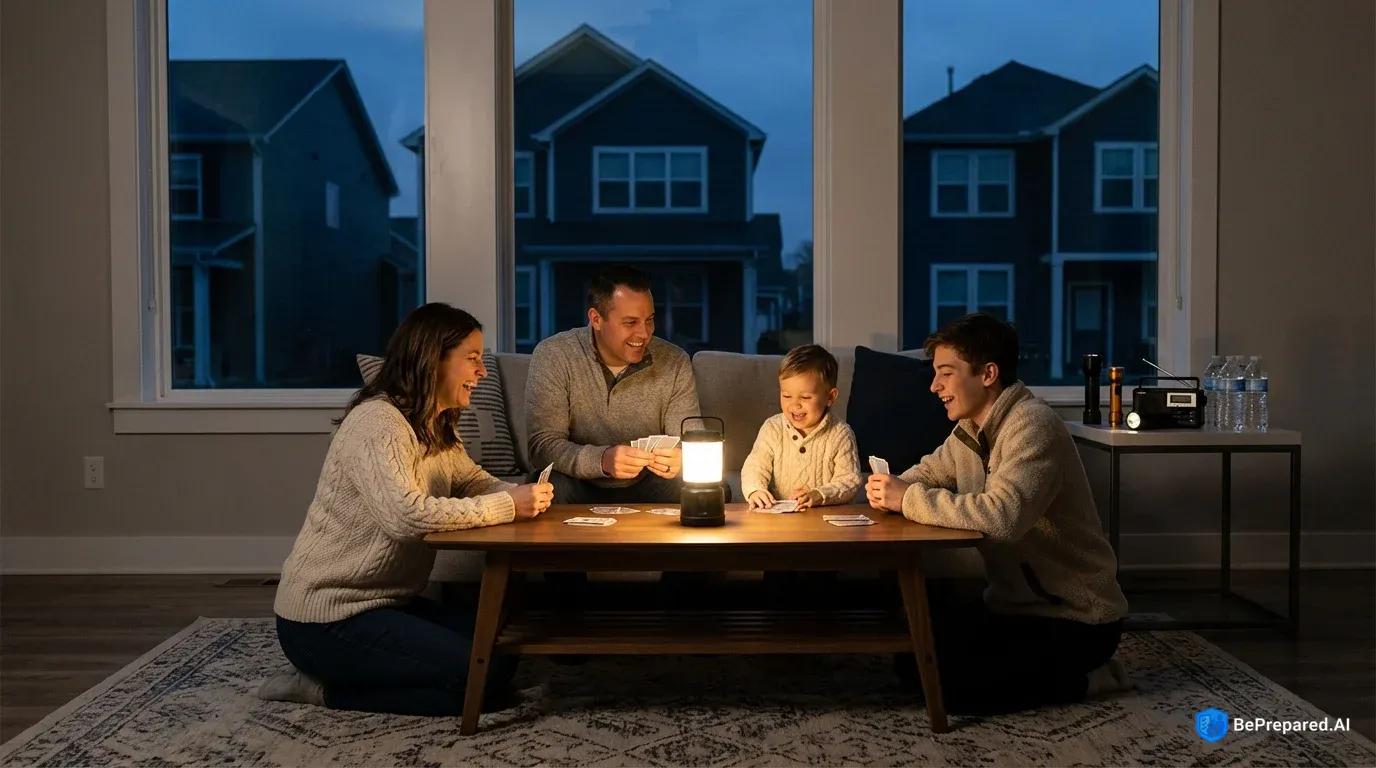
Complete Power Outage Survival Guide
Pillar article for this topic. Goes deeper on every section on this page, with concrete household-size math and a seasonal preparation calendar.
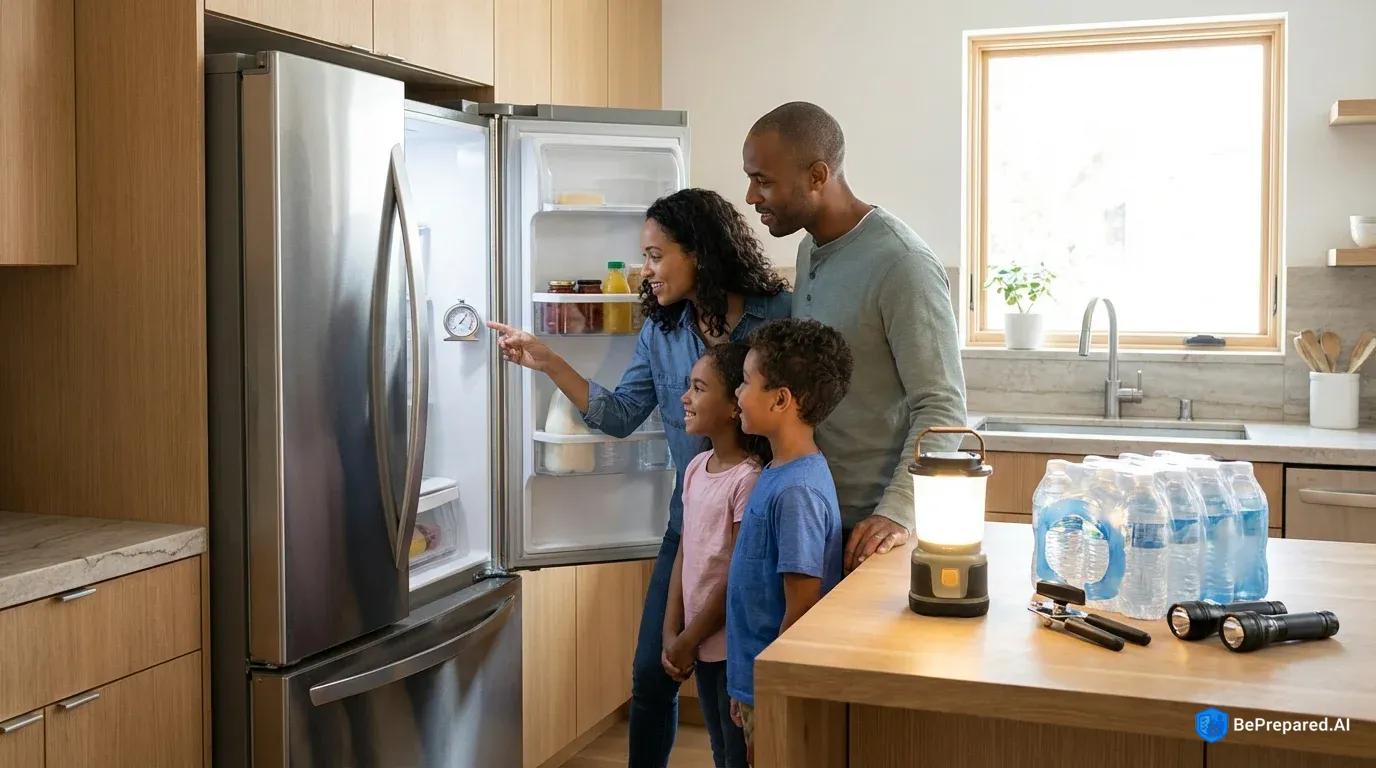
Food Storage During Power Outages
The 4-hour fridge window and 48-hour freezer window explained item by item. Exactly which foods to save first, which to discard immediately, and which survive longer than you think.
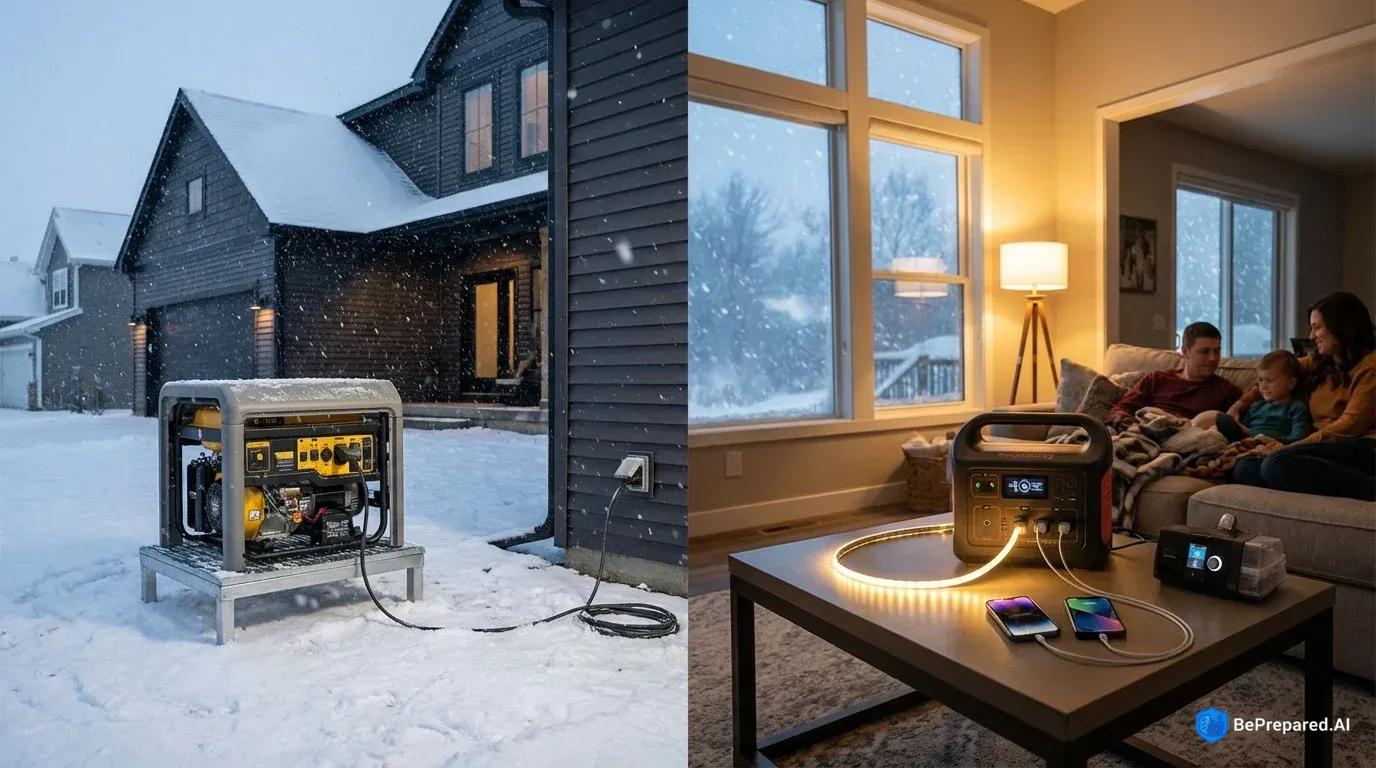
Generator vs. Power Station: Which Is Best for Winter Outages?
Real capacity math, runtime data, and cold-weather performance metrics. The "do I need a generator?" section above, with the actual spreadsheet.
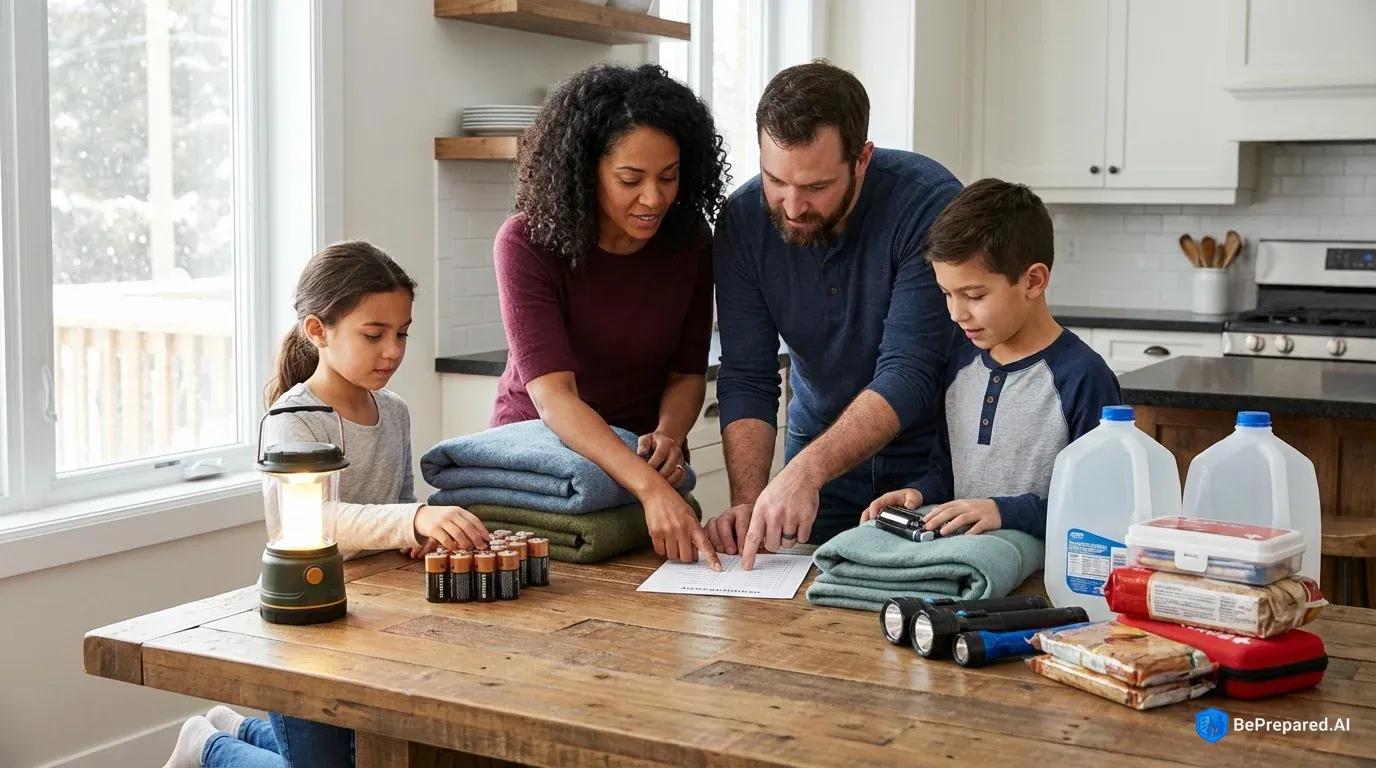
Winter Power Outage Survival: Essential Items Checklist
Winter-specific gear beyond the generic checklist above, item by item.
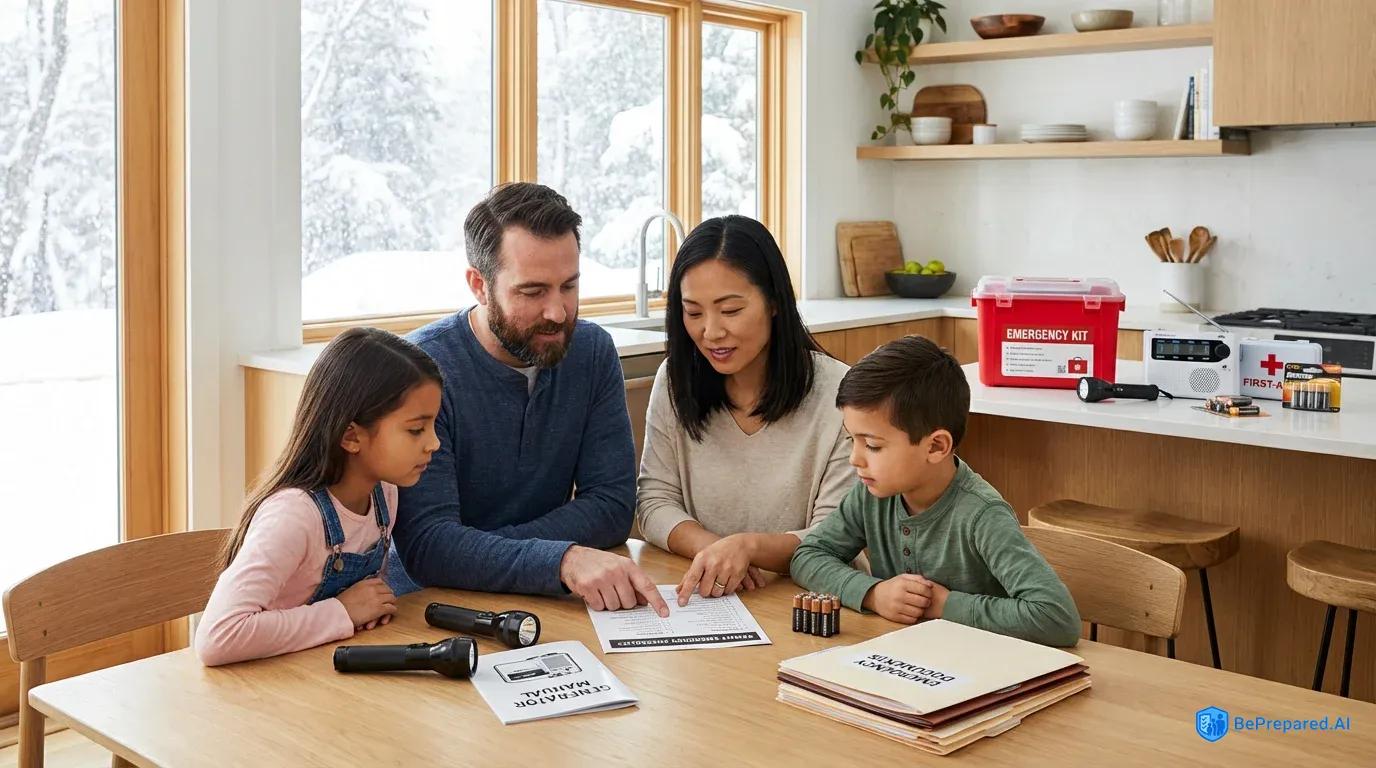
How to Create a Backup Power Plan for Winter Storms
How to plan backup power for a multi-day winter outage: prioritization, sequencing, and cold-weather fuel storage.

Non-Electric Alternatives for Daily Life
Can openers, hand tools, French presses, analog clocks. The manual substitutions that keep a household functional when the grid does not.
Preparedness that goes beyond the next outage
Outages usually arrive alongside other risks at your address. BeAware alerts you to utility outages in your area, BeReady plans the first 72 hours without power, BeEquipped ships a power outage kit, and BeAdvised gives you a preparedness expert to plan with.
See all BePrepared solutionsOr try it first: BeAware and BeReady free for 7 days, no credit card.Start my free 7-day trial