Creating a Safe Space for Earthquake Conversations
Picture this: You're sitting at the dinner table, and your seven-year-old asks, "Mom, what happens if an earthquake comes while I'm at school?" Your heart skips a beat. How do you answer honestly without creating nightmares? The truth is, talking to your kids about earthquakes doesn't have to be scary—for them or for you.
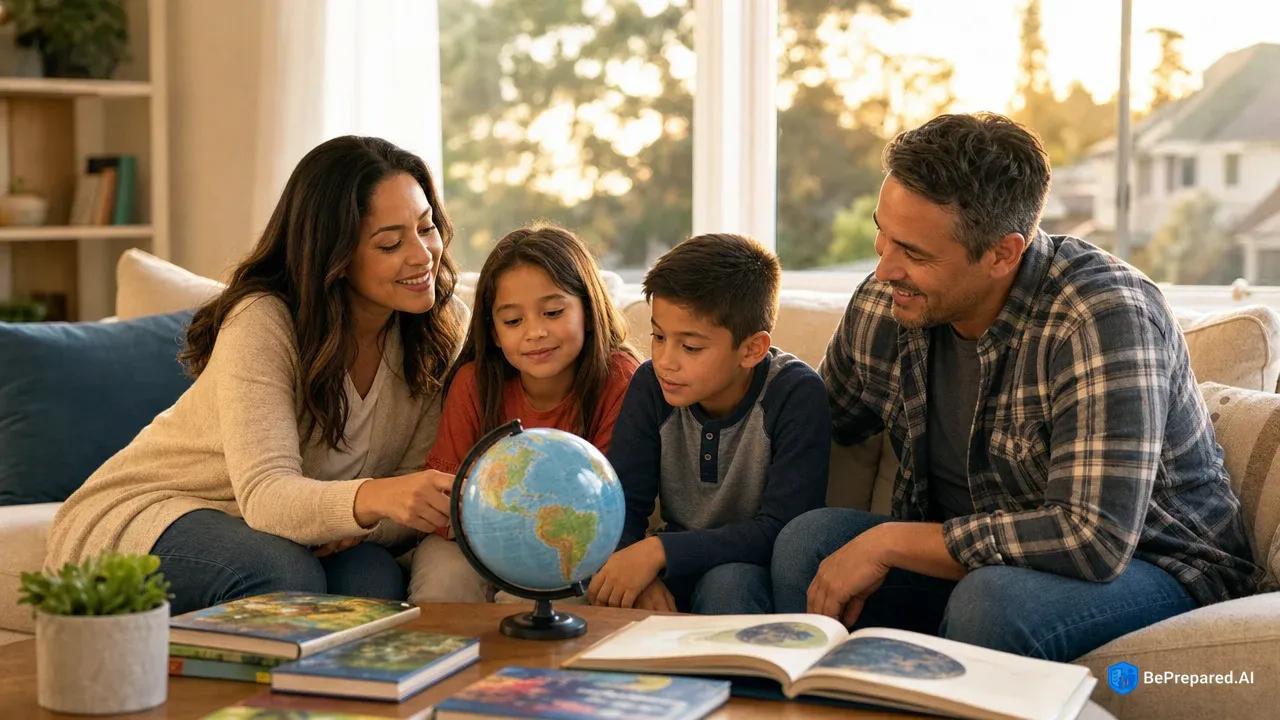
The key lies in creating the right environment for these conversations. Choose moments when your family feels relaxed and connected, perhaps during a calm weekend afternoon or while working on a puzzle together. Avoid bringing up earthquake preparedness during stressful times or right before bed, when anxious thoughts can take root more easily . Your body language matters just as much as your words. Sit at your child's eye level, keep your tone steady and warm, and let your facial expressions convey confidence rather than worry.
Children are incredibly perceptive. They pick up on our anxiety, so when you approach earthquake conversations with calm assurance, you're already teaching them that this is something your family can handle together . Age-appropriate conversations about earthquakes can reduce anxiety rather than increase it . When kids understand what earthquakes are and what to do about them, the unknown becomes manageable. The mystery loses its power, and practical knowledge takes its place.
Make it clear that questions are not just allowed—they're encouraged. Some of the best teaching moments happen when a child asks something unexpected, giving you the chance to address their specific concerns rather than the fears you imagined they might have. Your goal isn't to have one perfect conversation that covers everything. Think of earthquake preparedness as an ongoing dialogue that evolves as your children grow and their understanding deepens.
- Preschool (Ages 3-5): Play-Based Learning
- Use simple songs, games like 'Drop, Cover, Hold On' practice, and picture books to teach basic safety without causing fear
- Elementary (Ages 6-11): Interactive Activities
- Hands-on experiments with building blocks, earthquake simulation games, and creating family emergency kits together
- Key Teaching Principles
- Always match complexity to age, focus on empowerment over fear, and practice skills regularly as a family
Understanding What Kids Need to Know by Age
Not all earthquake conversations should sound the same. A preschooler and a teenager need entirely different approaches, and matching your message to your child's developmental stage makes all the difference. Children's cognitive development determines how much earthquake information they can process . Trying to explain tectonic plates to a four-year-old will only confuse them, while giving a teenager overly simplistic explanations might make them tune out.
Preschoolers (Ages 3-5): Young children think in concrete, literal terms. They need simple explanations tied to things they can see and touch.
- Keep explanations simple and concrete: "Sometimes the ground shakes a little, just like when you wiggle in your chair"
- Focus on what they can control: "We practice getting under the table to stay safe"
- Use reassuring language: "Mommy and Daddy know what to do to keep you safe"
- Limit details about damage or injuries
- Emphasize that earthquakes don't happen every day
- Example phrase: "The earth is like a big ball with moving pieces, and sometimes those pieces bump into each other and make the ground shake"
At this age, your main goal is building a sense of security. Preschoolers need to know that the adults in their lives are prepared and capable. They don't need scientific details—they need emotional reassurance wrapped in simple facts.
Elementary Age (Ages 6-10): School-age children can handle more information and start understanding cause and effect. They're curious about how things work and ready for more detailed explanations.
- Provide more specific information about what causes earthquakes
- Teach the complete Drop, Cover, and Hold On technique
- Explain what happens at school during an earthquake
- Discuss the family emergency plan in clear terms
- Answer questions about what earthquakes feel like
- Example phrase: "Earthquakes happen when giant pieces of rock deep underground move against each other, kind of like when you rub your hands together really fast"
This age group benefits from hands-on learning and practice. They're developing independence and can take on small responsibilities in your family preparedness plan. They want to feel capable and helpful, so give them age-appropriate tasks that build their confidence.
Tweens and Teens (Ages 11+): Older kids can grasp abstract concepts and think critically about risk and probability. They're ready for real scientific explanations and meaningful roles in family planning.
- Share scientific explanations about tectonic plates and seismic activity
- Discuss probability and risk in your specific geographic area
- Assign meaningful roles in family preparedness planning
- Address more complex questions about structural safety
- Explore how communities prepare for and respond to earthquakes
- Example phrase: "The Earth's crust is made of massive plates that are constantly moving, and the energy that builds up where they meet gets released as earthquakes"
Teenagers often respond well when treated as partners in family preparedness rather than children who need protection. Give them real responsibilities. Let them research earthquake science or help design your family's communication plan. This age group can handle honest conversations about risk while still benefiting from your calm, prepared approach.
Explaining Earthquakes as Natural Earth Processes
When my friend's daughter was six, she asked if earthquakes happened because people were bad. This heartbreaking question reveals something important: it's important to clarify natural causes because children often blame themselves for disasters . Your first job is helping kids understand that earthquakes are simply part of how our planet works—no different from rain, wind, or seasons changing.
Start with analogies that connect to their everyday experiences. Imagine explaining it like this: "You know how when you're building with blocks, sometimes the tower gets a little wobbly and shifts? The Earth is kind of like that, except it's made of enormous puzzle pieces called tectonic plates that are always slowly moving around. When these pieces bump into each other or slide past each other, that movement creates shaking we call an earthquake." This concrete comparison gives children something tangible to picture .
Another helpful analogy involves a rubber band. Stretch one between your fingers and let your child watch as you pull it tighter and tighter. Explain that rocks deep underground can stretch like this rubber band when the Earth's plates push against each other. Eventually, the rocks can't stretch anymore—just like the rubber band—and they snap back into place. That snapping releases energy that travels through the ground as shaking . You can even let the rubber band go (gently!) so they can see and hear the sudden release of energy.
Emphasize that earthquakes are natural events that have been happening since Earth formed billions of years ago. They're not punishments, they're not caused by anything people do, and they're not signs that something is wrong with the planet. Earthquakes occur naturally as part of Earth's geological processes . This is simply how our living, dynamic planet works.
Here's a comforting fact to share: Most earthquakes are so small that people don't even feel them . Scientists detect thousands of earthquakes every year that go completely unnoticed by everyone except their sensitive instruments. This helps children understand that while earthquakes are common, dangerous ones are relatively rare. You might even mention that scientists study earthquakes to help keep people safe, showing that smart adults are working to understand and prepare for these natural events . This knowledge can be surprisingly comforting to children who need to know that grownups are paying attention and taking action.
Teaching the Drop, Cover, and Hold Response
Here's where earthquake preparedness transforms from abstract concept to practical skill. Drop, Cover, and Hold On is the recommended earthquake safety response , and regular practice helps children respond automatically during actual earthquakes . The beauty of this technique is that it's simple enough for even young children to master, yet effective enough to protect them when it matters most.
Step 1: Demonstrate the Complete Sequence
Start by showing your children exactly what to do. DROP down onto your hands and knees immediately. Explain that this position prevents you from being knocked down and allows you to move if needed. Let them watch as you demonstrate getting low quickly but safely. Show them how to keep their balance and move with purpose, not panic.
Step 2: Get Under Sturdy Protection
COVER your head and neck under a sturdy desk or table. If no shelter is available, crawl to an interior wall away from windows and cover your head and neck with your arms. Show them how to tuck their head down and protect it with their hands clasped behind their neck. Explain that protecting their head and neck is the most important thing they can do during an earthquake. Walk through your house together and identify the best spots in each room—under the dining table, under a desk, next to an interior wall.
Step 3: Stay Put Until Shaking Stops
HOLD ON to your shelter with one hand while keeping the other protecting your head. Practice staying in position until you tell them it's safe to come out. Explain that the shaking might stop and start again, so they need to stay protected even if it seems like it's over. If the desk or table moves, move with it. This technique significantly reduces injury risk during earthquakes .
Step 4: Practice as a Family Game
Turn practice into a positive experience. Call out "Earthquake drill!" at random times and see how quickly everyone can get into position. Time yourselves. Make it playful: "Wow, you got under the table in five seconds! Let's see if we can all do it together." The muscle memory you're building could save lives. Frame it as learning a superpower—the ability to protect yourself automatically, without even thinking about it.
Practice in different locations and situations. What if you're in the kitchen? The bathroom? Outside? What if you're carrying something? These variations help children understand that the basic principle—protect your head and neck, get low, hold on—applies everywhere. When children feel competent and prepared, the abstract fear of earthquakes diminishes, replaced by confidence in their own capability to respond.
Building Family Preparedness Together
One of the most powerful ways to reduce earthquake anxiety is to channel nervous energy into productive action. Children who participate in emergency planning feel more confident and less anxious . When you involve your kids in creating your family's earthquake readiness plan, you're not just preparing for disaster—you're teaching problem-solving, responsibility, and teamwork.
Start with the family emergency plan. Gather everyone together and map out what you'll do if an earthquake strikes. Where will you meet if you're separated? Who will grab the emergency kit? What's the communication plan if phones don't work? Give each child age-appropriate responsibilities. Your ten-year-old might be in charge of knowing where the flashlights are stored, while your teenager could maintain a list of important phone numbers. These specific roles make children feel important and capable rather than helpless .
Building your emergency kit together turns abstract preparation into a tangible project. Send your younger children on a scavenger hunt through the house: "Can you find three cans of soup we could put in our earthquake kit?" Let older kids research what items you need and create a shopping list. When you purchase supplies, let them help pack the kit and choose where to store it. They might pick out their own small flashlight or choose which comfort items to include—a favorite book, a small game, or a stuffed animal. Having a plan reduces stress for both parents and children .
Consider creating a special "earthquake bag" that each child personalizes. Include a change of clothes, a family photo, a few snacks they like, and something comforting. Let them decorate the outside with their name and maybe some stickers. This bag becomes their contribution to family safety, something they can point to with pride. You're teaching them that preparedness isn't about living in fear—it's about being smart and ready, the same way you wear a seatbelt or look both ways before crossing the street.
Don't forget to practice your plan. Schedule earthquake drills every few months, but make them feel like family activities rather than scary tests. Time yourselves getting to your meeting spot. Practice using your emergency supplies. Check your kit together and replace expired items. These regular touchpoints keep earthquake preparedness on everyone's radar without making it feel overwhelming or constant. You're building habits and muscle memory that will serve your family well if an earthquake actually happens.
Break down preparedness into small, manageable steps. You don't need to do everything at once. Start with one simple task—maybe identifying safe spots in each room this week. Next week, you might gather supplies for your emergency kit. The following week, practice Drop, Cover, and Hold On. Small steps add up to big preparedness without overwhelming anyone.
Using Books, Games, and Activities to Reinforce Learning
The right resources transform earthquake preparedness from a heavy topic into engaging, even fun, learning experiences. Interactive learning helps children retain safety information better than lectures alone . When kids learn through play and hands-on activities, the information sticks in a way that serious talks alone can't achieve.
Books and Videos: Look for age-appropriate picture books that explain earthquakes through friendly characters and simple stories. Your local library likely has several options in the children's section. Choose materials that balance factual information with reassuring messages about safety. For older kids, look for books that explain the science behind earthquakes in accessible language. Videos can be helpful too, but preview them first to make sure they match your child's age and sensitivity level.
The Ready.gov Kids section features interactive games and activities that teach preparedness through play . These free online resources turn earthquake safety into an adventure rather than a chore. Your kids can explore at their own pace, and the game format makes learning feel natural and enjoyable.
Hands-On Activities: Build a shake table using a shoebox, rubber bands, and marbles to demonstrate how earthquakes affect buildings. This simple project helps kids visualize what happens during ground shaking. Create earthquake-resistant structures with blocks or LEGO, then test them on your homemade shake table. Which designs stand up best? Why? This activity teaches engineering concepts while reinforcing earthquake awareness.
Make a "safety spot" map of your home, marking the best places to take cover in each room. Give your kids clipboards and let them be the official safety inspectors. They can draw the map, mark the safe spots with stickers, and post it where everyone can see it. Design your own emergency kit checklist with drawings or photos of each item. Younger children can cut pictures from magazines or draw their own versions of supplies.
Games and Challenges: Play "earthquake safety BINGO" with squares representing different preparedness actions. Create a timed Drop, Cover, and Hold On challenge where family members practice getting into position quickly. Who can do it fastest? Who has the best form? Make it fun and competitive in a lighthearted way. Stage a "supply kit relay race" where kids race to gather emergency items from around the house. This helps them learn where supplies are stored while burning off energy.
Different children learn in different ways—some kids learn best by reading, others by doing, and still others through visual demonstrations. By offering variety, you ensure the information sticks regardless of how your child naturally processes information. The goal is making earthquake preparedness feel like something interesting to learn about, not something terrifying to fear. When learning feels like play, children engage more deeply and remember more completely.
Handling Questions and Ongoing Conversations
The earthquake conversation doesn't end after one talk. Open communication helps children process their concerns about earthquakes . Your willingness to revisit the topic, answer new questions, and address evolving concerns creates a foundation of trust and security.
Expect questions to come at unexpected times. Your child might ask about earthquakes while you're driving to school, during bath time, or seemingly out of nowhere weeks after your initial conversation. Welcome these questions enthusiastically: "That's a great question! I'm so glad you asked." Provide honest, age-appropriate answers without more detail than they're asking for. If your six-year-old asks, "Will our house fall down in an earthquake?" you might respond, "Most houses stay standing during earthquakes , and we're making our house even safer by securing heavy furniture to the walls."
Some common questions you might encounter include: "What if an earthquake happens at night?" (We'll hear it and wake up, and we can Drop, Cover, and Hold On right in our beds until it stops.) "What if you're not home?" (You'll do exactly what we practiced—get under something sturdy and hold on—and then we'll meet at our family meeting spot.) "Can we tell when an earthquake is coming?" (Scientists have special equipment that can detect earthquakes, but we usually don't know exactly when they'll happen, which is why we practice and prepare.)
Pay attention to signs that earthquake fears might be affecting your child's daily life. Some worry is normal and healthy—it motivates preparation. But if your child shows persistent anxiety, has trouble sleeping, seems constantly preoccupied with earthquake worries, or develops physical symptoms like stomachaches when the topic comes up, these might be signs that additional support would help. Some children may benefit from professional support to manage disaster-related fears, and there's no shame in consulting with a school counselor or child therapist who can provide specialized strategies.
Regular check-ins keep the lines of communication open. Every few months, perhaps when you review your emergency supplies together, ask how your kids are feeling about earthquake preparedness. "Do you feel like you know what to do if an earthquake happens? Is there anything you're still wondering about?" These conversations don't have to be long or formal—just brief opportunities to gauge their comfort level and address any new concerns.
You're building a family culture where it's normal and safe to talk about earthquakes, where questions are answered calmly, and where everyone works together to stay prepared and confident. This ongoing dialogue matters more than any single perfect conversation. Your consistent, calm approach teaches your children that earthquakes are something your family can handle together.
Remember that your own attitude sets the tone. If you approach earthquake preparedness with confidence and calm, your children will mirror that attitude. If you seem anxious or overwhelmed, they'll pick up on those feelings too. Take care of your own concerns first—educate yourself, make your own plan, and address your own fears—so you can be the steady, reassuring presence your children need.
Ready to start building your family's earthquake preparedness plan? Take the first small step today by identifying the safe spots in just one room of your house. Gather your kids, make it a game, and mark those spots together. That's it—one room, one simple action. Once you've done that, you'll feel the momentum building, and the next steps will feel easier. You've got this, and your family will be safer and more confident because you took action today.