Understanding Your Child's Safety at School During Tornadoes
Picture this: you're at work when your phone buzzes with a tornado warning for your area. Your first thought? Your child at school. That knot in your stomach tightens as you wonder if they're safe, if they know what to do, if anyone's looking out for them. This feeling is universal among parents, and it's completely natural.
Here's something that might ease your mind: schools take tornado safety incredibly seriously. Every school in tornado-prone areas operates under strict emergency protocols specifically designed to protect students during severe weather events. Your child's school has a comprehensive tornado emergency plan that's been carefully developed, regularly reviewed, and practiced throughout the school year .
These aren't just papers filed away in the principal's office. Schools conduct tornado drills at least twice per school year, meaning your child has actually practiced the exact steps they'd take during a real emergency . Think of it like a fire drill, but specifically tailored for tornado situations. The school has already identified and designated the safest areas in the building—interior rooms on the lowest floor, far away from windows—where students will shelter during a tornado warning .
Understanding these plans doesn't just help you feel more confident. It creates a partnership between you and the school. When you know what your child is learning and practicing, you can reinforce those same safety messages at home. This consistency helps children respond calmly and appropriately during emergencies. You're not starting from scratch—you're building on what trained professionals have already taught your child.
How Schools Choose Safe Areas for Tornado Shelter
When school administrators walk through their buildings to designate tornado shelter areas, they're looking at the structure through a very specific lens. They're asking: "If the worst happens, where will students have the best chance of survival?" It's a sobering responsibility, and the selection process follows clear scientific guidelines.
The safest areas are interior rooms on the lowest floor, far away from windows . This isn't random. During a tornado, the greatest dangers come from two sources: structural collapse and flying debris. Windows become deadly projectiles when they shatter. Exterior walls face the direct force of the wind. But deep inside the building, surrounded by multiple walls and structural supports, students gain layers of protection.
You might wonder why schools don't shelter students in places like gymnasiums or auditoriums. After all, they're spacious and can hold lots of kids. Schools avoid gymnasiums and auditoriums because these big, open spaces require roofs that stretch across wide areas without interior support walls . During a tornado, these roofs are particularly vulnerable to collapse. The same goes for cafeterias with their expansive ceilings. Schools specifically avoid these areas during tornado warnings, even though they might seem convenient.
Mobile classrooms present a unique challenge. These temporary structures, sometimes called portables or trailers, offer virtually no protection against tornado-force winds and students must immediately evacuate to the main building . There's no safe place to shelter in a structure that could potentially be lifted or destroyed by the storm. If your child has classes in a portable building, they've practiced the evacuation route to the main building multiple times.
Some newer schools, particularly in high-risk tornado regions, have gone a step further by constructing dedicated safe rooms. Dedicated safe rooms can withstand winds up to 250 mph—far beyond what even a strong tornado typically produces . These specially engineered spaces represent the ultimate in school tornado protection. Safe rooms should provide 5 square feet per person and be accessible within 5 minutes . If your child's school has one, that's an excellent sign of the district's commitment to student safety.
The design of these safe rooms follows specific engineering standards. They're built to protect against both wind pressure and flying debris. The walls, roof, and doors are all reinforced to maintain their integrity even under extreme conditions. Some schools have incorporated these safe rooms into new construction as multi-purpose spaces that serve everyday functions but transform into shelters when needed.
What Happens During a School Tornado Drill
Let's walk through what your child actually experiences during a tornado drill. This way, you can picture exactly what happens when that alarm sounds.
The drill typically begins with a specific signal. It might be a particular alarm tone, an announcement over the PA system, or a combination of both. This signal is distinct from fire alarms or other emergency alerts, so students learn to recognize it immediately . The moment that signal sounds, teachers spring into action with practiced efficiency.
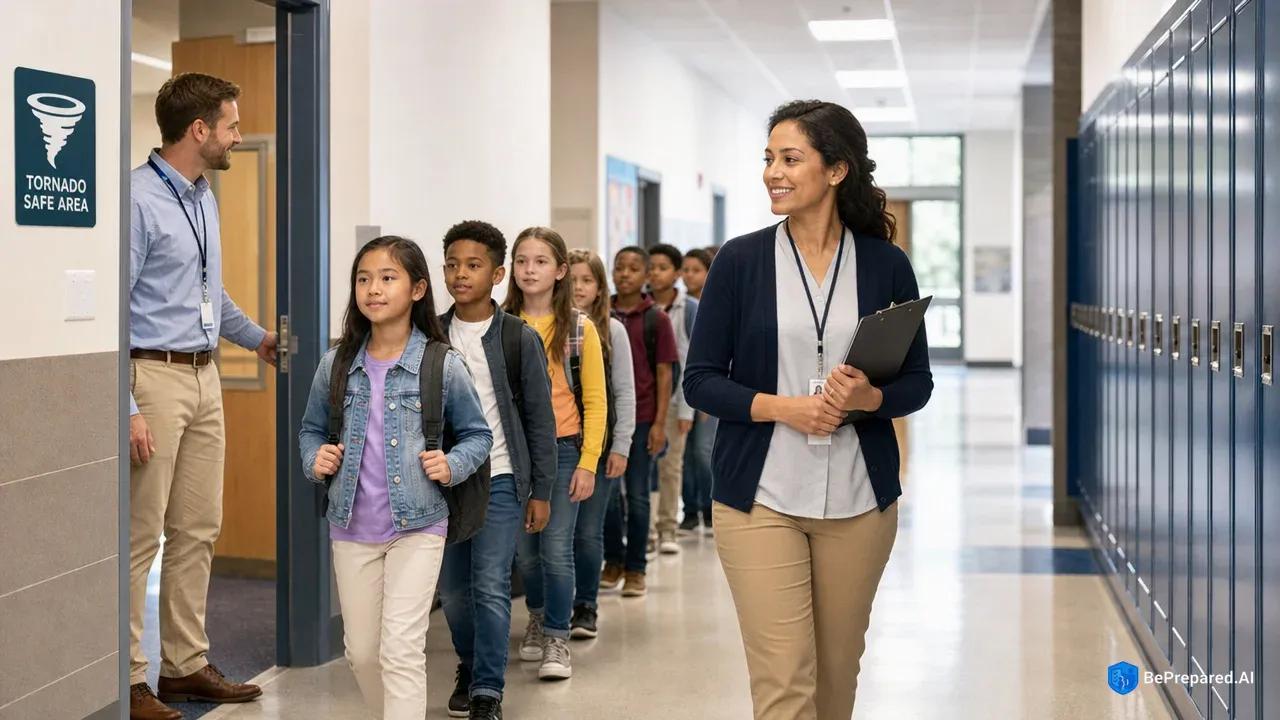
Students don't run, but they move with purpose. Teachers guide their classes out of the classroom in an orderly line, heading toward the predetermined safe area. If they're already in a designated safe room, they stay put. As students reach the shelter area—usually an interior hallway or bathroom—they line up against the walls, sitting or kneeling.
Then comes the protective position. Students crouch down, tuck their heads between their knees, and cover the backs of their heads and necks with their hands . This position protects the most vulnerable parts of the body from falling debris. It might feel awkward at first, but with practice, students can hold this position comfortably for several minutes.
Teachers account for every student, often using attendance clipboards or class rosters they've grabbed on the way out. They remain with their students, maintaining calm and providing reassurance. The drill continues for several minutes, giving everyone time to practice holding the position and staying quiet enough to hear emergency instructions.
School nurses play a critical role in tornado preparedness by maintaining emergency medical supplies and assisting students with special needs during drills . They position themselves strategically during drills to help any student who might need medical attention. They also work with teachers to ensure students with mobility challenges or other special needs can reach safe areas quickly.
Schools conduct these drills at least twice per school year, and many schools practice more frequently . Each drill is an opportunity to identify problems. Maybe a certain hallway gets too crowded, or perhaps a new student doesn't understand the procedure. Administrators take notes and adjust plans accordingly. By the time a real emergency occurs, the response has become almost automatic for both students and staff.
Your Role as a Parent During School Emergencies
When a tornado warning is issued and you know your child is at school, every instinct in your body screams at you to rush to them. You want to scoop them up and bring them home to safety. This reaction is deeply human and completely understandable. But here's the hard truth: attempting to pick up your child during an active tornado warning is one of the most dangerous things you can do—both for yourself and for your child .
Consider what happens when parents descend on a school during a tornado warning. Traffic creates chaos and danger. Multiple parents trying to reach the school at the same time create traffic congestion, blocking emergency vehicles and putting everyone on the road at risk. You could be caught in your car—one of the worst places to be during a tornado—when the storm hits.
You disrupt the school's emergency procedures. School staff have trained to account for every student in their designated safe areas. When parents arrive to pull children out, staff must break from their emergency protocols to locate students, sign them out, and ensure they leave with authorized adults. This diverts attention from the primary goal: keeping everyone safe.
Your child is safer at school than in transit. The school building, with its designated shelter areas and trained staff, offers better protection than your vehicle on the road. Schools are prepared for this exact scenario. Your car is not a safe shelter .
Schools have communication systems in place to notify parents during tornado warnings without encouraging dangerous travel . This might include automated phone calls, text messages, email updates, or posts to the school's website and social media accounts. Your job is to monitor these official channels rather than adding to the confusion by calling the school office. When phone lines stay clear, school staff can focus on student safety rather than answering worried parent calls.
Emergency contact information must stay current. Before an emergency happens, ensure the school has your current phone numbers, email addresses, and authorized pickup persons on file. If you've changed jobs, moved, or updated your phone number, notify the school immediately. This simple step makes a huge difference when schools need to reach you quickly.
The most helpful thing you can do during a school tornado emergency is trust the system. Trust that the trained professionals at your child's school are following their well-practiced procedures. Trust that your child has learned what to do through regular drills. Trust that staying safe yourself means you'll be available when your child needs you after the emergency passes.
- Does the school have a tornado drill plan?
- Ask how often drills are practiced and what specific procedures students follow during tornado warnings
- Where do students shelter during tornados?
- Identify the designated safe areas in the building and whether they meet safety standards for tornado protection
- How will parents be notified during emergencies?
- Understand the school's communication system for alerting families about tornado warnings and student safety status
- What is the student pickup procedure after a tornado?
- Learn the reunification process and where parents should go to safely collect their children after an emergency
- Are teachers trained in tornado safety protocols?
- Verify that staff receive regular training on emergency procedures and know how to keep students calm and safe
- Does the school monitor weather alerts?
- Confirm the school has reliable weather monitoring systems and clear protocols for responding to tornado watches and warnings
Questions to Ask Your Child's School
You have every right to understand how your child's school will protect them during a tornado. Schools should welcome these questions—they're a sign of engaged, caring parents who want to partner in keeping children safe . Here are the key questions to ask, framed as a conversation starter rather than an interrogation.
Where specifically will my child shelter during a tornado warning? Ask for details about the designated safe area for your child's particular classroom. Students should move to interior rooms and hallways on the lowest floor and avoid auditoriums and gymnasiums . Understanding the specific location helps you visualize where your child will be. Some schools even offer tours of their safe areas during open house events.
How will I receive information during an emergency? Make sure you're registered for all available notification systems and that your contact information is current. Ask about backup communication methods in case primary systems fail. Some schools use multiple platforms to ensure messages get through.
What is your reunification process? After a tornado or tornado warning, how will you be reunited with your child? Schools have specific procedures for releasing students to parents following an emergency. Understanding this process in advance prevents confusion and anxiety when you're already stressed. Many schools use a card system or check-in procedure to ensure students leave with authorized adults only.
How often do you conduct tornado drills, and how do you evaluate their effectiveness? Ask how the school reviews and improves its procedures based on each drill. Some schools involve students and staff in the evaluation process, gathering feedback about what worked well and what could improve.
What training do teachers and staff receive for tornado emergencies? Teachers aren't just handed a manual and expected to figure it out. They receive specific training on tornado response procedures, student management during emergencies, and how to keep children calm during frightening situations . Ask about the frequency and type of training staff receives.
Does the school have weather monitoring systems? Schools need reliable methods for receiving immediate weather warnings. Ask what systems they use and whether they have backup power sources in case of electrical failure.
Are there special considerations for students with disabilities or special needs? If your child has mobility issues, sensory sensitivities, or other special needs, the school should have specific plans to ensure their safety during tornado emergencies. Parents of children with medical conditions should ensure schools have updated emergency action plans . Don't hesitate to schedule a separate meeting to discuss your child's individual needs in detail.
Frame these questions as a partnership. You might say, "I want to support what you're teaching my child about tornado safety. Can you help me understand your procedures so I can reinforce them at home?" This approach invites collaboration rather than creating defensiveness.
Preparing Your Child for School Emergency Situations
Talking to children about emergencies requires a delicate balance. You want them informed and prepared, but not frightened or anxious. The key is age-appropriate communication that emphasizes empowerment rather than fear.
For younger children (elementary age), keep explanations simple and concrete. You might say, "Sometimes the weather gets really stormy with strong winds called tornadoes. Your school has a special safe place where you'll go with your teacher if that happens. You'll practice going there so you know exactly what to do." Focus on the adults who will take care of them and the fact that practice makes everyone feel more confident .
Older children (middle and high school) can handle more detailed information about why tornadoes are dangerous and how the protective measures work. They can understand the science behind sheltering in interior rooms and the importance of the protective position. This age group often benefits from feeling like they have some control and knowledge about the situation. They might even be interested in learning about meteorology or emergency management careers.
Regardless of age, emphasize that tornado drills are practice, not punishment or something to fear. Compare them to other types of practice your child does—sports drills, music rehearsals, or studying for tests. Regular practice helps children respond appropriately during real emergencies, just like practicing a sport helps them play better during a game .
If your child expresses fear or anxiety about tornadoes, acknowledge their feelings without dismissing them. "It's okay to feel a little nervous about tornadoes. They are serious weather events. That's exactly why your school practices what to do—so everyone knows how to stay safe." Children who understand emergency procedures actually feel more confident and secure because they know they can take action .
After your child participates in a school tornado drill, ask them about it. "What did you do during your tornado drill today? Where did you go? How did it feel?" This opens a dialogue where you can correct any misunderstandings, praise them for following directions, and reinforce the importance of the practice. Some children enjoy drawing pictures of their safe area or explaining the drill to younger siblings, which reinforces their learning.
Watch for signs that your child might be developing excessive anxiety about tornadoes. Some worry is normal and even helpful, but if your child becomes preoccupied with weather, has trouble sleeping, or shows other signs of distress, talk with their teacher or school counselor. These professionals can provide additional support and reassurance.
Building Confidence in Your Family's Tornado Preparedness
School safety is just one piece of your family's overall tornado preparedness puzzle. When your home safety plans align with what your child learns at school, you create a consistent message that reinforces proper emergency response no matter where your child happens to be when severe weather strikes.
Take time to develop or review your own home tornado plan. Identify the safest area in your house—typically a basement, storm cellar, or interior room on the lowest floor away from windows . Practice your family's tornado drill just like the school does. When your child hears the same instructions at home that they hear at school—"get to the interior room, crouch down, cover your head"—the response becomes second nature.
Make your home practice sessions low-pressure and even fun. Time how quickly everyone can reach the safe area. Let younger children bring a favorite stuffed animal to practice with them. Older children might help create an emergency supply kit for your safe area. Include items like flashlights, a battery-powered radio, water bottles, and a first aid kit.
Stay informed about local weather conditions, especially during tornado season in your area. Sign up for weather alerts on your phone. Consider purchasing a weather radio for your home . When you model staying informed and taking weather warnings seriously, your children learn that preparedness is a normal, responsible part of life rather than something to fear.
Connect with other parents in your school community. Share information about the school's emergency procedures, discuss your family's preparedness efforts, and support each other during severe weather events. Families with consistent emergency plans and strong community connections feel more prepared and confident when facing potential disasters . You might even organize a parent information session at your school where administrators can present their tornado safety procedures to multiple families at once.
The goal isn't to live in fear of tornadoes, but to live with confidence that you and your child's school are prepared to respond effectively if severe weather threatens. That confidence comes from knowledge, practice, and the understanding that preparedness is a shared responsibility between families, schools, and communities.
Think of tornado preparedness like learning to swim or ride a bike. At first, it might seem overwhelming. But with practice and the right guidance, it becomes a natural skill that provides confidence rather than anxiety. You're not trying to become a meteorologist or emergency management expert. You're simply learning a few key actions that could make all the difference.
Start small if you feel overwhelmed. This week, simply ask your child's school for a copy of their tornado emergency plan. Next week, identify your home's safe area. The week after that, practice getting there quickly. Small steps add up to real preparedness without the stress of trying to do everything at once.
Consider reaching out to your child's school this week to learn more about their specific tornado safety procedures and how you can best support their emergency preparedness efforts. A simple email or phone call to the school office can connect you with the right person—usually the principal, assistant principal, or safety coordinator. Most schools appreciate parent interest and are happy to share their plans.
Remember, you're not alone in this. Every parent in tornado-prone areas shares your concerns. Every school administrator takes these responsibilities seriously. By working together—schools, families, and communities—we create layers of protection that keep children safe when severe weather threatens. Your child benefits from professional emergency planning at school, reinforced safety messages at home, and the confidence that comes from knowing exactly what to do.