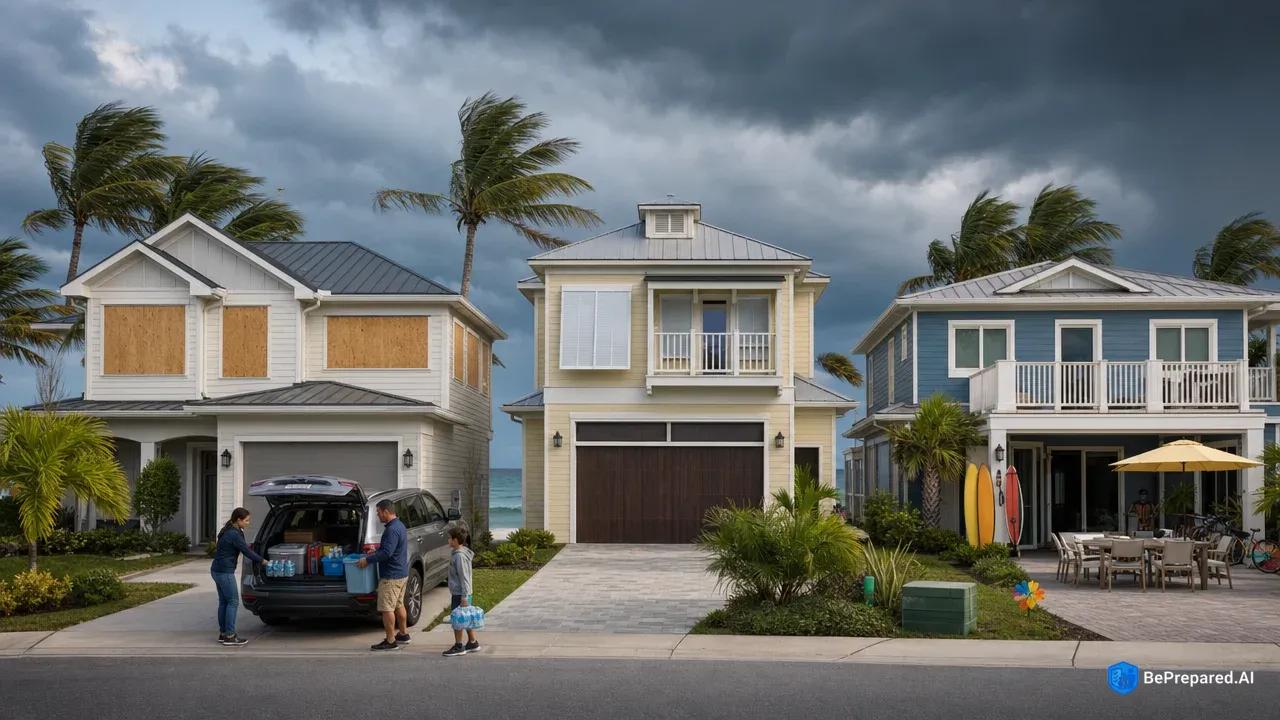
Understanding Hurricane Categories: Your Guide to Storm Intensity
When Sarah heard her first hurricane warning, she didn't know whether to board up her windows or just stock up on flashlight batteries. The forecaster kept mentioning "Category 2," but what did that actually mean for her family? This confusion happens to thousands of people every hurricane season. It can lead to either over-preparing for a minor storm or dangerously under-preparing for a major one.
The Saffir-Simpson Hurricane Wind Scale rates hurricanes from 1 to 5 based on sustained wind speed . Think of it as a universal language. Meteorologists, emergency managers, and weather services use it to communicate the potential danger heading your way. When you understand what each category means, you're not just hearing numbers. You're getting information about what kind of damage to expect, how long you might be without power, and whether you should evacuate or shelter in place.
Understanding hurricane categories helps you make better evacuation and preparation decisions . A Category 1 storm might mean securing outdoor furniture and stocking up on supplies for a few days. A Category 4 storm could mean evacuating immediately and planning for weeks away from home. The difference between inconvenience and catastrophe often comes down to understanding these categories. As we walk through each category together, you'll learn to decode these warnings and respond appropriately. You'll transform confusing forecasts into clear plans that protect your family and property.
Category 1 Hurricanes: Dangerous Winds Begin
Michael thought Category 1 sounded almost manageable, like the beginner level of a video game. He'd weathered plenty of thunderstorms, so how different could it be? Then the winds started howling at 80 mph. He watched his neighbor's aluminum siding peel away like wrapping paper. That's when he understood that even the "lowest" hurricane category deserves serious respect.
Category 1 hurricanes produce dangerous winds of 74-95 mph . To put that in perspective, imagine standing outside during a severe thunderstorm. Now multiply the wind force several times over and sustain it for hours. These aren't occasional gusts. They're relentless winds that push against every surface of your home with tremendous force. The National Hurricane Center emphasizes that the word "dangerous" isn't just dramatic language. It's a technical description of winds capable of causing real harm to people, property, and infrastructure.
Well-constructed frame homes typically sustain damage to roofs, shingles, and gutters in Category 1 storms . Your roof becomes a vulnerable point where wind can catch edges and tear away protective layers. Shingles that seemed perfectly secure on a calm day suddenly become projectiles. Gutters, which hang from your roofline, often can't withstand the sustained pressure and rip away. Sometimes they take fascia boards with them. Vinyl siding, especially if it wasn't installed with hurricane-force winds in mind, can buckle or tear loose. Large tree branches snap, and shallow-rooted trees topple , often falling onto homes, cars, or power lines.
Power outages may last several days with Category 1 hurricanes . When those trees fall across power lines, or when flying debris damages transformers, entire neighborhoods go dark. Unlike a typical storm outage that might last a few hours, hurricane damage to the electrical grid requires extensive repairs. Utility crews can't even begin work until winds drop below safe working conditions. This means you might sit in the dark for the first 24-48 hours before repairs even start.
Preparing for a Category 1 means taking the storm seriously while understanding you're likely not facing total destruction. Secure outdoor items that could become projectiles. This includes patio furniture, grills, potted plants, and decorations. Stock enough supplies for at least five to seven days without power. You'll need water, non-perishable food, medications, and battery-powered lighting. Consider whether your home can withstand the winds. Newer construction built to modern codes typically fares better than older homes.
Category 2 Hurricanes: Extensive Damage Expected
The jump from Category 1 to Category 2 might seem like just one number. But Jennifer learned it represents a significant leap in destructive power. After riding out a Category 1 storm with minimal damage, she felt confident staying for a Category 2. The difference shocked her. Where the Category 1 had torn off some shingles, the Category 2 ripped away entire sections of her roof. It exposed her attic to driving rain. The damage took nine months to fully repair.
Category 2 hurricanes produce extensive damage with winds of 96-110 mph . These winds represent a substantial increase in force. We're not talking about slightly stronger gusts. This is a sustained assault that tests the structural integrity of buildings. The wind pressure at 110 mph is nearly double that at 75 mph. Every surface of your home faces exponentially more stress. Windows that might have survived a Category 1 become vulnerable to failure. Garage doors, often a weak point in home construction, can buckle inward. This allows wind to enter the structure and potentially blow the roof off from the inside.
Well-constructed frame homes could sustain major roof and siding damage in Category 2 storms . The word "major" here means damage that renders your home potentially uninhabitable until repairs are completed. We're talking about significant roof sections being torn away, not just surface shingles. Siding doesn't just loosen. Large portions can be stripped entirely from walls. Well-built homes survive, but they often need extensive repairs costing tens of thousands of dollars. Older homes or those not built to hurricane codes face even more severe damage. Some experience structural compromise.
The power outage situation becomes dramatically worse with Category 2 hurricanes. Near-total power loss becomes likely, with outages potentially lasting weeks to months . The electrical infrastructure doesn't just need repairs. It often requires rebuilding. Transmission towers can buckle. Substations can flood. The sheer volume of damage means utility crews must prioritize critical facilities like hospitals before addressing residential areas. Imagine planning your life without electricity for not just days, but potentially a month or more. Refrigerated food spoils. Air conditioning disappears in the late summer heat. Charging phones becomes a daily challenge.
At Category 2, evacuation considerations intensify. If you're in a mobile home, evacuation isn't optional. It's essential. Even in a site-built home, you need to honestly assess your structure's condition. Can you cope with potentially weeks without power? Do you have medical conditions requiring electricity? Are you prepared to live without running water if the municipal system fails? Category 2 storms demand respect and serious preparation. This includes the willingness to leave if conditions warrant.
- Category 3: Major Hurricane
- 111-129 mph winds. Well-built homes lose roofing materials, mobile homes destroyed. Large trees snap or uproot. Power outages last weeks.
- Category 4: Extreme Hurricane
- 130-156 mph winds. Well-built homes suffer severe damage with loss of most roof structure. Most trees snap or uproot. Power outages last months.
- Category 5: Catastrophic Hurricane
- 157+ mph winds. Well-built homes suffer complete roof failure and wall collapse. Nearly all trees snap or uproot. Power outages last months to over a year.
- Wind Speed Color Guide
- Orange for Cat 3 (111-129 mph), Red for Cat 4 (130-156 mph), Dark Red for Cat 5 (157+ mph) - helps visualize increasing danger levels.
- Evacuation Zones
- Cat 3: Some areas evacuate. Cat 4: Widespread mandatory evacuation. Cat 5: Complete evacuation of hurricane-prone areas required.
- Preparation Timeline
- Cat 3 approach: 48-72 hours to prepare. Cat 4-5 approach: Earlier evacuation needed, 72+ hours advance preparation critical for survival.
Category 3, 4, and 5: Major to Catastrophic Hurricanes
When a major hurricane slammed into Mexico Beach, Florida, entire neighborhoods were reduced to rubble. Homes that had stood for decades were reduced to concrete slabs. The devastation wasn't just severe. It was apocalyptic. This is the reality of major hurricanes. Understanding the difference between Category 3, 4, and 5 storms could save your life.
Category 3 hurricanes bring winds of 111-129 mph and are classified as "major" hurricanes . The damage shifts from extensive to devastating. Well-built homes will experience major damage, with significant roof damage and potential wall failures. This happens especially in gable ends. Electricity and water services will likely be unavailable for weeks or even months after the storm passes . Trees will be snapped or uprooted, blocking roads and isolating neighborhoods. The landscape transforms. Familiar streets become unrecognizable obstacle courses of debris. Category 3 storms mark the threshold where even sturdy, well-maintained homes face serious structural threats.
Category 4 hurricanes escalate the danger with winds of 130-156 mph . At this level, we're discussing catastrophic damage. Well-built homes sustain severe damage with loss of most of the roof structure and some exterior walls. The destruction becomes widespread and severe. Most trees will be snapped or uprooted. Power poles will come down. Fallen trees and power lines isolate residential areas, making them inaccessible for weeks or months. Most of the area will be uninhabitable for an extended period. This isn't a storm you recover from in days or weeks. It's a storm that fundamentally disrupts your life for months.
Category 5 hurricanes cause catastrophic damage with winds of 157 mph or higher . A high percentage of framed homes will be destroyed with total roof failure and wall collapse . Let that sink in: not damaged, not severely damaged, but destroyed. Category 5 storms represent nature's ultimate fury. These are winds so powerful they can level entire communities. Fallen trees and power lines will isolate residential areas for weeks to months . The National Hurricane Center notes that most of the area will be uninhabitable for weeks or months . This means complete displacement. You won't just evacuate for the storm. You'll be evacuating for the foreseeable future.
Mandatory evacuation zones exist specifically for major hurricanes. When authorities issue mandatory evacuation orders for Category 3 or higher storms, they're not being overly cautious. They're trying to prevent loss of life. First responders cannot reach you during the storm. If your home fails, you're on your own in life-threatening conditions. The time to leave is before the storm, not when you realize the danger mid-hurricane.
Long-term displacement and recovery challenges define the aftermath of major hurricanes. You're not just planning for the storm itself. You're planning for potentially months of living elsewhere. You'll navigate insurance claims. You'll find contractors in an overwhelmed market. You'll rebuild your life. The psychological and financial toll extends far beyond the wind and rain.
Storm Surge: The Hidden Killer Across All Categories
While everyone focuses on wind speed categories, meteorologists will tell you that storm surge is often the greatest threat to life and property from a hurricane . Storm surge has killed more people than wind in recent decades. Yet it remains the most misunderstood hurricane hazard. Understanding this phenomenon is crucial regardless of what category hurricane is approaching.
Storm surge is essentially a giant dome of water pushed ashore by hurricane winds. As the storm moves across the ocean, it acts like a massive plow. It pushes water ahead of it and piles it up as it reaches the shallow coastal shelf. Storm surge can reach heights well over 20 feet and span hundreds of miles of coastline . Imagine a wall of water taller than a two-story building rushing inland at speeds faster than you can run. This water doesn't arrive like a crashing wave and recede. It rises rapidly and can remain elevated for hours. Coastal areas essentially become extensions of the ocean.
The critical point many people miss is that storm surge can occur with any hurricane category. A Category 1 or 2 hurricane can produce life-threatening storm surge if conditions align. These conditions include the storm's size, forward speed, angle of approach to the coast, and the shape of the coastline and sea floor. A well-documented example shows how a Category 2 hurricane can produce devastating storm surge because of its enormous size. Large storms push more water. The surge can destroy entire communities along the coast, with water reaching 15-20 feet above normal levels in some areas.
The technical factors that determine storm surge height include several elements. The hurricane's intensity matters because lower atmospheric pressure allows water to rise higher. The storm's size matters because larger storms push more water. The speed of the storm's forward motion plays a role. Slower storms can pile up more water. The angle of approach matters too. Storms hitting perpendicular to the coast often produce higher surge. The underwater geography is also crucial. Gently sloping sea floors allow surge to travel farther inland. The Saffir-Simpson scale rates wind, not water, which is why you can't assume a lower category hurricane means safe conditions near the coast .
Evacuation zones are mapped based on storm surge potential, not wind categories. Coastal communities divide areas into zones. These are typically labeled A, B, C, and so on. The labels are based on which category storm surge would flood that area. You might live in an evacuation zone for Category 2 and higher storms. This means even a Category 2 hurricane's potential surge threatens your location. Understanding your evacuation zone matters more than just hearing the storm's category. A Category 3 hurricane with moderate surge might spare your neighborhood. A Category 2 with exceptional surge could flood you out. Check your local emergency management website to find your evacuation zone. Understand what it means for your specific location.
- Category 1-2: Basic Preparation
- Stock 3-day supply of water and food, charge devices, secure outdoor items, and prepare to shelter in place
- Category 4-5: Maximum Preparation
- Evacuate if ordered, secure 2-week supplies if staying, expect extended power outages and major damage
- Essential Supply Kit
- Water (1 gallon per person per day), non-perishable food, flashlights, batteries, first aid kit, medications
- Shelter Decision Guide
- Stay home for lower categories in safe areas, evacuate for higher categories or if in flood/mobile home zones
- Recovery Timeline
- Category 1-2: Days to weeks for power restoration; Category 3+: Weeks to months for full community recovery
Matching Your Response to the Category
Different hurricane categories require different preparation and response strategies . Understanding this principle transforms you from someone who either under-prepares or panic-prepares. You become someone who responds appropriately to the actual threat. Let's walk through how to match your actions to the category of storm approaching.
For Category 1 and 2 storms, start preparations 48-72 hours before anticipated landfall. Secure outdoor items by bringing them inside or anchoring them firmly. Install storm shutters or board up windows if you're in a vulnerable area. Fill your vehicle's gas tank. Gas stations lose power too, and you don't want to be stuck with an empty tank if you need to evacuate post-storm. Stock up on supplies for at least one week without power. You'll need water, non-perishable food, medications, first aid supplies, flashlights, batteries, battery-powered radio, and cash. ATMs won't work without power. Charge all devices and portable batteries. If you have a generator, test it and ensure you have adequate fuel stored safely.
The decision to evacuate versus shelter in place for Category 1 and 2 storms depends on several factors. If you're in a storm surge evacuation zone, evacuate regardless of the category. The surge can kill you even if the wind wouldn't destroy your home. If you're in a mobile home or poorly constructed building, evacuate to a stronger structure or a public shelter. If you have medical needs requiring electricity, evacuate to somewhere with power backup. If your home is well-constructed and you're not in a flood zone, sheltering in place may be appropriate. But prepare for extended power outages.
For Category 3, 4, and 5 storms, preparation becomes more urgent and extensive. Higher category storms require longer-term supply planning due to extended power outages . Think in terms of weeks, not days. Consider evacuating even if you're not in a mandatory evacuation zone. This is especially true if you're in an older home or if the storm is large and slow-moving. The goal isn't just surviving the storm itself. It's surviving the aftermath when help might not reach you for days or weeks.
If you're evacuating, do so early. Don't wait until the last minute when roads are clogged and gas stations are empty. Bring important documents in waterproof containers. This includes insurance papers, identification, and medical records. Take photos of your home and belongings for insurance purposes. Turn off utilities if instructed to do so. Leave a note indicating when you left and where you're going. This helps rescue workers account for residents. Bring enough supplies for several days. Pack medications, clothing, and comfort items.
Post-storm safety considerations vary by category. After Category 1 or 2 storms, the main hazards are downed power lines, unstable trees, contaminated water, and lack of power. After Category 3, 4, or 5 storms, entire areas may be impassable and uninhabitable. Don't return until authorities say it's safe. You might not be able to reach your home. Even if you can, it might not be safe to enter. Structural damage, gas leaks, electrical hazards, and contaminated floodwater create deadly conditions. Bring supplies with you when you return. Local stores will be closed or stripped bare.
Document all damage with photos before making temporary repairs. Contact your insurance company as soon as possible. Be wary of contractor scams. Major hurricanes attract unscrupulous operators who demand large upfront payments and disappear. Verify credentials and get multiple estimates. Understand that recovery from major hurricanes takes years, not months. Pace yourself for the long haul.
Your Next Steps in Hurricane Preparedness
Understanding hurricane categories is the first step in developing an effective hurricane preparedness plan . You've learned the difference between dangerous winds and catastrophic destruction. You understand the difference between inconvenience and displacement. Now it's time to transform that knowledge into action that protects your family.
Start by knowing your evacuation zone. Visit your local emergency management website or call their office. Find out which evacuation zone you're in and what that means for different storm categories. This single piece of information is more valuable than any general hurricane advice. It's specific to your exact location. Write down your evacuation zone and post it somewhere visible. Put it on your refrigerator or in your emergency plan folder. Discuss it with your family so everyone understands what different evacuation orders mean.
Create category-appropriate supply kits. Don't just buy random supplies. Think through what each category storm would mean for your household. Your basic kit should cover one week without power for Category 1 and 2 storms. Consider a more extensive kit or evacuation supplies for Category 3 and higher. Include items specific to your family's needs. This means baby supplies, pet food, prescription medications, medical equipment, and comfort items that help reduce stress. Category-specific preparation saves lives and reduces property damage .
Develop communication plans that work when normal systems fail. Designate an out-of-state contact person everyone can check in with. Local phone systems often fail, but long-distance calls may go through. Teach children how to send text messages. These often work when calls don't. Write down important phone numbers rather than relying solely on your phone's contact list. Establish a meeting place if family members are separated when a storm approaches.
Stay informed through official sources. Follow your local National Weather Service office, emergency management agency, and local news. Download weather apps that send alerts. Purchase a battery-powered NOAA weather radio that automatically alerts you to watches and warnings. Ignore rumors on social media and rely on official sources like the National Hurricane Center, NOAA, FEMA, and Ready.gov . These agencies provide accurate, timely information without the hype and misinformation that spreads through unofficial channels.
The path from understanding to preparedness isn't complicated. It requires taking actual steps rather than just intending to prepare someday. This week, find out your evacuation zone. Next week, start building your supply kit. The week after, have a family discussion about your hurricane plan. Small, consistent actions now mean you'll be ready. When the forecast shows a storm spinning in the Atlantic with your community in its projected path, you'll know exactly what to do.
Ready to build your hurricane preparedness plan? Learn about creating emergency supply kits tailored to your family's needs. Get specific guidance on quantities, storage, and maintenance that keeps your supplies fresh and ready when you need them most.