Generator Sizing Calculator: Getting the Numbers Right
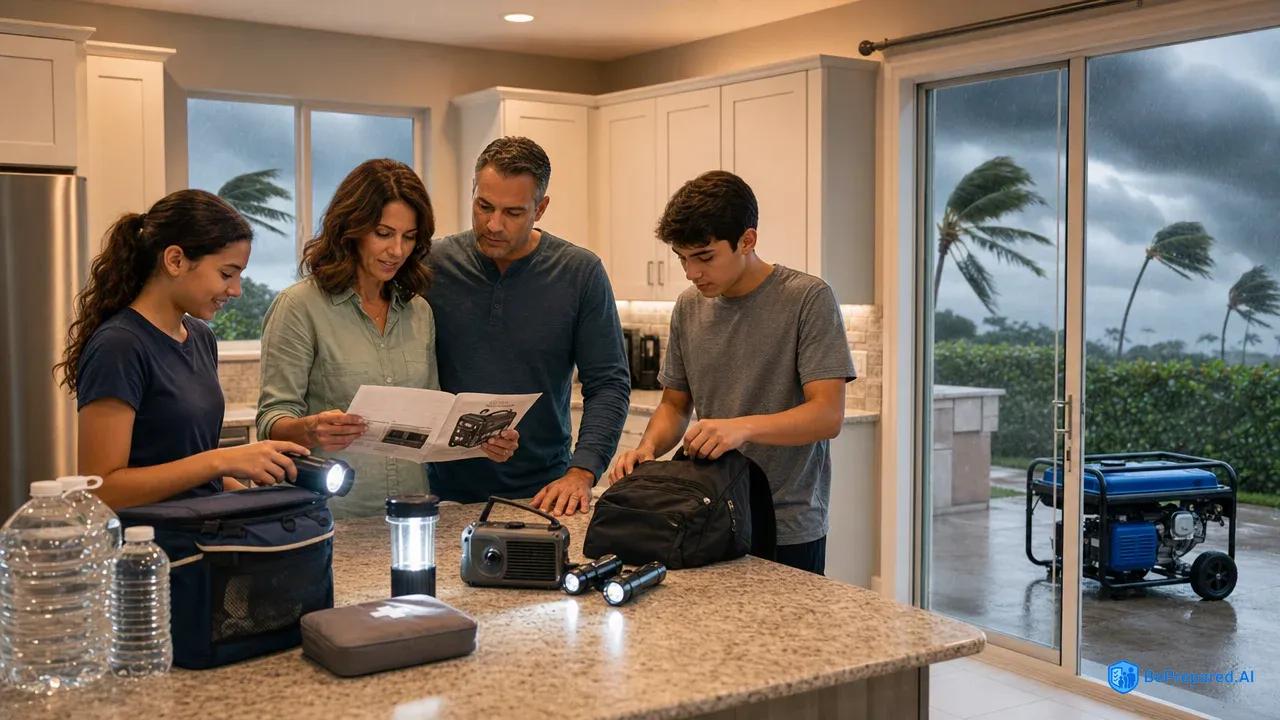
The lights flicker once, twice, then darkness swallows your home. Outside, a Category 3 hurricane howls with sustained winds of 120 mph, and you know from the emergency broadcasts that this storm isn't moving fast. Your neighbor's portable generator roars to life across the street, but your own sits silent in the garage—too small to power what you actually need, a fact you're discovering at the worst possible time. This scenario plays out in thousands of homes after every major hurricane, and it's entirely preventable with proper planning.
Generator sizing isn't about buying the biggest unit you can afford or grabbing whatever's left on the shelf when a storm approaches. It's about understanding your actual power requirements and matching them to a generator that can deliver reliable electricity for the duration of an extended outage. During major hurricanes, power outages can last several weeks , transforming generator selection from a convenience question into a critical survival decision. The difference between a properly sized generator and an inadequate one isn't just comfort—it's food safety, medical equipment operation, and preventing secondary damage like flooding or mold growth.
Most American homes consume approximately 30 kilowatt-hours (kWh) of electricity per day under normal circumstances . That's running everything: air conditioning, entertainment systems, computers, multiple refrigerators, electric water heaters, and every light switch flipped on without a second thought. Hurricane preparedness isn't about maintaining your pre-storm lifestyle—it's about strategic power allocation to essential systems. With careful planning, you can reduce daily consumption to just 5-10 kWh during an outage, which translates to a generator in the 5,000-7,500 watt range for most households .
The key to getting this right lies in understanding the difference between what you want to power and what you actually need to power. That distinction becomes crystal clear when you're calculating whether your generator budget should go toward a 5,000-watt portable unit or a 12,000-watt standby system. Make the wrong call, and you'll either waste thousands on unnecessary capacity or find yourself in a dangerous situation where critical systems can't operate. The good news? The math isn't complicated—it just requires honest assessment and some basic calculations we'll walk through together.
- Essential: Refrigerator (150-800W)
- Critical for food safety and medication storage; prioritize energy-efficient models during outages
- Essential: Sump Pump (800-1200W)
- Prevents basement flooding and structural damage; requires immediate backup power in flood-prone areas
- Essential: Medical Equipment (50-500W)
- Life-sustaining devices like CPAP machines, oxygen concentrators, and medication refrigeration
- Essential: LED Emergency Lighting (5-15W)
- Energy-efficient illumination for safety and navigation; significantly lower power draw than traditional bulbs
- Nice-to-Have: Air Conditioning (2000-5000W)
- High power consumption may exceed generator capacity; consider fans or portable units as alternatives
- Nice-to-Have: Non-Essential Appliances (varies)
- Items like coffee makers, TVs, and gaming systems; evaluate power budget before including in emergency plan
Essential vs. Nice-to-Have: What Actually Needs Power
Before you can size a generator, you need to ruthlessly categorize every electrical device in your home. This exercise forces you to confront the difference between genuine necessities and the conveniences you've grown accustomed to. During a hurricane aftermath, this distinction becomes painfully clear.
Critical Priority: Food Safety and Preservation
Your refrigerator and freezer top every essential list for good reason. A typical refrigerator uses between 700-800 watts when running , though it doesn't run continuously—it cycles on and off to maintain temperature. Your freezer typically adds another 600-700 watts to the equation. These appliances represent hundreds of dollars in food that will spoil within 24-48 hours without power. When grocery stores are closed or have empty shelves after a major storm, that food becomes irreplaceable in the short term. During Hurricane Katrina, residents who lost refrigerated food faced not just financial loss but genuine food insecurity for weeks.
Life-Safety Equipment
Medical equipment occupies its own category beyond negotiation. If anyone in your household depends on oxygen concentrators, CPAP machines, nebulizers, or refrigerated medications like insulin, these devices must receive power without interruption. Oxygen concentrators commonly draw between 300-600 watts, while CPAP machines typically use just 30-60 watts. These modest power requirements save lives, making them the first items you'll calculate into your generator capacity. Document the exact wattage requirements for any medical devices—this information appears on labels or in user manuals—because there's zero margin for error here.
Water Management Systems
If your home has a sump pump, it becomes essential equipment the moment heavy rains accompany or follow a hurricane. Sump pumps require 800-1,200 watts to operate , and they often need to run frequently during flooding conditions. A failed sump pump can flood your basement in hours, causing tens of thousands in damage and creating ideal conditions for dangerous mold growth. Similarly, if you rely on a well pump for water, that system typically draws 1,000-2,000 watts and becomes essential for basic sanitation and hygiene. City water users have an advantage here—one less major load to power.
Communication and Lighting
A few lights for safety and your communication devices round out the essential category. You don't need every room lit up like Times Square, but you do need enough lighting to move safely through your home and perform necessary tasks. LED bulbs have revolutionized this calculation—where a traditional incandescent bulb consumed 60-100 watts, an LED equivalent uses just 8-12 watts while providing the same light output. Five LED bulbs strategically placed throughout your home consume just 50 watts total. Add your phone chargers (5-10 watts each), a laptop (50-100 watts), and a radio (10-20 watts), and your entire communication and lighting needs stay under 150 watts combined.
Nice-to-Have Systems
Everything else falls into the nice-to-have category: air conditioning, electric water heaters, entertainment systems, gaming consoles, multiple TVs, garage door openers, and electric ranges. A central air conditioning system alone can demand 3,000-5,000 watts , instantly doubling or tripling your generator size requirements. Electric water heaters typically draw 4,000-5,500 watts. These systems dramatically increase both generator costs and fuel consumption. You can survive—even remain reasonably comfortable—without them during a temporary outage.
The math tells a compelling story. Essential items (refrigerator, freezer, sump pump, lights, and communication devices) total roughly 2,500-3,500 watts when everything runs simultaneously. Add medical equipment if needed, and you're still under 4,000 watts for most households. This is how you reduce from 30 kWh daily consumption to 5-10 kWh—by powering only what truly matters and accepting temporary lifestyle adjustments for the duration of the emergency.
The Math: Calculating Your Actual Power Requirements
Understanding wattage requirements involves more than adding up numbers on appliance labels. Motors and compressors—found in refrigerators, freezers, air conditioners, and pumps—behave differently than resistive loads like lights and heaters. This distinction makes or breaks your generator sizing calculations.
Step 1: Identify Starting Watts vs. Running Watts
Every motor-driven appliance requires significantly more power to start than it needs to keep running. When your refrigerator compressor kicks on, it might need 2,100 watts for the first second or two, even though it only draws 700 watts during normal operation. This surge power, also called starting watts, exists because electric motors need extra energy to overcome inertia and begin spinning. Motor-driven appliances typically need 2-3 times more power to start than to run continuously .
Your generator must handle these starting surges without shutting down or damaging the appliance. If your generator can only produce 3,500 watts and your refrigerator suddenly demands 2,100 watts to start while your sump pump is already running at 1,000 watts, you've just exceeded capacity by 600 watts. The generator will either shut off to protect itself or struggle under the overload, potentially damaging both the generator and your appliances.
Step 2: List Every Essential Appliance with Both Values
Create a detailed spreadsheet or use the back of an envelope—whatever works for your planning style. For each essential appliance, record both the running watts and starting watts. Check the manufacturer's label on the appliance itself, consult the owner's manual, or search for specifications online using your exact model number. Here's what a realistic essential load might look like:
- Refrigerator: 700 watts running, 2,100 watts starting
- Freezer: 600 watts running, 1,800 watts starting
- Sump pump: 1,000 watts running, 2,000 watts starting
- Five LED lights: 50 watts total (LEDs have negligible starting surge)
- Phone chargers and laptop: 100 watts total
- Radio: 15 watts
- Microwave (if included): 1,000 watts running, 1,000 watts starting (resistive load, no surge)
Step 3: Calculate Maximum Simultaneous Load
Here's where strategy enters the equation. You don't need to start every appliance at the exact same moment. In practice, you'll manage your loads by starting one motor-driven appliance at a time, waiting 30 seconds for it to settle into running mode, then starting the next. This load management technique dramatically reduces the peak power your generator must deliver.
Calculate your maximum realistic scenario: assume your refrigerator and freezer are already running (1,300 watts combined), then your sump pump kicks on, requiring its full 2,000-watt starting surge. Add your continuous loads like lights and chargers (165 watts). Your peak demand in this scenario reaches 3,465 watts. That's your baseline minimum generator capacity—but you're not done calculating yet.
Step 4: Add the Critical 20% Safety Margin
Generator manufacturers rate their products at maximum output, but running any engine at 100% capacity continuously causes excessive wear, overheating, and shortened lifespan. Professional electricians and generator installers recommend adding a 20% safety margin to your calculated maximum load . This buffer protects your equipment, ensures reliable operation, and gives you flexibility if you've underestimated any appliance's power draw.
Taking our 3,465-watt peak demand and adding 20% brings you to 4,158 watts. Round up to the nearest generator size, and you're looking at a 5,000-watt unit as your minimum adequate capacity. This calculation assumes careful load management and excludes nice-to-have items like air conditioning or electric water heaters.
Step 5: Consider Real-World Scenarios
Walk through a mental simulation of a typical day during a power outage. At 6:00 AM, you'll start the generator and your refrigerator and freezer will immediately begin cooling down. By 7:00 AM, you're making coffee (add 1,000 watts if you use an electric coffee maker). Throughout the day, the sump pump may cycle on and off depending on rainfall. In the evening, you'll want additional lighting and perhaps a fan for air circulation. Each of these scenarios represents a different load profile, and your generator must handle the peak demand moment.
This is also when you'll discover whether you've been honest about your essential vs. nice-to-have categorization. That window air conditioning unit drawing 1,200 watts might seem essential during a hot September hurricane, but adding it to your load calculation pushes you from a 5,000-watt generator to a 7,500-watt unit—a significant cost increase for both the equipment and the fuel it will consume.
Create a personalized preparedness plan based on your location and family needs to identify your household’s severe-weather power priorities before the next outage.
Generator Types and Capacity Options
Once you know your wattage requirements, you'll face a marketplace offering dozens of generator types, fuel options, and capacity ranges. Each category serves different needs and comes with distinct advantages and limitations during hurricane scenarios.
Portable Generators: The Flexible Workhorse
Portable generators range from small 3,000-watt recreational units to substantial 12,000-watt models that can power most of a home's essential systems. These generators feature wheels for mobility, manual start systems (pull cord or electric start), and require you to run extension cords to appliances or connect through a manual transfer switch. The 5,000-7,500 watt range represents the sweet spot for hurricane preparedness, providing enough capacity for essential appliances without excessive fuel consumption or cost.
The primary advantage of portable generators lies in their flexibility and lower initial investment. You can move them to optimal placement locations, store them in a garage or shed when not needed, and even take them to other locations if you evacuate. During Hurricane Harvey, many residents who evacuated with their portable generators were able to power essentials at their temporary accommodations or bring them back to run tools during cleanup operations.
Portable generators demand hands-on operation. You must manually start them, monitor fuel levels, perform refueling (which requires shutting down and cooling), and shut them down when they're no longer needed. In the middle of a storm or during the exhausting days of recovery, this manual operation becomes a significant burden. You're also responsible for proper storage of fuel, regular maintenance, and seasonal preparation.
Standby Generators: The Automatic Solution
Standby generators permanently install outside your home, connect directly to your electrical panel through an automatic transfer switch, and start automatically within seconds of detecting a power outage. Standby generators range from 7,500 watts for basic whole-house coverage up to 20,000+ watts for large homes with air conditioning and all amenities. They typically run on natural gas from your existing utility line or a large propane tank installed specifically for the generator.
The convenience factor cannot be overstated. When Hurricane Irma knocked out power across Florida, homeowners with standby generators didn't need to do anything—their systems detected the outage and started automatically, maintaining power to pre-selected circuits without any human intervention. This automatic operation proves especially valuable if you're elderly, disabled, or away from home when the outage occurs.
The trade-off comes in cost and commitment. Standby generators require professional installation, including electrical work, fuel line connections, and often concrete pads for mounting. Installation costs can equal or exceed the generator's purchase price. You're also committing to a permanent location, regular maintenance schedules, and the aesthetic impact of having a generator unit visible in your yard. For homeowners in hurricane-prone regions who experience frequent extended outages, these trade-offs often prove worthwhile.
Inverter Generators: The Quiet Specialist
Inverter generators use advanced electronics to produce cleaner, more stable power than conventional generators. They run significantly quieter, adjust engine speed based on demand (improving fuel efficiency), and provide power quality safe for sensitive electronics like computers and medical equipment. Most inverter generators fall in the 2,000-7,000 watt range, with the technology adding cost compared to conventional portable generators of similar capacity.
For hurricane scenarios, inverter generators excel when you're powering a smaller essential load that includes electronics and medical devices. The fuel efficiency becomes significant during extended outages—an inverter generator might run 8-10 hours on a gallon of gasoline compared to 4-6 hours for a conventional generator of the same capacity. The reduced noise also matters when you're living in close quarters with neighbors who are equally stressed and sleep-deprived after a major storm.
Fuel Type Considerations
Your generator's fuel type shapes its reliability and convenience during hurricane scenarios. Gasoline generators offer the lowest initial cost but require fuel that degrades over time and becomes scarce before and after storms. Propane generators burn cleaner, store for extended periods without degradation, and allow you to stockpile fuel in advance, though propane contains less energy per gallon than gasoline. Natural gas generators provide unlimited runtime without refueling but depend on utility infrastructure that might fail during earthquakes or other disasters. Dual-fuel generators offer flexibility by accepting both gasoline and propane, giving you options when one fuel becomes unavailable.
The capacity question ultimately returns to your calculated essential load plus that 20% safety margin. A properly sized generator handles your needs without excess capacity that wastes fuel and money. Generators should be sized to handle essential appliances, typically requiring 5,000-7,500 watts for basic household needs during hurricane outages. Larger capacity makes sense only if you've honestly assessed your requirements and determined that air conditioning, water heating, or other major loads truly belong in your essential category.
Safety First: Proper Installation and Operation
Generator safety isn't optional or negotiable—it's the difference between helpful backup power and deadly carbon monoxide poisoning. Carbon monoxide from generators kills about 85 people each year and sends hundreds more to emergency rooms with serious poisoning . Every single one of these deaths was preventable through proper placement and operation.
The Carbon Monoxide Threat
Carbon monoxide (CO) is an invisible, odorless gas produced whenever you burn fuel—gasoline, propane, natural gas, or diesel. Your generator's engine produces substantial quantities of CO in its exhaust, and this gas kills by displacing oxygen in your bloodstream. You cannot smell it, see it, or taste it. The symptoms of CO poisoning—headache, dizziness, nausea, and fatigue—mirror the exhaustion you already feel after surviving a hurricane, making it easy to miss the warning signs until you lose consciousness.
The critical safety rule allows no exceptions: never operate a generator indoors, in your garage, in your carport, in your basement, or in any enclosed or partially enclosed space . "But I opened the garage door" doesn't cut it—CO accumulates rapidly even in spaces that seem well-ventilated. "But it's raining outside" isn't an excuse either—generators are designed to operate outdoors in weather, and you can purchase weather-resistant covers if needed.
Proper Placement Requirements
Position your generator at least 20 feet away from windows, doors, and vents. This distance helps prevent exhaust from entering your home through any opening, including those you might not immediately consider like dryer vents, crawl space vents, or gaps around window air conditioning units. Point the generator's exhaust away from your house and your neighbors' houses. Remember that CO is roughly the same density as air, so it doesn't simply rise and dissipate—it can flow through open windows on any floor of your home.
Consider wind direction when placing your generator. During a hurricane, wind patterns shift constantly, but you can usually identify the prevailing direction. Position your generator so typical wind patterns carry exhaust away from structures rather than toward them. If you're using a portable generator, establish your safe operating location before the storm arrives, ensuring the area provides stable, level ground that won't flood during heavy rainfall.
Electrical Safety and Proper Connections
Generator electrocution hazards come primarily from improper connections to your home's electrical system. The safest approach uses a transfer switch—either manual or automatic—professionally installed by a licensed electrician. This switch isolates your home from the utility grid when generator power activates, preventing backfeed that can electrocute utility workers trying to restore power to your neighborhood. Backfeed occurs when generator power flows backward through your electrical panel into utility lines, creating a lethal hazard for linemen who assume the downed lines are dead.
If you're using extension cords instead of a transfer switch, use only heavy-duty outdoor-rated cords of appropriate gauge for the appliance load. Undersized extension cords overheat, creating fire hazards and delivering insufficient power to your appliances. Never plug a generator into a wall outlet—this "backfeeding" method bypasses safety systems and creates the electrocution hazard described above. It's also illegal in most jurisdictions and violates electrical codes nationwide.
Grounding Requirements
Proper grounding protects you from electrical shock if a fault occurs in the generator or connected appliances. Many portable generators require grounding through a copper grounding rod driven at least eight feet into the earth, with a grounding wire connecting the generator's grounding terminal to this rod. Some newer generators with bonded neutral connections may not require separate grounding when used with extension cords, but you must verify your specific model's requirements in the owner's manual. Standby generators receive proper grounding as part of professional installation, but you should verify this work was completed to code.
Refueling Safety
Always shut down your generator and allow it to cool for at least 15 minutes before refueling. Gasoline spilled on hot engine components ignites easily, causing fires that can spread to fuel containers and nearby structures. Keep fuel containers at least 10 feet away from the generator during operation, and store them in a cool, well-ventilated area away from living spaces. The fumes from gasoline are themselves flammable and can ignite from pilot lights, water heater burners, or electrical sparks.
Install battery-powered carbon monoxide detectors on every level of your home and test them regularly. These detectors provide your only reliable warning if exhaust enters your living space despite proper generator placement. During extended outages, check detector batteries and replace them if needed—your CO detectors are just as essential as the generator itself.
- Fuel Type Overview & Storage
- Comparison of gasoline, propane, and natural gas with standard container sizes, storage requirements, and shelf life specifications
- Energy Density & Runtime Calculations
- BTU output per gallon/cubic foot, generator runtime formulas, and fuel consumption rates for load calculations
- 72-Hour Emergency Requirements
- Minimum fuel quantities needed for 3-day power generation based on typical household loads and generator sizes
- Storage & Safety Considerations
- Ventilation requirements, fire codes, container specifications, and safety protocols for each fuel type
- Cost Analysis & Availability
- Price per BTU comparison, regional availability factors, and long-term cost projections for each fuel option
- Pros & Cons Matrix
- Comprehensive advantages and disadvantages including reliability, maintenance, environmental impact, and operational complexity
Fuel Planning and Runtime Considerations
A generator without fuel is just an expensive lawn ornament. Hurricane power outages can last several weeks, making fuel planning as critical as generator sizing. Your fuel strategy must account for storage capacity, fuel degradation, availability during emergencies, and the practical logistics of multi-day operation.
Gasoline: Convenient but Complicated
Gasoline offers the advantage of universal availability and compatibility with most portable generators. A typical 5,000-watt generator running at 50% load may consume approximately 0.6-0.8 gallons per hour, meaning a 5-gallon container provides 6-8 hours of runtime. For a 24-hour day of operation, you'll need 15-20 gallons of gasoline. For a week-long outage, that's 105-140 gallons—a substantial quantity that exceeds most people's safe storage capacity.
The storage challenge intensifies because gasoline degrades over time. Even with fuel stabilizer additives, gasoline can begin breaking down within several months, forming varnishes and deposits that clog carburetors and fuel systems. This degradation means you can't simply fill 30 jerry cans in June and expect them to work reliably in November. You need a rotation system where you periodically use stored fuel in your vehicles and replace it with fresh gasoline, adding stabilizer to each batch.
Hurricane preparation creates a fuel availability crisis in threatened regions. In the 48-72 hours before a major storm makes landfall, gas stations experience runs that empty their tanks. After the storm passes, stations may remain closed for days or weeks due to power outages, fuel delivery disruptions, or damage. The residents who prepared by stockpiling fuel before the storm watch forecasts have their needs met, while those who waited find themselves unable to obtain fuel when they need it most.
Propane: The Storage Champion
Propane solves the degradation problem—it stores for extended periods without losing potency or forming deposits. A standard 20-pound propane cylinder (the size used for gas grills) contains approximately 4.7 gallons of propane, providing 8-12 hours of runtime on a 5,000-watt generator at 50% load. Propane also burns cleaner than gasoline, reducing engine deposits and extending time between maintenance intervals.
The energy density trade-off means propane contains roughly 27% less energy per gallon than gasoline, so you'll consume more fuel volume for equivalent runtime. The ability to store multiple propane cylinders without degradation concerns often outweighs this disadvantage. You can keep 100 pounds of propane (five 20-pound cylinders) stored safely and legally at most residential properties, providing 40-60 hours of generator runtime immediately available when disaster strikes.
Propane availability during hurricanes is generally better than gasoline because propane dealers often continue operating when gas stations close. Propane doesn't require electricity to pump, and many dealers offer emergency delivery services. Some homeowners install 100-500 gallon propane tanks specifically for generator use, providing days or weeks of fuel capacity that requires no rotation or maintenance.
Natural Gas: Unlimited but Infrastructure-Dependent
If your home already has natural gas service, a natural gas generator offers the ultimate convenience—unlimited runtime without refueling. The gas flows continuously from utility lines, and you never need to store, rotate, or transport fuel. For extended outages lasting weeks, this advantage becomes enormous.
The vulnerability lies in infrastructure dependence. Natural gas service requires functioning distribution systems and pressure regulation. While natural gas utilities generally maintain service during power outages (the gas itself doesn't require electricity to flow), physical damage to distribution lines from hurricanes, tornadoes, or floods can interrupt service. Earthquakes pose particular risks to natural gas infrastructure. You're also locked into a single fuel source with no backup option if that supply fails.
Runtime Strategy and Load Management
You don't need to run your generator 24 hours per day during an extended outage. Strategic operation conserves fuel and extends your supply. Run the generator 4-6 hours in the morning to cool down refrigerator and freezer, charge devices, prepare food, and run the sump pump if needed. Shut down during midday when you can use natural light. Run another 4-6 hours in the evening for lighting, cooking, and another refrigeration cycle. Shut down overnight unless you have medical equipment requiring continuous power.
This intermittent operation reduces your daily fuel consumption by 50-60% compared to continuous operation, effectively doubling your fuel supply's duration. Modern refrigerators and freezers maintain safe temperatures for 4-6 hours between cooling cycles if you keep doors closed, making this strategy practical for food safety. Your total daily runtime might be just 8-12 hours, consuming 6-10 gallons of gasoline or equivalent propane instead of 15-20 gallons for continuous operation.
Calculate your fuel needs based on realistic runtime expectations and your storage capacity. If you can safely store 30 gallons of gasoline with proper containers and rotation, that provides 3-4 days of intermittent operation. Add two 20-pound propane cylinders as backup fuel for a dual-fuel generator, and you've extended your capacity to 5-6 days. This planning transforms an overwhelming logistical challenge into a manageable preparation task.
Making Your Final Decision: Budget and Long-term Planning
You've calculated your wattage requirements, compared generator types, and planned your fuel strategy. Now comes the decision that balances immediate costs against long-term value, weighing your specific circumstances against general recommendations. This decision isn't purely financial—it's about matching your resources to your actual risk and your household's specific vulnerabilities.
Assessing Your Risk Profile
Start by honestly evaluating how often you lose power and for how long. If you live in South Florida, coastal Louisiana, or the Outer Banks of North Carolina, multi-day outages occur with predictable frequency during hurricane season. Your risk profile justifies more substantial investment in generator capacity and installation. If you're in an area that faces hurricane threats once or twice per decade, your calculation shifts toward more modest, portable solutions that serve multiple purposes beyond hurricane prep.
Consider your household's specific vulnerabilities. A family with young children, elderly members, or anyone with medical conditions requiring powered equipment faces different stakes than a healthy young couple who can weather discomfort more easily. The presence of medical equipment elevates generator power from convenience to genuine necessity, justifying higher investment in reliable standby systems with automatic operation. Similarly, if you work from home and depend on internet connectivity for income, your essential load calculations might legitimately include networking equipment and computers that others would classify as nice-to-have items.
Initial Investment vs. Operating Costs
A quality 5,000-7,500 watt portable generator represents a moderate initial investment that most households can accommodate with advance planning. Installation remains simple—you can handle setup yourself with basic mechanical skills, or hire a handyman for a few hundred dollars to install a manual transfer switch for safer operation. Your total initial investment remains manageable while providing genuine capability for essential loads.
Standby generators multiply the initial investment significantly, but they also eliminate ongoing operational burden. You're not hauling a generator out of storage, managing fuel, performing manual starts, or monitoring operation during exhausting post-storm recovery. For many homeowners—particularly those who are older, have mobility limitations, or travel frequently—this convenience justifies the higher cost. The automatic operation also protects your home if you're away when an outage occurs, preventing food spoilage, sump pump failures, and temperature-related damage.
Don't overlook ongoing costs in your analysis. Generators require annual maintenance including oil changes, spark plug replacement, air filter cleaning, and periodic load testing to ensure they'll start when needed. Portable generators might cost $50-100 annually in maintenance if you perform it yourself, while standby generators typically require professional service contracts costing $200-400 annually. Fuel costs during actual outages vary based on duration and your load management strategy, but budget for substantial expense during extended outages—$100-300 in fuel for a week-long outage is realistic.
Whole-House vs. Essential Circuits
The essential circuits approach focuses your generator capacity on truly critical loads, accepting that some areas of your home will remain without power during outages. This strategy allows smaller, less expensive generators to meet your genuine needs. You'll manually manage which devices operate, potentially running extension cords to essential appliances or using a manual transfer switch that powers only selected circuits. The trade-off is convenience and comfort for cost savings and simpler logistics.
Whole-house generators attempt to maintain your normal lifestyle during outages, powering air conditioning, water heaters, and multiple circuits throughout your home. This approach requires substantially larger generators—typically 15,000-20,000 watts or more —with corresponding increases in equipment costs, installation complexity, and fuel consumption. For most households, whole-house power represents over-preparation that consumes resources better allocated to other preparedness priorities.
Weighing the Pros and Cons
Portable Generator Advantages:
- Lower initial cost ($500-2,000 for quality units)
- Flexibility to move and relocate
- No installation requirements
- Can serve multiple purposes (camping, job sites, lending to neighbors)
- Easier to repair and maintain yourself
Portable Generator Disadvantages:
- Manual operation during stressful conditions
- Fuel storage and rotation requirements
- Exposure to weather during operation
- Limited runtime per tank (requires refueling)
- No power if you're away from home
Standby Generator Advantages:
- Automatic operation within seconds of outage
- No manual intervention required
- Unlimited runtime with natural gas
- Powers home even when you're away
- Professional installation ensures safety compliance
Standby Generator Disadvantages:
- High initial cost ($3,000-7,000+ for equipment)
- Installation costs ($2,000-5,000 or more)
- Permanent location commitment
- Requires professional maintenance
- Depends on fuel infrastructure
Making Your Confident Decision
Your generator decision should align with your overall preparedness philosophy and budget. A properly sized 5,000-7,500 watt generator that matches your calculated essential load provides genuine capability without overspending on unnecessary capacity. This mid-range approach serves most households well, offering meaningful protection against extended outages while remaining financially accessible.
If budget constraints limit your options, a smaller 3,000-4,000 watt generator still provides value by powering your refrigerator, some lighting, and communication devices—covering the most critical food safety and information needs even if it can't handle your complete essential load. You'll manage loads more carefully, running only one major appliance at a time, but you'll avoid the worst consequences of extended outages.
Conversely, if your circumstances include medical equipment, frequent outages, or household members with special needs, stretching your budget toward a standby generator with automatic operation might represent the most prudent investment. The peace of mind and reliable automatic operation during what's already a stressful emergency situation carries genuine value beyond the equipment's specifications.
The right generator for your household matches your calculated needs, fits your budget (including installation and ongoing costs), and aligns with your realistic assessment of how you'll actually use it. Proper generator sizing ensures adequate power without overspending on unnecessary capacity, while factoring in long-term costs including fuel, maintenance, and potential repairs. Make this decision deliberately during calm times, and you'll have reliable power when hurricane winds test your preparation.
Get our complete hurricane preparedness checklist including generator safety guidelines, fuel calculation worksheets, and maintenance schedules to ensure your generator remains ready when the next storm threatens. Your preparation today determines your resilience tomorrow.