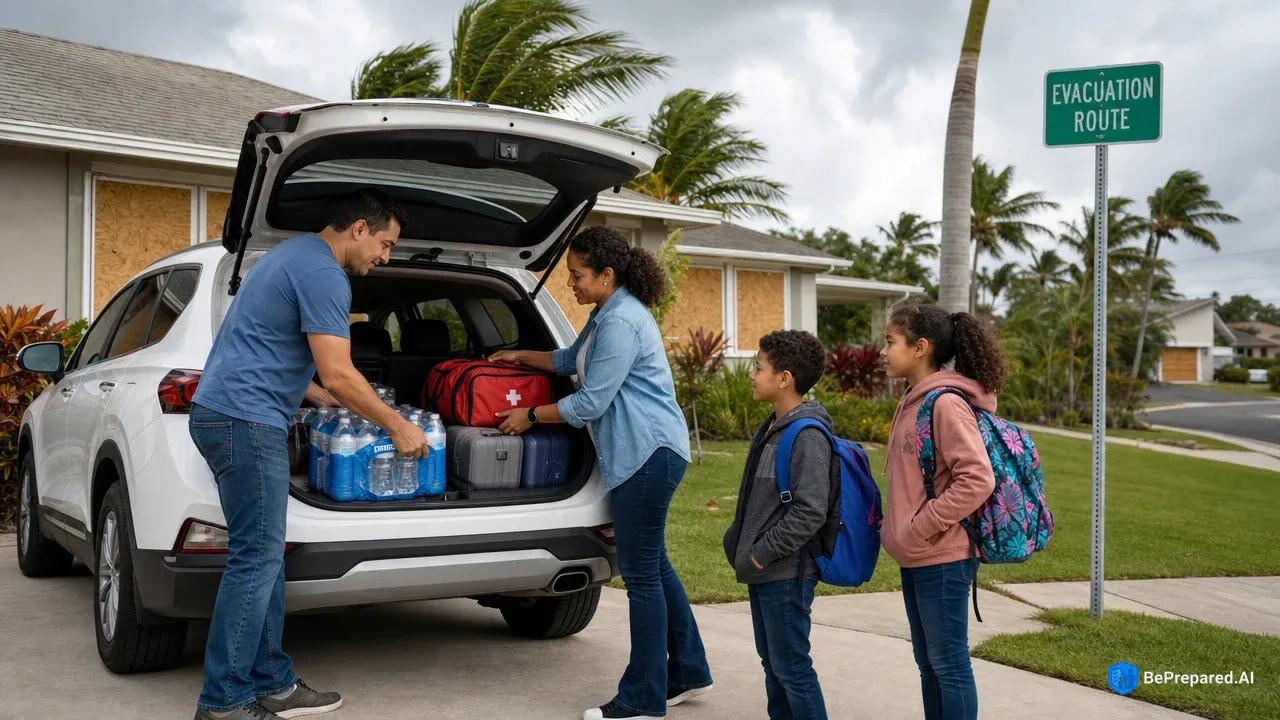
Don't Let These Hurricane Evacuation Mistakes Put Your Family at Risk
The Martinez family thought they had plenty of time. When the hurricane forecast shifted Tuesday evening, showing their coastal town directly in the path, they figured they'd leave Wednesday morning. By the time they loaded their SUV and pulled onto the highway, thousands of other families had the same idea. What should have been a four-hour drive turned into a thirteen-hour crawl of gridlocked traffic, dwindling fuel, and rising anxiety as the storm's outer bands began lashing their vehicle with rain.
Note: This is a composite example based on common evacuation experiences.
Stories like this happen every hurricane season, and they don't have to. Hurricane evacuations absolutely save lives when done correctly, but common mistakes can transform a straightforward safety measure into a dangerous situation . The difference between a successful evacuation and a harrowing experience often comes down to understanding what not to do.
Many people underestimate how long it takes to evacuate and wait too long to leave . Failing to know your evacuation zone is a critical error that can cost lives . Learning from others' errors gives you the advantage of preparation without the price of experience.
This guide walks you through the most common hurricane evacuation mistakes so you can avoid them when your family's safety depends on making the right choices. You'll learn simple steps to take right now that make evacuation smoother and less stressful when the time comes.
Timing Mistakes: When 'Later' Becomes Too Late
Sarah Thompson still remembers the panic in her neighbor's voice. It was September 2018, and Hurricane Florence was bearing down on their North Carolina community. Sarah had left two days earlier during the voluntary evacuation, but her neighbor Jim kept saying he'd "wait and see." When the mandatory evacuation order finally came, Jim found himself in bumper-to-bumper traffic that barely moved. What terrified him most wasn't just the crawling pace—it was watching the gas gauge drop while still being miles from any open station.
Note: This is a representative example based on typical evacuation experiences during Hurricane Florence.
Waiting for a mandatory evacuation order instead of leaving during voluntary evacuation leads to dangerous traffic congestion that can trap you in harm's way . When officials issue voluntary evacuation orders, they're not being overly cautious—they're giving you the gift of time. These early windows allow you to leave before the rush, find available hotel rooms, and evacuate safely with your family.
The roads are clearer during voluntary evacuations. Gas stations are still operating normally. You're not racing against a ticking clock with a massive storm breathing down your neck. You have time to think clearly and make good decisions.
Many people underestimate how long it takes to evacuate and wait too long to leave . They think about their normal drive time to reach safety—maybe four hours to get to relatives inland—and figure they can leave the morning of the mandatory order. What they don't factor in is that hundreds of thousands of other people are making the same calculation.
According to emergency management officials, evacuation times can increase dramatically during mass evacuations. A route that normally takes four hours can stretch to twelve hours or more when everyone leaves at once. Add in the time needed to pack, secure your home, withdraw cash, fill prescriptions, and handle last-minute details, and you're looking at leaving a full day earlier than you think.
The psychology behind this timing mistake makes sense. Leaving early feels like overreacting. You might miss work unnecessarily, spend money on a hotel you didn't need, or feel foolish if the storm changes course. But the alternative—being caught on the highway when the storm hits—carries risks that far outweigh any inconvenience.
Emergency managers plan voluntary evacuation windows specifically to spread out traffic and give everyone a chance to leave safely . They base these decisions on years of experience and sophisticated modeling. When they say it's time to consider leaving, they mean it.
Here's a simple way to think about timing: If you're debating whether it's too early to leave, it's probably the perfect time. If you're sure you need to leave right now, you're probably already behind the curve.
Route Planning Failures That Leave You Stranded
Having a solid evacuation route planned makes all the difference between a smooth departure and a dangerous journey. Unfortunately, route planning is where many families make critical errors that leave them stranded or searching for alternatives at the worst possible time.
The Single-Route Trap
Planning only one evacuation route sets you up for trouble. Hurricanes bring flooding that closes roads with little warning. Accidents during mass evacuations can shut down major highways for hours. If your only planned route becomes impassable, you're left making desperate decisions without good information.
Plan evacuation routes in advance and have multiple options in case roads are blocked . Know at least two completely different ways to reach your destination. These routes should use different highways when possible, not just different exits on the same road.
Ignoring Real-Time Conditions
The route that worked perfectly last year might be underwater this year. Failing to check current road conditions before leaving means you could drive an hour in the wrong direction only to hit a roadblock and have to backtrack.
Before you leave, check your state's department of transportation website. Listen to local radio. Monitor traffic apps on your phone. Some coastal states activate contraflow lanes during evacuations, reversing normally inbound lanes to add outbound capacity—but only on certain highways. You need to know which routes have this advantage.
The Fuel Miscalculation
Not planning fuel stops along your route creates one of the most stressful evacuation scenarios. Gas stations along evacuation routes run dry quickly. You can't count on finding fuel when you need it.
Fill your tank completely before leaving home, even if you filled up yesterday. Then map out where gas stations are located along your primary and alternate routes. Know which exits have multiple stations in case one is already out of fuel.
Keep your tank above half-full during the entire journey. Don't let it drop to a quarter tank before looking for the next station. This gives you flexibility if stations are closed or have long lines.
Underestimating Inland Flooding
Many evacuees assume once they're away from the coast, they're safe from hurricane impacts. This leads to choosing routes through low-lying inland areas that flood from the hurricane's rainfall.
Rivers and streams inland can rise rapidly as storm surge pushes water upstream and heavy rains overwhelm drainage systems. Just 6 inches of moving water can knock you down and one foot can sweep your vehicle away . Your evacuation route should avoid known flood zones, even those far from the coast.
The National Weather Service provides inland flood forecasts during hurricanes. Use this information when selecting your route . A slightly longer route on higher ground beats a shorter route through a flood zone.
No Backup Communication
Routes change during active evacuations, but you won't know about closures or alternatives if you can't receive updates. Download offline maps to your phone before leaving, since cell service can become spotty during evacuations.
Have a battery-powered radio to receive emergency broadcasts. Share your route with family members who aren't evacuating with you. Establish check-in times so someone knows where you should be. This simple step helps if you need assistance or if worried relatives are trying to reach you.
- Essential Documents ✓
- ID, insurance papers, medical records, and cash in waterproof bag
- Medications & First Aid ✓
- Prescription drugs, basic bandages, pain relievers, and emergency contacts
- Water & Food ✓
- 3 days of water per person, non-perishable snacks, and can opener
- Electronics & Communication ✓
- Phone chargers, battery radio, flashlight, and extra batteries
- Heavy Furniture ✗
- Leave behind bulky items like dressers, couches, and large appliances
Packing Mistakes That Create New Problems
The difference between smart packing and problematic packing becomes painfully clear during an evacuation. While the Martinez family sat in traffic, they realized their mistake: they'd packed like they were moving, not evacuating. The truck bed was loaded with furniture, boxes of kitchen items, and even a television.
All that weight was burning through their fuel faster. None of it mattered compared to what they'd forgotten—their insurance documents and their daughter's prescription medications.
Too Much Versus Too Little
Bringing too much stuff slows you down in multiple ways. Extra weight decreases your fuel efficiency right when gas is precious. Loading and unloading takes longer. You need more space at your destination.
More importantly, time spent deciding what to bring and loading non-essentials is time you should be spending getting on the road. Focus on what you truly need for safety and recovery.
On the other hand, forgetting essentials creates problems you can't easily fix during an evacuation. Medications should be packed with extra supplies in case of delays. Emergency management agencies recommend having enough medication to last beyond your expected return date .
Important documents should be kept in waterproof containers so you have proof of insurance, identification, and property ownership if you need to file claims later . These documents are your lifeline for recovery after the storm passes.
Documents Versus Dishes
Compare what matters in the days after a hurricane versus what you can replace. Your insurance policy, property deed, birth certificates, medical records, and family photos are irreplaceable. Your dishes, clothes, and furniture can be replaced.
Yet people consistently make the mistake of packing items that won't survive the trip or don't matter for their immediate safety and recovery. Use a fireproof and waterproof document bag for papers. Take photos of your important documents and upload them to cloud storage as a backup.
For sentimental items like photos, consider scanning them or photographing them rather than bringing bulky albums. A digital backup of precious memories takes up no space and can't be lost in the chaos of evacuation.
Vehicle Loading Mistakes
Not securing items properly in your vehicle creates hazards during the trip. Loose objects become projectiles if you have to brake suddenly in evacuation traffic. Heavy items should go low and toward the front of your vehicle for better weight distribution.
Keep your evacuation bag accessible in the passenger compartment, not buried in the trunk. You should be able to grab essentials without unpacking everything if you need to leave your vehicle for any reason. This includes water, snacks, medications, phone chargers, and important documents.
Perishables and Pets
Packing items that won't survive the trip wastes space and creates messes. Don't pack coolers full of food that will spoil—you'll have access to food along the way and at your destination. Focus your packing energy on things that actually matter.
Do pack supplies for pets, including food, medications, vaccination records, and comfort items. Many shelters that accept pets require proof of vaccinations, so having those records readily available prevents problems . A familiar toy or blanket helps keep pets calm during the stressful evacuation journey.
Zone Confusion: Not Knowing Where You Stand
Failing to know your evacuation zone is a critical error that can cost lives . Yet remarkably, many coastal residents have lived in their homes for years without ever checking which evacuation zone they're in. This isn't just an oversight—it's a dangerous gap in your hurricane preparedness that you need to fix right now, before hurricane season starts.
The good news? Finding your zone takes about five minutes and gives you crucial information for making evacuation decisions.
Step One: Find Your Zone Today
Don't wait until a hurricane is forecast to figure this out. Visit your county emergency management website and look for their evacuation zone map. Most coastal counties have interactive maps where you enter your address and immediately see your zone.
Evacuation zones are typically labeled with letters or numbers, with zones closest to water being most vulnerable to storm surge. Some areas use different naming systems, but the concept is the same—zones closest to water and at lowest elevation evacuate first.
Step Two: Understand What Your Zone Means
Different zones evacuate at different times based on the storm's predicted strength and the expected storm surge . If you're in a high-risk zone near the coast, you'll likely be under evacuation orders even for weaker hurricanes. Zones farther inland might only evacuate for stronger storms.
This staggered approach prevents everyone from evacuating simultaneously, but it only works if residents know their zones and leave when their zone is called. Storm surge affects zones differently—a Category 3 hurricane might produce surge that reaches inland zones in your county, meaning multiple zones all need to evacuate while others might shelter in place.
Step Three: Check Special Circumstances
Mobile homes and high-rise buildings have special considerations that override the standard zone designations. Mobile homes should be evacuated even for weaker storms regardless of zone, as they're vulnerable to high winds even without storm surge .
High-rise buildings present unique risks from wind and, in some cases, from storm surge that can damage lower floors and trap residents above. If you live in either situation, plan to evacuate earlier and for a wider range of storm scenarios. Check with your local emergency management office about specific guidance for your building type.
Step Four: Share Zone Information
Make sure everyone in your household knows your evacuation zone. Post it on your refrigerator along with evacuation routes and contact numbers. Discuss with family members who might not live with you but who would evacuate together.
If you have elderly parents or relatives in different zones, factor their evacuation timing into your planning. You might need to help them evacuate before your own zone is called, which affects when you need to start preparing.
Step Five: Reassess After Moving
Every time you move to a new home in a coastal area, finding your evacuation zone should be among your first tasks. Don't assume your new home is in the same zone as your old one, even if it's just a few miles away. Slight differences in elevation or distance from water can change your zone significantly.
Knowing your zone removes guesswork from evacuation decisions. When officials call for your zone to evacuate, you know exactly what to do because you've already planned for it.
Shelter and Safety Mistakes During the Journey
Once you've made the decision to evacuate and you're on the road, a new set of potential mistakes can put your safety at risk. The evacuation doesn't end when you leave your driveway—it continues until you're safely sheltered away from the storm's impact.
Choosing Unsafe Shelter Locations
Some evacuees make the mistake of stopping too soon, finding a hotel that's still within the hurricane's projected path. Others stay with friends or family whose homes aren't actually built to withstand hurricane conditions.
Your evacuation destination should be outside the forecast cone and preferably inland where storm surge and the strongest winds won't reach. Confirm that your shelter location has a plan for severe weather and that the building meets modern construction codes. If you're staying in a hotel, ask about their emergency procedures and whether they have backup power.
Carbon Monoxide Dangers
Carbon monoxide poisoning increases during hurricanes when people use generators, grills, or other fuel-burning devices indoors . This mistake often happens at evacuation destinations, not just at home.
If you're staying somewhere that loses power, never run a generator inside the house, garage, or near windows. Don't use charcoal grills or camping stoves indoors. According to the CDC, carbon monoxide is colorless and odorless, making it impossible to detect without a CO detector. It can cause serious illness or death quickly and without warning.
Communication Breakdowns
Not having backup communication plans leaves your family disconnected when you need coordination most. Cell service can become unreliable during hurricanes, and you can't count on being able to call or text.
Before evacuating, establish an out-of-state contact person everyone can check in with. This person acts as a central information hub when direct communication between family members fails. Choose someone far enough away that they won't be affected by the same storm.
Write down important phone numbers on paper—don't rely solely on your phone's contact list if your battery dies. Include numbers for your out-of-state contact, local emergency management, your insurance company, and key family members.
Underestimating Time Away
Many evacuees pack for two or three days, then find themselves unable to return home for a week or more. Roads back to evacuated areas remain closed until officials confirm they're safe, debris is cleared, and utilities are being restored.
Emergency management guidelines recommend packing supplies for at least one week when evacuating. Have a plan for how you'll manage if it stretches to two weeks. Keep enough cash to cover expenses if ATMs aren't working in your evacuation area. Credit cards are better, but cash provides backup if electronic payment systems fail.
Think through what you'll need for an extended stay. Extra clothes, toiletries, entertainment for kids, and work materials if you'll need to work remotely. Phone chargers and backup batteries. Copies of important documents in case you need to prove identity or file insurance claims.
Returning Too Soon
The evacuation isn't over until officials declare it's safe to return. Some residents make the dangerous mistake of trying to return before the all-clear is given, driving around barricades or through flooded roads.
Roads might look passable but have undermined sections that can collapse. Downed power lines might be hidden in debris. Flooding might still be rising as storm surge recedes or rivers crest days after the storm passes. Just 6 inches of moving water can knock you down and one foot can sweep your vehicle away .
Wait for official word that your area is safe to return. Monitor local news and your county emergency management website or social media channels. They'll announce when reentry is permitted, often in phases by zone or neighborhood.
- Create Your Evacuation Plan
- Identify safe destinations, map multiple routes, and establish family meeting points before any emergency occurs
- Build Your Go-Bag Kit
- Pack essential supplies including water, food, medications, documents, and clothing for each family member
- Monitor Emergency Alerts
- Stay informed through official channels, weather apps, and local authorities to know when to evacuate
- Execute Your Plan
- Grab your go-bags, secure your home, and follow your predetermined route to your safe destination
- Check In and Communicate
- Contact family members, register with authorities if needed, and update your status on social media
- Settle at Safe Location
- Find temporary shelter, assess your supplies, and monitor conditions before considering return home
Your Hurricane Evacuation Success Plan
The difference between families who evacuate successfully and those who struggle often comes down to one factor: they planned ahead. You don't figure out hurricane evacuation during a hurricane any more than you'd figure out how to swim while drowning. The time to build your evacuation success plan is right now, during the calm before the storm.
The Atlantic hurricane season officially runs from June 1 through November 30 each year, according to NOAA. Start planning before June arrives. Families who practice their evacuation plan are more likely to evacuate successfully and safely .
Set aside an afternoon to sit down with everyone in your household and walk through each element of your plan. Know your evacuation zone. Map your primary and alternate routes. Identify where you'll go—whether it's a hotel, relatives' home, or public shelter. Discuss what each person is responsible for packing and preparing.
Practice Makes Perfect
Practice your evacuation route during normal conditions so you understand the drive, know where services are located, and can identify potential problem areas. This practice run helps you estimate realistic travel time and spot gas stations, rest stops, and alternate routes.
Keep important phone numbers and documents ready in a go-bag that you don't have to assemble during an emergency. Update your plan annually, especially if family circumstances change, you move to a new home, or your household composition shifts.
Special Considerations
Your plan should include provisions for pets, arrangements for anyone with special medical needs, and coordination with elderly family members who might need assistance evacuating. Write everything down and keep copies in multiple places—one in your home, one in your vehicle, and one uploaded to cloud storage you can access from anywhere.
If someone in your household uses medical equipment that requires power, plan for how you'll manage that during evacuation. If mobility issues make evacuation challenging, register with your local emergency management office for assistance programs.
The Commitment to Act
The most important part of your success plan is the commitment to act on it when the time comes. All the planning in the world doesn't help if you ignore voluntary evacuation orders or convince yourself that this storm won't be that bad.
Trust the plan you've built. Trust the emergency managers issuing the orders. Trust yourself to make the right decision for your family's safety. You've done the work of preparing—now you just need to follow through when it matters.
Breaking It Down Into Easy Steps
Feeling overwhelmed? Start with just one thing today. Look up your evacuation zone. That's it. Tomorrow, map one evacuation route. The next day, start a list of what you'd pack. Break the preparation into small, manageable pieces instead of trying to do everything at once.
Each small step you take now makes evacuation less stressful when you need to do it for real. You're building confidence along with your plan. You're taking control of your family's safety one decision at a time.
Ready to create your family's hurricane evacuation plan? Check out our step-by-step hurricane preparedness guide to get started with simple actions you can take right now.