Understanding Barter During Economic Crisis
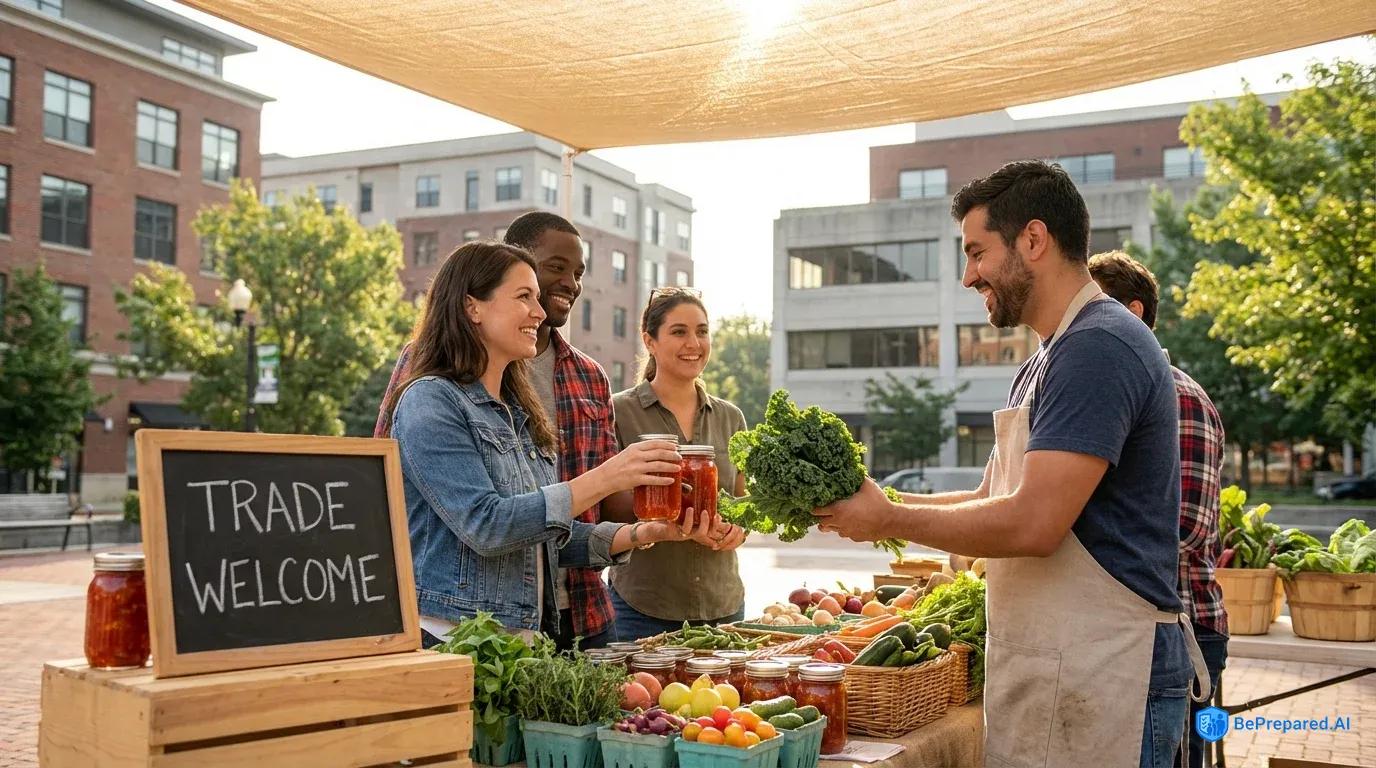
When Argentina's economy collapsed in 2001, something remarkable happened. Barter markets spread rapidly across the country as traditional currency lost its value. Neighbors who had never traded anything more valuable than recipe cards suddenly found themselves exchanging goods and services to survive. Currency became unreliable overnight, and people rediscovered an ancient truth: when money fails, human ingenuity prevails through direct exchange.
Barter represents the oldest form of commerce, predating currency by thousands of years. At its core, bartering means trading goods or services directly without money as an intermediary. During economic crises, this system resurfaces because certain tangible items hold inherent value regardless of what's happening with banks, governments, or paper money. A can of coffee remains a can of coffee whether your currency is worth its face value or belongs in a recycling bin.
The items that become most valuable during barter situations share common characteristics. They're consumable, meaning people use them up and need more. They're practical, addressing real daily needs rather than wants. They're portable enough to trade easily, and they're recognizable, so both parties immediately understand their value. Understanding these principles helps you recognize why a bottle of aspirin might trade for more than a designer handbag when the economic system crumbles.
Think of building a barter collection as creating a backup plan that requires no special skills or huge investment. You're simply setting aside extras of things people need every day. This approach removes the overwhelm because you're starting with familiar items you already buy and use.
- Coffee & Tea
- Store in airtight containers, 1-2 year shelf life. High trade value due to caffeine and comfort factor.
- Batteries
- Store in cool, dry place. 5-10 year shelf life for lithium. Universal need makes them valuable trade items.
- Soap & Hygiene Items
- Store at room temperature, indefinite shelf life. Essential for health and sanitation, always in demand.
- Salt
- Store in sealed containers away from moisture. Infinite shelf life. Vital for food preservation and cooking.
- Matches & Lighters
- Keep dry in waterproof container. Essential for fire starting, cooking, and warmth. Highly tradeable.
Essential Consumables for Barter
The foundation of any barter collection starts with items people consume regularly and can't easily produce themselves. These everyday necessities become currency when normal supply chains break down. Smart preparedness means stockpiling extras specifically for trading.
Shelf-stable food items form the cornerstone of barter goods. Long-term storage foods like rice, beans, and honey maintain stable nutritional value . Everyone needs to eat, and these foods last for years when stored properly. Proper storage methods can extend shelf life of basic commodities up to 25-30 years . Honey deserves special mention—it has exceptional longevity and has been recovered from ancient archaeological sites still in edible condition. Sugar, salt, and cooking oil also rank high because they're essential for making other foods palatable and preservable.
Consider smaller package sizes for trading purposes. A one-pound bag of rice is more practical for barter than a twenty-pound sack. People want portions they can use immediately, not bulk quantities that might spoil before they finish them.
Addictive commodities hold disproportionate trading power during crises. Alcohol, cigarettes, and coffee become premier barter items during economic crises . Coffee maintains exceptional barter value because caffeine dependence is real and withdrawal causes genuine discomfort. During World War II, coffee became so valuable that soldiers traded cigarettes and chocolate for it.
Tobacco products consistently rank among the most tradeable items, even among non-smokers who recognize their exchange value. Alcohol, particularly spirits with long shelf lives like whiskey or vodka, serves triple duty: it's consumable, it's a stress reliever people crave during difficult times, and it has medical applications as a disinfectant.
Personal care items might seem less critical than food, but they become surprisingly valuable. Soap, shampoo, toothpaste, and toilet paper address basic human dignity needs that people desperately want to maintain even during hardship. Women's hygiene products are particularly valuable because they're essential and have no improvised substitute. Diapers for those with infants become worth their weight in gold.
Batteries, matches, and candles round out this category—small, inexpensive items that enable daily life when infrastructure fails. These products cost little now but can command premium trades when stores are empty or closed.
The key with consumables is thinking about what people use daily and can't easily make themselves. A hand-crank radio might be useful, but bar soap is something people will trade for repeatedly. Focus on the unglamorous basics that disappear from shelves first during any disruption.
Medical and Health Items
Medical supplies represent critical barter goods because health emergencies don't pause during economic crises. Basic medical supplies become scarce within 72 hours of any significant disruption . When people can't access pharmacies or hospitals, they'll trade almost anything for items that relieve pain, prevent infection, or address urgent health needs.
First aid supplies constitute the foundational tier of medical barter items. Adhesive bandages, gauze pads, medical tape, and antiseptic solutions address the minor injuries that occur constantly during normal life. These injuries increase during crisis situations when people undertake unfamiliar physical tasks. Butterfly closures and wound closure strips can substitute for sutures in many situations.
Elastic bandages for sprains and strains become valuable when people can't simply visit urgent care for minor injuries. Disposable gloves protect both the caregiver and patient during wound treatment. These items are relatively inexpensive to stockpile now but become premium barter goods when medical facilities are overwhelmed or inaccessible.
Over-the-counter medications rank among the most sought-after barter items during any extended crisis. Pain relievers—acetaminophen, ibuprofen, and aspirin—address everything from headaches to dental pain to injury management. Antihistamines treat allergic reactions and help people sleep. Anti-diarrheal medications become critical when water quality deteriorates or stress affects digestive systems.
Antacids address the stomach issues that arise from stress and dietary changes. Cough suppressants and decongestants help people function through respiratory illnesses. The value of these medications increases exponentially when people can't simply drive to a pharmacy for relief.
Prescription medications present ethical and legal complexities, but understanding their barter value is important. Antibiotics and pain relievers consistently rank as the most desperately sought items during crises. While stockpiling prescription medications raises legal questions, some preparedness-minded individuals work with sympathetic physicians to obtain extra supplies of critical medications.
The reality is that during severe disruptions, people with chronic conditions or acute infections will trade almost anything for medications that maintain their health or save their lives. This makes medical supplies some of the most powerful barter items you can hold.
Storage considerations for medical items require attention to temperature and expiration dates. Most medications remain effective beyond their printed expiration dates when stored in cool, dark, dry conditions. Potency gradually decreases over time, but the items don't suddenly become useless the day after the date on the package.
Precious Metals and Portable Wealth
Precious metals and paper currency represent fundamentally different approaches to portable wealth during economic uncertainty. While both can facilitate trade, their performance during crises diverges dramatically. Currency depends entirely on government stability and public confidence—two things that evaporate quickly during severe economic disruptions. Precious metals, conversely, have maintained value across cultures and millennia because their worth is intrinsic rather than decreed.
Silver coins historically serve as the practical choice for everyday transactions during currency crises. The reasoning is straightforward: gold's high value makes it impractical for small purchases. Trying to buy a chicken with a gold coin is like trying to buy coffee with a hundred-dollar bill—technically possible but awkward and inefficient. Small denominations of precious metals proved most practical for local trading during economic disruptions .
Silver's lower per-ounce value makes it ideal for modest transactions. Pre-1965 American dimes, quarters, and half-dollars contain 90% silver and are instantly recognizable to most people. This eliminates concerns about authenticity that arise with generic silver rounds. These "junk silver" coins circulated as regular currency, so people instinctively trust them. Their recognizable design and government mint marks provide built-in authentication.
Gold maintains value across all cultures and economic conditions, serving as humanity's ultimate store of wealth . Unlike silver's practical transaction role, gold functions as concentrated wealth storage—a way to preserve significant purchasing power in minimal space. One-ounce gold coins represent substantial value, making them suitable for large purchases like vehicles or property during currency collapse.
Fractional gold coins (one-tenth ounce, one-quarter ounce) offer more flexibility for medium-sized transactions. The universal recognition of gold means it facilitates trade even between parties who share no common language or cultural background. Gold has been valued for over 5,000 years across every major civilization.
Storage and security considerations differ significantly between precious metals and other barter goods. Metals' high value-to-size ratio makes them theft targets, requiring discrete storage separate from your main supplies. Never advertise your precious metal holdings to anyone beyond your immediate household. Consider multiple small hiding spots rather than one large cache—diversification protects against total loss.
Home safes provide some security but are obvious targets. Creative concealment often works better. The same portability that makes precious metals valuable for barter also makes them ideal for evacuation scenarios where you can carry significant wealth in a small package.
The practical balance for most preppers involves holding some precious metals while prioritizing consumable goods. Metals won't feed you, but they'll help you acquire what you need when currency fails. Start with consumables that meet immediate needs, then add metals as your budget allows.
Starting Your Barter Collection
Building a barter stockpile doesn't require massive upfront investment or warehouse space. The sustainable approach involves gradual, systematic accumulation that fits your budget and storage capacity while ensuring you're prepared when needed. This method removes the overwhelm because you're taking small, manageable steps rather than trying to do everything at once.
Start with what you already use. This principle solves multiple problems simultaneously. By stockpiling items your household consumes regularly, you ensure nothing expires unused because you simply rotate stock—using older items while adding fresh ones to the back of your storage. This rotation system keeps your barter supplies fresh without waste.
Begin by identifying ten items you buy monthly: perhaps coffee, soap, pasta, canned vegetables, pain relievers, batteries, and toilet paper. Each shopping trip, add one or two extra units of these items specifically for barter storage. This approach costs just a few extra dollars per trip but accumulates substantial reserves over months . You're not changing your lifestyle or breaking your budget—you're just buying a little extra of what you already purchase.
Prioritize consumables over durables during your initial collection phase. That fancy camping stove might seem like a valuable barter item, but people will trade repeatedly for coffee, not repeatedly for stoves. Focus on items people consume and need to replace. Once you've built a solid consumable foundation—perhaps a three-month supply of key barter goods—then consider adding durable items and precious metals to your collection.
Think of it like building a house: you need a strong foundation before you add the fancy features. Consumables are your foundation. They're affordable, easy to store, and you can use them yourself if you never need to barter.
Organize storage by category and rotation date. Label containers clearly and group similar items together. Keep a simple inventory list noting quantities and purchase dates. This organization lets you quickly assess what you have during actual barter situations and ensures proper rotation. Store items in cool, dark, dry locations to maximize shelf life.
Consider splitting your storage between your primary residence and a secondary location if possible—diversification protects against loss from fire, theft, or forced evacuation. A relative's garage, a storage unit, or a trusted friend's basement can serve as your backup location.
Build knowledge alongside supplies. Understanding proper storage techniques, realistic shelf lives, and fair trade values makes your barter stockpile far more effective. Learn which items store longest, how to repackage bulk goods into trade-sized portions, and what people valued during historical crises. This knowledge transforms a random pile of stuff into a strategic preparedness asset.
Read accounts from people who lived through economic collapses in Argentina, Venezuela, Greece, and other countries. Their experiences provide invaluable insights into what actually matters when systems fail. You'll notice patterns: the same categories of items appear repeatedly in their stories.
Take your first step today. The journey from zero to prepared happens one shopping trip at a time. Add one extra shelf-stable item to your next shopping trip. That single can of coffee or extra bottle of pain reliever represents your first step toward economic resilience, whatever the future brings.
Don't worry about having everything perfect or complete. Every extra can of beans, every spare bar of soap, every additional bottle of pain reliever makes you more prepared than you were yesterday. Progress, not perfection, is the goal. Start small, stay consistent, and watch your preparedness grow naturally over time.