Why Store Emergency Food?
Picture this: It's a Tuesday evening, and you're scrolling through the news when you see reports of a major winter storm heading your way. The meteorologists are calling it a "once-in-a-decade" event. Within hours, grocery store shelves are stripped bare as neighbors rush to stock up. You realize with a sinking feeling that you're down to half a loaf of bread and some condiments in your fridge.
This scenario plays out more often than most people realize, and it's exactly why building an emergency food supply matters. Natural disasters—whether hurricanes, earthquakes, floods, or severe winter storms—can disrupt food supply chains without warning. FEMA recommends every household should maintain at least a three-day food supply per person . That might sound like a lot until you consider that recent events have shown how supply chains can be disrupted for weeks, not just days.
Beyond the practical necessity, there's something deeply reassuring about knowing you're prepared. When uncertainty strikes—whether it's a natural disaster, a power outage, or even an unexpected job loss—having food security removes one major source of stress. You're not competing with panicked crowds at the grocery store or worrying about how you'll feed your family. Instead, you can focus on keeping everyone safe and comfortable.
This peace of mind is invaluable. It transforms you from someone reacting to a crisis into someone who's already taken control of the situation before it even began. You'll sleep better knowing that whatever comes your way, your family won't go hungry. That confidence makes all the difference when the unexpected happens.
- Honey
- Indefinite shelf life in sealed glass jars. Natural sweetener that never spoils and has multiple uses.
- Salt
- Indefinite shelf life in airtight containers. Essential mineral for cooking and preservation.
Best Foods for Long-Term Storage
When you're building your emergency food pantry, not all foods are created equal. The key is selecting items that will remain safe and nutritious for extended periods while still providing the calories and nutrients your family needs during stressful times.
Canned goods form the backbone of most emergency food supplies, and for good reason. Canned vegetables, fruits, meats, and soups can last anywhere from two to five years when stored at room temperature . The canning process creates an airtight seal that prevents bacterial growth, making these items incredibly reliable. Think beyond basic vegetables—canned chicken, tuna, and salmon provide essential proteins, while canned beans offer both protein and fiber.
Don't forget comfort foods like canned chili or stew. These can be eaten cold if necessary but taste much better heated. Canned soups make quick, filling meals that require minimal preparation. The variety available in canned goods means you can create diverse meals even during an emergency.
Dried and dehydrated foods offer another excellent storage option. Rice and pasta can last for years when kept in proper conditions, and they're filling, versatile staples that form the base of countless meals. Dried beans, lentils, and split peas provide plant-based protein and can last indefinitely when stored correctly. Dried foods in airtight containers can maintain quality for 6-12 months .
Powdered milk might not taste quite like fresh milk, but it's invaluable for cooking, baking, and adding nutrition to your emergency menu. Instant oatmeal provides quick, hot breakfasts that boost morale on difficult mornings. Dried fruits and nuts round out this category, offering quick energy and essential nutrients that keep well over time.
Shelf-stable packaged foods designed for long storage include items like crackers, granola bars, peanut butter, and jarred foods. Foods high in salt, sugar, or acid naturally have longer shelf lives because these elements inhibit bacterial growth . This is why pickles, jams, and salted snacks last so long on the shelf. White sugar, salt, and pure vanilla extract last indefinitely when stored properly.
Honey deserves special mention as one of nature's most remarkable preservatives. This natural sweetener can last for years without spoiling due to its low moisture content and natural acidity. Archaeologists have even found honey in ancient Egyptian tombs that was still edible after thousands of years. Keep a jar or two in your emergency supply for sweetening foods and soothing sore throats.
Consider including comfort foods and familiar favorites in your stockpile. During emergencies, familiar tastes provide psychological comfort that shouldn't be underestimated. If your children love a particular cereal or your family enjoys specific snacks, include reasonable quantities. The goal isn't just survival—it's maintaining morale and normalcy during abnormal circumstances.
Hard candies, hot chocolate mix, and coffee or tea can make difficult situations more bearable. These small luxuries take up little space but provide big emotional benefits. When you're dealing with stress, a familiar treat can lift spirits and help everyone cope better.
Special dietary needs require advance planning. If family members have food allergies, diabetes, or other dietary restrictions, ensure your emergency supply accommodates these needs. Stock gluten-free alternatives if needed, or include low-sugar options for diabetics. Baby formula and infant food deserve special attention since babies can't simply adapt to adult food options. Store extra formula and jarred baby food appropriate for your child's age and developmental stage.
Storage Methods and Conditions
Proper storage conditions mean the difference between food that remains safe for years and food that spoils within months. Temperature control stands as one of the most critical factors affecting shelf life. Cool, stable temperatures work best for most shelf-stable foods. Think of a basement or interior closet—these spaces typically maintain steady temperatures year-round.
Avoid storing emergency food in garages, attics, or outdoor sheds where temperatures fluctuate dramatically. These spaces might seem convenient, but summer heat can reach levels that actively degrade food quality. High temperatures speed up chemical reactions that cause food to spoil. Similarly, avoid areas near heat sources like furnaces, water heaters, or appliances that generate warmth.
Instead, identify the coolest, most temperature-stable areas in your home. Interior closets work wonderfully because they're insulated from outside temperature swings. Pantries away from exterior walls stay cooler in summer and warmer in winter. Basement storage areas typically provide excellent conditions, though you'll want to ensure they stay dry.
Moisture represents another major enemy of long-term food storage. High humidity promotes mold growth, accelerates spoilage, and can cause packaging to deteriorate. Ensure your storage area has adequate ventilation and doesn't experience condensation or dampness. If you live in a humid climate, consider using desiccant packets or moisture absorbers in your storage containers.
Check your storage area periodically for signs of moisture problems. Water stains, musty odors, or visible condensation all signal that you need to address humidity issues. Sometimes simply improving air circulation or using a dehumidifier can solve the problem. Keeping food off the floor on shelves or pallets also helps protect against moisture damage.
Container selection plays a crucial role in protecting your food supply from both environmental factors and pests. Original packaging works well for many items, but consider additional protection for long-term storage. Food-grade plastic buckets with gasket-sealed lids provide excellent protection for bulk items like rice, flour, and dried beans. These containers create barriers against moisture, pests, and oxygen.
For added protection, Mylar bags with oxygen absorbers can be placed inside buckets. This creates multiple layers of defense against degradation. The oxygen absorbers remove air from the sealed bags, preventing oxidation that causes food to go stale or rancid.
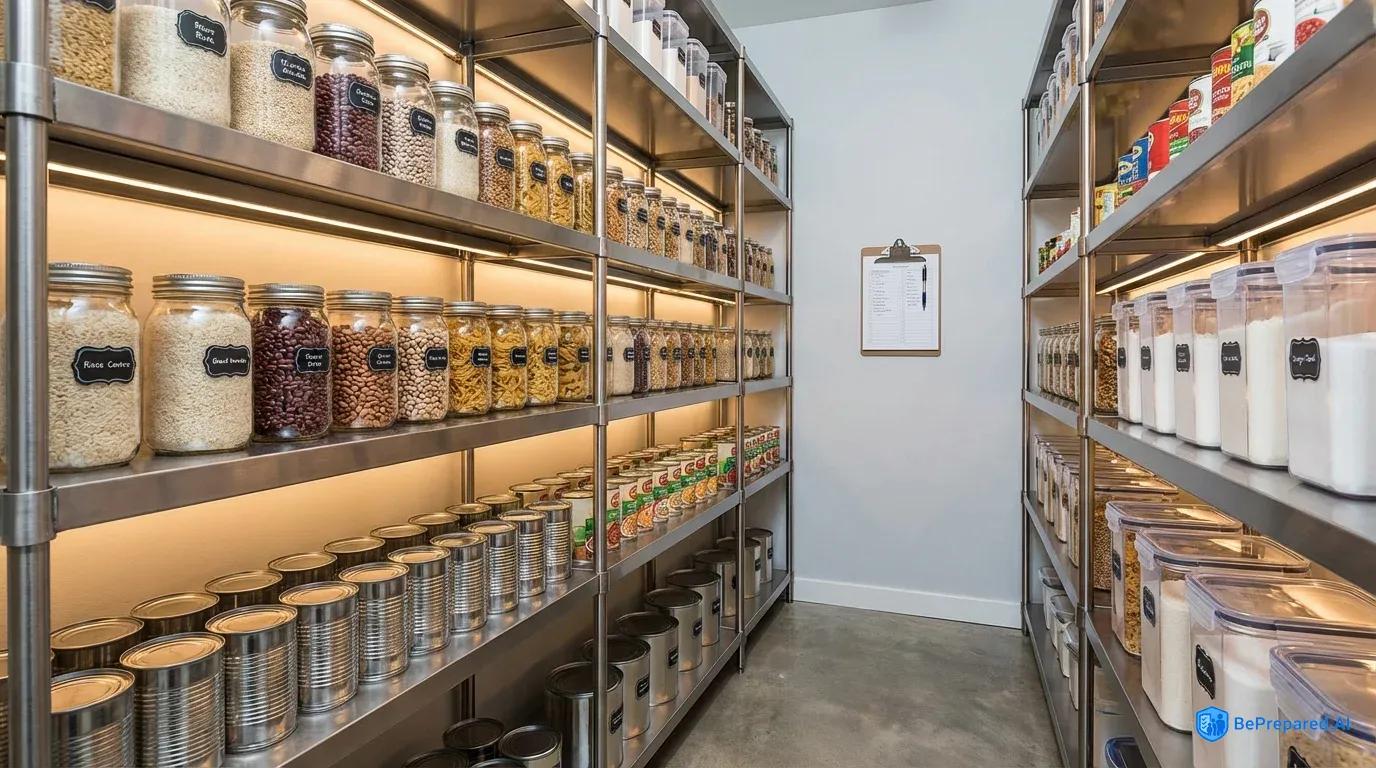
Glass jars with tight-fitting lids work beautifully for storing dried goods you've purchased in bulk. They allow you to see contents at a glance while protecting against pests. Mason jars are particularly good for this purpose and come in various sizes to accommodate different quantities. Metal containers can work but may rust in humid conditions, so plastic or glass often proves more reliable.
Whatever containers you choose, ensure they're specifically rated as food-grade. Containers designed for other purposes may leach chemicals into food over time. Food-grade containers are made from materials tested for safety with food products. They're worth the small extra investment for peace of mind.
Building Your Emergency Food Supply
Starting your emergency food storage journey can feel overwhelming, but the secret is beginning small and building systematically rather than trying to create a complete supply overnight. This approach not only makes the project financially manageable but also allows you to develop the organizational systems you'll need to maintain your stockpile effectively.
Begin with a realistic initial goal. Rather than immediately aiming for a year's supply, start by building a three-day supply for each person in your household, as FEMA recommends . Once you've achieved this milestone, expand to a one-week supply, then two weeks. This graduated approach prevents you from becoming discouraged or making expensive mistakes.
Breaking the project into smaller goals makes it feel achievable rather than impossible. Celebrate each milestone you reach. When you've got three days covered, you're already better prepared than most households. Each step forward increases your resilience and confidence.
Implement a systematic purchasing plan by adding a few extra shelf-stable items to your regular grocery shopping each week. If spaghetti sauce is on sale, buy four jars instead of one. When canned vegetables are discounted, stock up. This method spreads the cost across many shopping trips rather than requiring a large upfront investment.
Look for sales and use coupons to maximize your budget. Store brands often cost less than name brands but offer similar quality. Buying in bulk when prices are low helps you build your supply faster. Within a few months, you'll have accumulated a substantial emergency supply without straining your budget.
Rotation becomes critical once you've built your supply. The most effective system follows the "first in, first out" principle used by grocery stores. When you add new items to your stockpile, place them behind older items so you naturally use the oldest products first. This rotation prevents waste and ensures your emergency supply never becomes a collection of expired items gathering dust.
Some people mark purchase dates on items using permanent markers, making rotation even easier. Others organize their shelves so new items automatically go to the back. Find a system that works for your space and habits. The goal is making rotation so automatic that it requires minimal thought or effort.
Create a tracking system to monitor expiration dates and inventory levels. This can be as simple as a spreadsheet listing items, quantities, and expiration dates. You could also use a notebook or dedicated app if you prefer. Review your inventory quarterly, checking for items approaching expiration that should be rotated into regular use.
Replace anything you consume to maintain your target supply level. If you use three cans of tomatoes from your emergency supply, add three cans back during your next shopping trip. This regular attention keeps your emergency stockpile fresh and reliable. You'll always know exactly what you have and what you need.
Organize your storage space logically by grouping similar items together. Keep all canned vegetables in one area, proteins in another, grains and pasta elsewhere. This organization lets you quickly assess what you have and what you need. Label shelves or storage containers clearly so family members can easily locate items if you're not available during an emergency.
Consider creating zones in your storage area. A breakfast zone might include oatmeal, cereal, and powdered milk. A dinner zone could hold pasta, rice, canned meats, and sauces. Snack items go in their own section. This logical arrangement makes meal planning easier and helps you spot gaps in your supplies.
Ready to take the first step? Start by checking what shelf-stable foods you already have in your pantry. Make a list of items you use regularly that store well. On your next grocery trip, buy just two or three extra cans or packages of these familiar foods. Place them in a designated emergency supply area, and you've officially begun building your food security.
The journey toward food security doesn't require perfection—it requires commitment to steady progress. Each can you add, each bag of rice you store, and each rotation cycle you complete strengthens your family's resilience. You don't need to do everything at once. Small, consistent steps add up faster than you might expect.
Start today with just one or two items, and before you know it, you'll have created a safety net that transforms how you face uncertainty. You'll feel more confident and less anxious about potential disruptions. That peace of mind is worth every bit of effort you invest in building your emergency food supply.