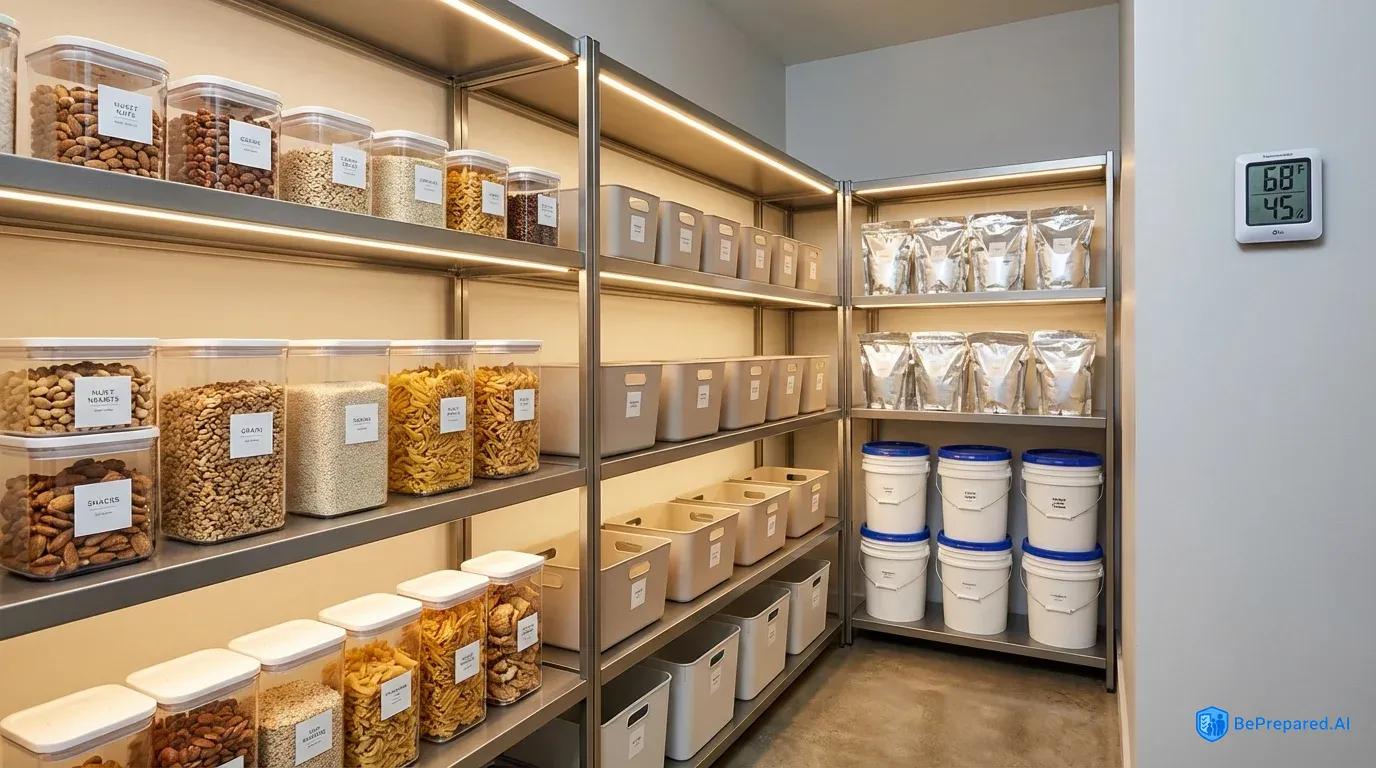
Understanding Long-Term Food Storage for Pandemic Preparedness
When the first wave of lockdowns hit in early 2020, grocery store shelves emptied in days. Families who'd never considered food storage suddenly faced the stark reality of supply chain fragility. That experience taught millions a critical lesson: the difference between having enough food for a few days versus having enough for several weeks or months can fundamentally change how you weather a crisis.
Long-term food storage differs significantly from simply keeping a well-stocked pantry. While short-term storage focuses on rotating through items you'll consume within weeks or months, long-term storage involves deliberately preserving foods that can remain safe and nutritious for years. This distinction becomes crucial during pandemic scenarios, where supply chains may falter unpredictably and repeated trips to crowded stores increase health risks. The CDC recommends maintaining a minimum two-week food supply specifically for pandemic situations, though many preparedness experts suggest extending this to three months or more .
Pandemic-specific considerations add layers of complexity to traditional food storage planning. Unlike natural disasters that typically affect localized areas, pandemics can disrupt global supply networks simultaneously. Manufacturing facilities may shut down, transportation networks may face worker shortages, and international trade can grind to a halt. During COVID-19, meat processing plants closed for weeks, creating cascading shortages that lasted months. These disruptions mean you can't rely on restocking during the emergency—your initial supplies need to sustain you through extended isolation periods.
The basic principles of food preservation revolve around controlling the factors that cause food degradation: oxygen exposure, temperature fluctuation, moisture, light, and biological contamination. When properly managed, these principles can extend the shelf life of many common foods significantly beyond their standard expiration dates. Whole grains stored in oxygen-free containers with proper temperature control can remain viable for extended periods, sometimes decades. Canned goods, when kept in stable conditions, can safely feed your family years after the "best by" date printed on the label.
Understanding these fundamentals transforms food storage from a daunting prepper project into a manageable system. You're not building a bunker—you're creating a buffer against uncertainty. This buffer provides not just physical sustenance but psychological security. Knowing you can feed your family regardless of external circumstances reduces the anxiety that accompanies crisis situations, allowing you to make better decisions when they matter most.
- Environmental Factors
- Key storage conditions (humidity, light exposure, air circulation) with specific requirements for each food group
- Preservation Methods
- Specialized storage techniques (canning, dehydrating, freezing) with category-specific applications and effectiveness ratings
Essential Food Categories and Storage Requirements
Building a comprehensive long-term food storage system requires balancing nutritional needs, shelf stability, and practical usability. The goal isn't simply accumulating calories—it's creating a sustainable diet that maintains health and morale during extended isolation. Each food category serves specific nutritional and psychological functions, and understanding their storage requirements ensures your investment remains viable when you need it most.
Shelf-Stable Proteins form the foundation of any serious storage plan. Proteins maintain muscle mass, support immune function, and provide satiety that helps stretch other resources. Canned meats remain safe indefinitely as long as the seal stays intact, though quality gradually declines after 2-5 years . Dried beans and legumes offer exceptional value—properly stored in airtight containers with oxygen absorbers, they can maintain nutritional quality for many years, potentially decades in optimal conditions. Peanut butter in sealed jars lasts 1-2 years in normal pantry conditions, but can extend considerably longer in cool, dark storage. Powdered eggs and freeze-dried meats provide lightweight, space-efficient protein sources with extended shelf lives when packaged correctly. For those who eat meat, canned varieties provide familiar comfort during stressful times, while plant-based proteins offer versatility for various dietary needs.
Grains and Starches provide the bulk calories that sustain energy levels during extended isolation. White rice, when stored in oxygen-free containers at stable temperatures, can last for years, significantly outlasting brown rice which contains oils that turn rancid within 6-12 months. This durability makes white rice a cornerstone of long-term storage despite its lower nutritional profile. Pasta in sealed packages lasts 1-2 years normally, but can extend much longer in mylar bags with oxygen absorbers. Oats, particularly steel-cut varieties, remain viable for 2-3 years in original packaging and considerably longer when properly repackaged. Whole wheat berries offer superior nutrition compared to processed flour and can last many years, though they require grinding equipment for use. Flour itself has limited storage life—white flour lasts 6-12 months while whole wheat flour spoils within 3-6 months unless frozen or specially packaged.
Preserved Fruits and Vegetables prevent nutrient deficiencies and add crucial variety to stored food diets. Canned vegetables and fruits maintain safety for extended periods with intact seals, though texture and flavor may degrade over time . Low-acid vegetables like green beans and corn typically maintain better quality than high-acid tomatoes over extended storage. Dried fruits in sealed packages last 6-12 months normally, extending to 1-2 years in cool storage and longer when vacuum-sealed or frozen. Freeze-dried vegetables and fruits offer extended shelf life, retain most nutritional value, and rehydrate quickly for cooking. Tomato products—sauce, paste, and diced tomatoes—provide essential flavor and nutrition, with canned versions lasting 18-24 months and properly stored home-canned versions potentially extending to 2-3 years.
Comfort Foods and Supplementary Items address the psychological dimension of crisis preparedness. Extended isolation creates stress, and familiar flavors provide emotional stability. Honey never spoils—archaeologists have found edible honey in ancient Egyptian tombs. Sugar, salt, and spices remain viable indefinitely when kept dry. Coffee and tea in sealed packages last 1-2 years while maintaining quality, though both remain safe to consume far longer. Chocolate chips, cocoa powder, and baking supplies allow you to create treats that boost morale during difficult times. Cooking oils vary significantly—coconut oil lasts 2-3 years, olive oil 1-2 years, and vegetable oil 6-12 months before oxidation affects flavor. Bouillon cubes, dried herbs, and condiments in sealed containers add variety that prevents menu fatigue, a real concern during extended reliance on stored foods.
Pros and Cons of Different Protein Storage Options
Canned Meats
- Pros: Ready to eat, no preparation required, familiar taste, proven long shelf life
- Cons: Heavy and bulky, higher cost per serving, limited variety, requires storage space
Dried Beans and Legumes
- Pros: Extremely cost-effective, very long shelf life, high nutritional value, versatile in recipes
- Cons: Require soaking and cooking time, need fuel and water for preparation, may cause digestive issues if not regularly consumed
Freeze-Dried Proteins
- Pros: Lightweight, extended shelf life, quick rehydration, retain most nutrients
- Cons: Expensive initial investment, require water for preparation, texture differs from fresh
Powdered Eggs
- Pros: Space-efficient, versatile for cooking and baking, long shelf life when sealed
- Cons: Taste differs from fresh eggs, limited uses compared to whole eggs, requires proper reconstitution technique
Storage Methods and Environment Control
The most expensive freeze-dried food or premium canned goods won't protect your family if environmental conditions destroy them before you need them. Storage environment control separates successful long-term food preservation from costly failures. The interaction between temperature, humidity, light, and pest exposure determines whether your investment feeds your family or fills your trash can.
Temperature management stands as the single most critical factor in food preservation. Higher storage temperatures significantly reduce the shelf life of stored foods. A can of vegetables that might last five years at 60°F will last considerably less time at 78°F. This relationship makes basement storage vastly superior to garage or attic storage in most climates. Ideal storage temperatures range from 50-70°F, with consistency mattering as much as the actual temperature. A stable 70°F environment preserves food better than temperatures fluctuating between 50°F and 80°F daily. Basements, interior closets, and under-bed storage in climate-controlled rooms provide the most reliable temperature stability. If you lack naturally cool storage areas, prioritize the coolest, most stable location available and adjust your storage expectations accordingly—plan for shorter viable storage periods and more frequent rotation.
Humidity control prevents both moisture damage and excessive dryness, either of which compromises food safety and quality. Optimal relative humidity for food storage typically falls in a moderate range, with very low humidity causing excessive drying and high humidity promoting mold growth, rust, and bacterial proliferation. Metal cans rust in high-humidity environments, eventually compromising seals. Cardboard packaging absorbs moisture, transferring it to contents and attracting pests. Dried goods clump and spoil when exposed to humidity. Monitor humidity levels with an inexpensive hygrometer placed in your storage area. In humid climates or damp basements, use desiccant packets, silica gel containers, or a dehumidifier to maintain proper levels. Elevate stored foods off concrete floors, which transfer moisture through direct contact. In extremely dry climates, excessive dehydration can make some foods brittle or affect texture, though this poses less risk than high humidity.
Light exposure degrades food quality through photodegradation, breaking down vitamins, fats, and proteins while causing discoloration and off-flavors. Clear glass jars, while attractive for display, expose contents to damaging light wavelengths. Opaque containers—metal cans, mylar bags, dark plastic buckets—provide superior protection. Even in opaque containers, store foods in dark locations away from windows and bright artificial lighting. Pantries, closets, and covered storage in basements offer ideal conditions. If you must store food in areas with ambient light, use additional barriers like blankets, tarps, or cardboard boxes to create darkness.
Pest prevention protects your investment from the insects and rodents that view your food storage as an all-you-can-eat buffet. Mice can chew through plastic bags, cardboard, and even soft metals. Insects infiltrate the smallest gaps, with some species already present in grain products from the manufacturing facility. Prevention starts with proper containers—food-grade plastic buckets with gamma seal lids, metal cans, or thick mylar bags inside protective outer containers. Bay leaves placed in grain storage deter some insects naturally. Regular inspection catches infestations early, before they spread throughout your storage. Keep storage areas clean, promptly removing any spilled food that attracts pests. Consider the storage area's pest history before committing large quantities of food—a single mouse can destroy hundreds of dollars of stored food in weeks.
- Initial Assessment & Planning
- Calculate 6-month caloric needs, dietary requirements, and storage space. Create detailed inventory spreadsheet with expiration tracking.
- Storage Organization System
- FIFO (First-In-First-Out) rotation system, temperature-controlled zones, humidity monitoring, and contamination prevention protocols.
- Decontamination Workflow
- Three-stage sanitization process for incoming supplies: outer packaging removal, surface disinfection, 72-hour quarantine protocol.
- Inventory Management Cycle
- Bi-weekly inventory checks, restock triggers at 70% capacity, digital tracking system integration with consumption rates.
Environmental Control Checklist
Temperature Management
- Maintain 50-70°F range
- Choose locations with minimal temperature fluctuation
- Avoid garages, attics, and non-climate-controlled spaces
- Use thermometers to monitor conditions regularly
Humidity Control
- Keep humidity in moderate range
- Use hygrometers to track moisture levels
- Deploy dehumidifiers in damp environments
- Elevate containers off concrete floors
- Store desiccant packets with moisture-sensitive items
Light Protection
- Use opaque containers whenever possible
- Store in dark locations away from windows
- Cover clear containers with cloth or cardboard
- Keep storage areas closed when not accessing supplies
Pest Prevention
- Seal all containers properly
- Inspect storage areas monthly
- Clean up spills immediately
- Use food-grade buckets with tight-fitting lids
- Consider natural deterrents like bay leaves
- Address any signs of infestation immediately
Rotation Systems and Inventory Management
Even perfectly stored food requires systematic rotation to prevent waste and ensure you're actually consuming what you've preserved. The most sophisticated storage setup fails if food expires unused or if you can't locate items when needed. Effective rotation transforms static stockpiling into a dynamic system that continuously refreshes your supply while providing real-world practice using stored foods.
Step One: Implement First-In-First-Out (FIFO) Organization. This restaurant industry standard ensures older items get consumed before newer purchases. Start by organizing storage shelves so older items sit at the front while newer items go behind. Many preparedness enthusiasts build angled shelving where cans roll forward as front items are removed, automatically maintaining FIFO order. Label everything with purchase or packaging dates using permanent marker—don't rely on memory or assume you'll recognize older items. When shopping, immediately rotate new purchases to the back of your storage, moving older items forward. This physical system works even without technology, though it requires discipline. Regular rotation using this method can significantly reduce food waste compared to random selection.
Step Two: Establish a Digital or Physical Tracking System. Create a master inventory listing every item in storage, including quantity, purchase date, and expiration date. Digital spreadsheets allow sorting by expiration date, making it easy to identify items needing consumption soon. Smartphone apps designed for food storage management send alerts as items approach expiration. However, low-tech solutions work equally well—a simple notebook with item lists and tally marks provides reliable tracking without technology dependence. Update your inventory whenever you add or remove items, treating this as a non-negotiable habit rather than an occasional task. Consistent tracking systems improve rotation compliance substantially compared to informal mental tracking, primarily because they remove the cognitive burden of remembering hundreds of items.
Step Three: Schedule Regular Consumption and Replacement Cycles. Rather than treating stored food as untouchable emergency supplies, integrate them into regular meal planning. Designate one or two meals per week using stored items, simultaneously testing recipes and rotating stock. This practice familiarizes your family with stored foods before stress makes new foods harder to accept. Create a consumption calendar noting when specific items need use—for example, if canned vegetables expire in six months, plan meals incorporating them over the next three months. Replace consumed items during regular shopping trips, maintaining consistent inventory levels. This continuous cycle prevents the common preparedness mistake of storing food, forgetting it, and discovering expired products years later.
Step Four: Conduct Quarterly Inventory Audits. Every three months, physically verify your inventory against your tracking system. Check for signs of spoilage—bulging cans, rust, pest damage, or unusual odors. Verify that environmental conditions remain stable by checking thermometers and hygrometers. Identify gaps in your storage plan—perhaps you have abundant rice but insufficient protein, or plenty of main ingredients but no cooking oil. These audits catch problems early and allow course correction. They also provide opportunities to reorganize as your system evolves, improving efficiency based on real-world usage patterns.
Step Five: Plan Consumption Around Expiration Timelines. Group foods by expiration timeframes—items expiring within six months, 6-12 months, 1-2 years, and 2+ years. Focus consumption on the nearest expiration group while continuing to rotate newer items forward. This tiered approach prevents waste while maintaining long-term reserves. For items approaching expiration that you can't consume in time, consider donating to food banks rather than allowing waste—most food banks accept items within reasonable periods past printed dates, as these dates indicate quality rather than safety for most shelf-stable foods.
Sample Rotation Schedule
Weekly Tasks
- Move newly purchased items to back of storage
- Bring forward items for upcoming meal plans
- Update inventory for items added or consumed
Monthly Tasks
- Review expiration dates on front-row items
- Plan meals around items expiring within 3-6 months
- Check storage environment conditions
- Inspect for pest activity or container damage
Quarterly Tasks
- Complete full physical inventory count
- Verify tracking system accuracy
- Reorganize based on usage patterns
- Identify and address storage gaps
- Test unfamiliar stored foods in recipes
Annual Tasks
- Evaluate overall storage strategy effectiveness
- Update storage goals based on family changes
- Replace or upgrade containers showing wear
- Deep clean storage areas
- Reassess quantity needs and adjust accordingly
Special Considerations for Pandemic Scenarios
The morning Jennifer realized the pandemic would fundamentally change daily life, she stood in her pantry doing mental calculations. Two adults, two kids—roughly 6,000-8,000 calories daily. Most households need approximately 2,000 calories per person per day, though this varies with age, activity level, and individual metabolism. She counted cans, bags of rice, jars of peanut butter, trying to calculate how long her family could eat without leaving home. That math, performed by millions during spring 2020, revealed how few households maintain genuine food security during extended crises.
Pandemic scenarios create unique challenges that differentiate them from other emergencies. Supply chain disruptions can persist for extended periods during severe pandemics as manufacturing facilities close, transportation networks falter, and international trade contracts. Unlike hurricanes or earthquakes where external aid arrives within days or weeks, pandemics affect entire regions or nations simultaneously, eliminating the cavalry-coming-to-rescue option. You're not waiting out a temporary local disruption—you're navigating a sustained, widespread crisis where restocking opportunities may be limited, dangerous, or impossible.
Extended isolation periods demand psychological preparation alongside physical supplies. Eating the same meals repeatedly for weeks creates menu fatigue that affects morale and can even suppress appetite, leading to inadequate nutrition despite available food. Combat this by storing variety—different proteins, multiple grain types, various canned vegetables and fruits, and diverse seasonings. The family that can choose between pasta, rice, or bean dishes; that can flavor meals with different spices; that can occasionally enjoy treats like hot chocolate or cookies, maintains better mental health during isolation. This isn't frivolous—psychological resilience directly impacts physical health and decision-making quality during crises.
Cross-contamination prevention becomes paramount when the threat is biological rather than environmental. During pandemic shopping trips, treat all purchased items as potentially contaminated. Many families during COVID-19 established decontamination protocols—leaving non-perishables in a garage or mudroom for 72 hours before bringing them inside, or wiping all cans and packages with disinfectant. While specific protocols vary by pathogen, the principle remains constant: create barriers between the outside world and your home environment. Once items enter storage, maintain this separation by designating specific storage areas as "clean zones" accessed only with washed hands. This mindset shift—treating food acquisition as a potential exposure event—influences shopping strategy and storage organization.
Shopping strategy during pandemics balances the need to minimize exposure against the necessity of maintaining supplies. Infrequent, well-planned shopping trips reduce infection risk compared to multiple small trips. Before shopping, inventory current supplies using your tracking system, identifying specific needs rather than shopping randomly. Create detailed lists organized by store layout to minimize time in public spaces. Consider shopping during off-peak hours when stores are less crowded. Purchase in bulk when possible, though avoid hoarding that deprives others—there's a meaningful difference between maintaining a three-month household supply and clearing shelves of items others need. Some families during COVID-19 established shopping rotations with trusted neighbors or family members, where one person shopped for multiple households, reducing overall community exposure.
Pandemic-Specific Storage Strategies
Minimize Shopping Frequency
- Build supplies that support 4-6 week intervals between shopping trips
- Focus on shelf-stable items that don't require refrigeration
- Stock up on items with longest shelf life first
- Create detailed shopping lists to maximize efficiency per trip
Decontamination Protocols
- Establish a staging area for incoming purchases
- Wipe down cans, jars, and packages with appropriate disinfectants
- Allow cardboard packaging to sit in isolated area before handling
- Wash hands thoroughly before and after handling new items
- Transfer items to clean storage only after decontamination
Nutritional Balance During Isolation
- Calculate total caloric needs for your household
- Ensure adequate protein sources (aim for 50-75g per adult daily)
- Include vitamin C sources to support immune function
- Store multivitamins as nutritional insurance
- Plan for dietary restrictions and allergies
Mental Health Support Through Food
- Stock comfort foods that provide emotional stability
- Include ingredients for special occasion meals
- Maintain variety to prevent menu fatigue
- Store ingredients for baking and cooking projects
- Keep treats and snacks that boost morale
Water Storage Considerations
- Store one gallon per person per day minimum
- Include extra water for cooking dried foods
- Rotate water supplies every 6-12 months
- Have backup purification methods available
- Consider space-efficient water storage containers
The pandemic preparedness mindset recognizes that stored food serves multiple functions simultaneously. It's a physical buffer against supply disruptions, a psychological comfort reducing crisis anxiety, a practical tool enabling extended isolation when necessary, and a hedge against price inflation that often accompanies supply chain stress. Your stored food isn't just calories—it's options, autonomy, and security in an uncertain situation. This perspective transforms food storage from a prepper stereotype into a rational response to demonstrated systemic vulnerabilities that affect everyone, regardless of preparedness philosophy.
Actionable Recommendations for Getting Started
Immediate Actions (This Week)
- Assess current pantry inventory and identify gaps
- Purchase a thermometer and hygrometer for monitoring storage conditions
- Start a basic inventory tracking system (notebook or spreadsheet)
- Buy one week's worth of shelf-stable foods you already eat regularly
Short-Term Goals (This Month)
- Build up to a two-week food supply following CDC recommendations
- Organize storage using FIFO principles
- Test one stored-food recipe per week with your family
- Identify and prepare your primary storage location
Medium-Term Goals (Next Three Months)
- Expand storage to one month of supplies
- Implement proper storage containers (mylar bags, food-grade buckets)
- Establish regular rotation schedule
- Conduct first quarterly inventory audit
Long-Term Goals (Six Months to One Year)
- Build toward three-month food supply
- Optimize storage environment controls
- Develop comprehensive meal plans using stored foods
- Train family members on storage system and rotation procedures
The difference between having food security and facing empty shelves during the next crisis comes down to decisions you make today. Start small, build systematically, and create a storage system that works for your family's actual needs and circumstances. Your future self will thank you for the preparation.