Understanding Civil Unrest Safety
Picture this: You're scrolling through your phone on a quiet Tuesday evening when notifications start flooding in. Something's happening downtown—protests, crowds, maybe conflict. Your heart rate picks up. Should you grab your family and leave? Stock up on supplies? Board up the windows? The uncertainty feels overwhelming, and suddenly your peaceful suburb doesn't feel quite so safe anymore.
If you've experienced this anxiety, you're not alone. Civil unrest has become an increasingly visible part of modern life, and the fear it generates often outpaces the actual risk. Here's something that might surprise you: 27% of significant civil unrest events occur in suburban or rural areas , which means no community is inherently immune. But here's the good news: most of what you've heard about staying safe during civil unrest is either exaggerated or outright wrong.
Understanding the myths surrounding civil unrest safety is the first step toward developing a calm, practical response plan. When you separate fact from fiction, you'll discover that protecting yourself and your family doesn't require extreme measures or panic-driven decisions. You rely on simple, straightforward strategies that work across multiple emergency scenarios. Let's examine three of the most common—and most dangerous—myths about civil unrest safety, and replace them with practical approaches that will help you stay safe and maintain peace of mind.
Myth 1: 'I Need to Evacuate Immediately'
When news breaks of civil unrest in your area, every instinct might scream at you to pack up the car and get out. It's the classic fight-or-flight response, and fleeing feels like taking control of an uncontrollable situation. But here's what emergency management professionals know: the safest place during civil unrest is typically inside your home .
Think about what evacuation actually involves during a period of civil disorder. You're leaving a secure, familiar environment where you have supplies, shelter, and protection. You're entering streets where conditions are unpredictable, potentially driving through areas of conflict, and competing with others who may also be trying to leave.
Your car becomes a vulnerable metal box in traffic. If you're stopped or blocked, you have far fewer options than you would at home. Most civil disturbances occur within 1-3 miles of participants' homes , which means the unrest is often localized to specific areas rather than spreading across entire cities or regions.
The comparison between sheltering-in-place and evacuating reveals a clear winner in most scenarios. At home, you can lock doors, close blinds, move to interior rooms, and monitor the situation safely. You have access to food, water, medications, and communication tools. You can wait out the disturbance in relative comfort and safety.
In contrast, evacuation puts you in motion during the most chaotic and unpredictable period. Roads may be blocked, gas stations overwhelmed, and hotels fully booked. You're moving through uncertainty instead of waiting it out from a position of security.
Of course, there are exceptions. If authorities issue a mandatory evacuation order, follow it. If your home is directly in the path of destruction or if you witness imminent threats to your property, leaving may be necessary. But these situations are rare.
In the vast majority of civil unrest situations, your best strategy is to stay put, secure your home, and wait for the situation to stabilize. Think of it like a severe thunderstorm—you don't run outside into the weather. You stay inside where it's safe.
Home security during these periods doesn't require elaborate preparations. Simple measures make a significant difference: lock all doors and windows, close curtains and blinds to prevent visibility inside, move away from windows and exterior walls, and bring outdoor furniture or objects inside that could be used to damage property.
Keep your car in the garage if you have one. Turn off exterior lights that might draw attention. Stay informed through reliable sources about what's happening in your area. These basic steps create layers of security that discourage problems while keeping you safely inside.
The key is recognizing that your home, when properly secured, functions as your strongest asset during civil unrest—not a trap you need to escape. You're not hiding in fear. You're making a smart tactical decision to stay in the most defensible, well-supplied position available to you.
- Official Government Sources
- FEMA, local emergency management, verified .gov websites (Green - Most Reliable)
- Emergency Services
- Police, fire department, emergency radio broadcasts (Blue - Highly Reliable)
- Local News Media
- TV stations, newspapers, radio stations with official credentials (Yellow - Generally Reliable)
- Community Organizations
- Red Cross, verified local community groups, neighborhood watch (Orange - Use with Verification)
- Social Media Updates
- Official agency accounts, verified local community pages (Red - Requires Multiple Source Verification)
Myth 2: 'Social Media Will Tell Me Everything I Need to Know'
When something significant happens in your community, where do you turn first? If you're like most people, you immediately check social media. It's instant, it's visual, and it feels like you're getting information straight from the source.
The problem? Social media monitoring during civil unrest events often provides unreliable information . This unreliable information can increase panic and lead to poor decisions that put you and your family at greater risk.
Here's why social media fails during emergencies:
Unverified reports spread faster than facts. Someone posts that they heard gunshots three blocks away. Within minutes, that single unconfirmed report has been shared hundreds of times, each share adding new details or interpretations. By the time you see it, the story might bear little resemblance to what actually happened.
Timestamps create confusion. That dramatic video might be from three hours ago, yesterday, or even a different event entirely. Social media feeds don't always make timing clear, so you might be reacting to information that's no longer relevant.
Algorithms amplify the most sensational content. Platforms prioritize engagement, which means the most shocking, emotional, or dramatic posts rise to the top—whether they're accurate or not. The calm, factual update gets buried beneath speculation and fear.
Bad actors deliberately spread misinformation. During civil unrest, some individuals intentionally post false information to create confusion, increase tension, or advance particular agendas. They know that chaos breeds more chaos, and misinformation is an easy way to stir the pot.
So where should you turn instead? Official emergency alerts and local news are more reliable sources . Your county or city emergency management office, local law enforcement social media accounts (official ones, not random posts about police), and established local news organizations have verification processes and accountability.
They're slower to report because they're confirming information before sharing it. That delay isn't a bug—it's a feature. You want accuracy more than speed when making decisions about your family's safety.
Set up your information ecosystem before an emergency occurs. Sign up for your county's emergency alert system—most areas offer text or email notifications. Identify two or three trusted local news sources and bookmark them. Program local emergency management numbers into your phone.
When something happens, check these sources first. Then use social media only to supplement what you're learning from verified channels. If you see something alarming on social media, verify it through official sources before taking action or sharing it further.
This disciplined approach to information gathering will keep you informed without drowning you in panic-inducing speculation. Think of it as building a filter between you and the noise. You're not ignoring what's happening—you're just making sure you're responding to reality, not rumors.
Myth 3: 'It Can't Happen Here'
Sarah lived in a quiet town of 15,000 people, surrounded by farmland and local businesses that had been family-owned for generations. When she watched news coverage of protests and civil unrest in major cities, she felt sympathetic but distant. Those were big-city problems, she thought. Her community was different—close-knit, peaceful, stable.
Then a controversial incident occurred at the local high school. Within 48 hours, her town square was filled with protesters and counter-protesters. The police presence tripled. Businesses closed early. Sarah realized her assumption had left her completely unprepared.
This "it can't happen here" mindset is perhaps the most dangerous myth of all because it prevents any preparation whatsoever. The data tells a different story than our assumptions. Civil unrest can occur in any community type . Small towns experience protests over local issues. Suburban areas see demonstrations related to regional or national concerns.
Rural communities aren't immune to the social, political, and economic pressures that sometimes boil over into public unrest. Geography doesn't provide protection from the tensions that affect society as a whole. The average duration of civil unrest events has increased from 2.5 days in 2000 to 4.1 days in 2020 , which means these situations are lasting longer than they used to.
The good news hidden within this uncomfortable truth is that basic preparedness applies to multiple scenarios . The supplies and plans you develop for potential civil unrest also serve you during severe weather, power outages, medical emergencies, or natural disasters.
You're not preparing for one specific unlikely event—you're building general resilience that makes your household safer across the board. A well-stocked pantry doesn't care whether you need it because of a snowstorm or a community disturbance. A communication plan works the same whether cell towers are down from a hurricane or overwhelmed during an emergency.
Accepting that civil unrest could happen in your community doesn't mean living in fear. It means acknowledging reality and taking sensible precautions that increase your overall preparedness. It means having a plan before you need one, so that if something does happen, you can respond calmly instead of scrambling.
The families who weather emergencies best aren't the ones who saw them coming—they're the ones who prepared for possibilities without obsessing over probabilities. They took simple steps when things were calm, and those steps paid off when things got complicated.
- Basic Home Security
- Install deadbolts, window locks, and motion sensor lights to secure your home's entry points
- Emergency Contacts
- Create a list of important phone numbers and establish a family meeting point
- Water Storage
- Store 1 gallon of water per person per day for at least 3 days
- Communication Plan
- Get a battery-powered radio and establish check-in procedures with family members
- First Aid Kit
- Assemble basic medical supplies and learn how to use them properly
Practical Safety Steps
Now that we've cleared away the myths, let's focus on what actually works. Effective preparation for civil unrest doesn't require expensive gear or complicated plans. It requires a few systematic steps that build your household's resilience and give you confidence that you can handle whatever comes.
Start with home security basics. Walk around your home with a critical eye. Can you quickly secure all entry points? Do you know where your spare keys are (and are they in a place where someone couldn't use them to gain entry)?
Consider these practical measures: install or verify that you have working locks on all doors and windows, including the garage door. Keep a flashlight near your bed and another in a central location. Know how to manually close your garage door if the power goes out. Trim bushes near windows that could provide cover for someone approaching your home.
These aren't civil-unrest-specific preparations—they're good security practices that serve you every day while providing extra protection during disturbances. You're not fortifying a bunker. You're just making sure your home does what it's supposed to do: keep you and your family safe.
Develop a communication plan that everyone in your household understands. During civil unrest, cell networks often become overloaded, making calls difficult or impossible. Many emergency management experts note that text messages often get through when calls don't because they require less bandwidth.
Designate an out-of-area contact person that everyone can check in with—someone who lives far enough away that they won't be affected by the same local emergency. Establish a meeting place if family members are separated. Make sure every family member has important phone numbers written down, not just stored in their phone.
Communication plans increase family safety by ensuring you can coordinate and confirm everyone's wellbeing even when normal communication channels are disrupted. Practice your plan once or twice a year so everyone remembers what to do. Make it simple enough that even young children can follow the basic steps.
Assemble essential supplies that let you shelter in place comfortably. Emergency preparedness experts commonly recommend having enough supplies to be self-sufficient for at least several days. This isn't about hoarding or building a bunker—it's about having enough on hand that you don't need to leave your home during the most uncertain period.
Focus on water (emergency preparedness guidelines often suggest about one gallon per person per day), non-perishable food that doesn't require cooking, necessary medications, a first aid kit, battery-powered radio, flashlights and extra batteries, phone chargers including a battery backup, and important documents in a waterproof container.
If you have pets, include supplies for them. If anyone in your household has special needs—infant formula, medical equipment, specific dietary requirements—make sure those items are stocked. Don't forget basics like toilet paper, soap, and garbage bags.
The beauty of these preparations is their flexibility. You're not preparing for one specific scenario; you're building general household resilience. The same supplies and plans that help during civil unrest will serve you during power outages, severe weather, or any situation where you need to stay home and be self-sufficient for a few days.
Start small if the whole list feels overwhelming. Buy a few extra cans of food each week. Fill a couple of water containers. Get one flashlight and some batteries. Each small step moves you forward, and before you know it, you'll have a solid foundation of preparedness without ever feeling stressed about it.
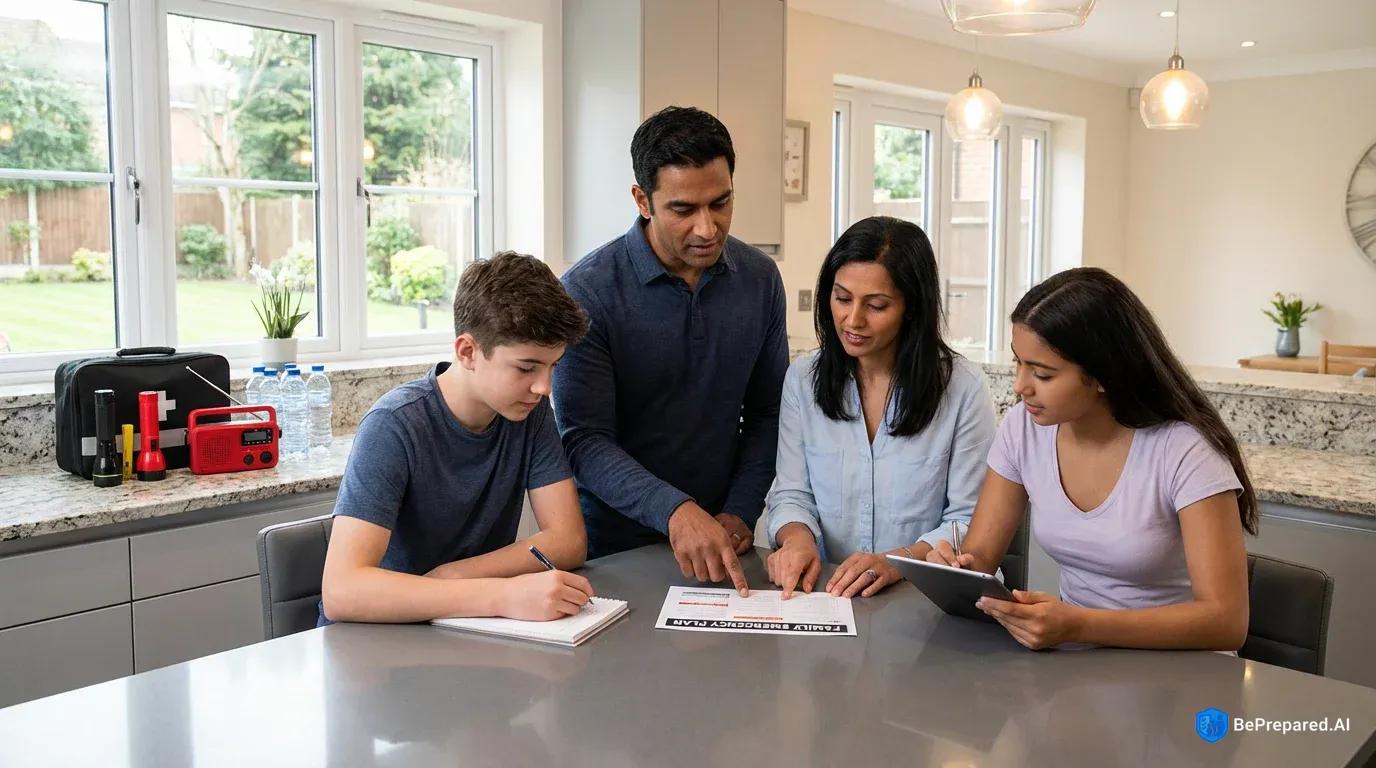
Create a personalized preparedness plan based on your location and family needs to make sure everyone in your household knows what to do during an emergency.
The path to safety during civil unrest isn't paved with panic, evacuation plans, or social media monitoring. It's built on simple, practical preparations that you can implement today: understanding when to shelter in place, knowing where to get reliable information, and maintaining basic supplies and communication plans.
These aren't dramatic measures, but they're effective ones—and effectiveness matters far more than drama when your family's safety is at stake. Start with one step today, and build from there. Preparedness is a journey, not a destination, and every small action increases your household's resilience and your own peace of mind.