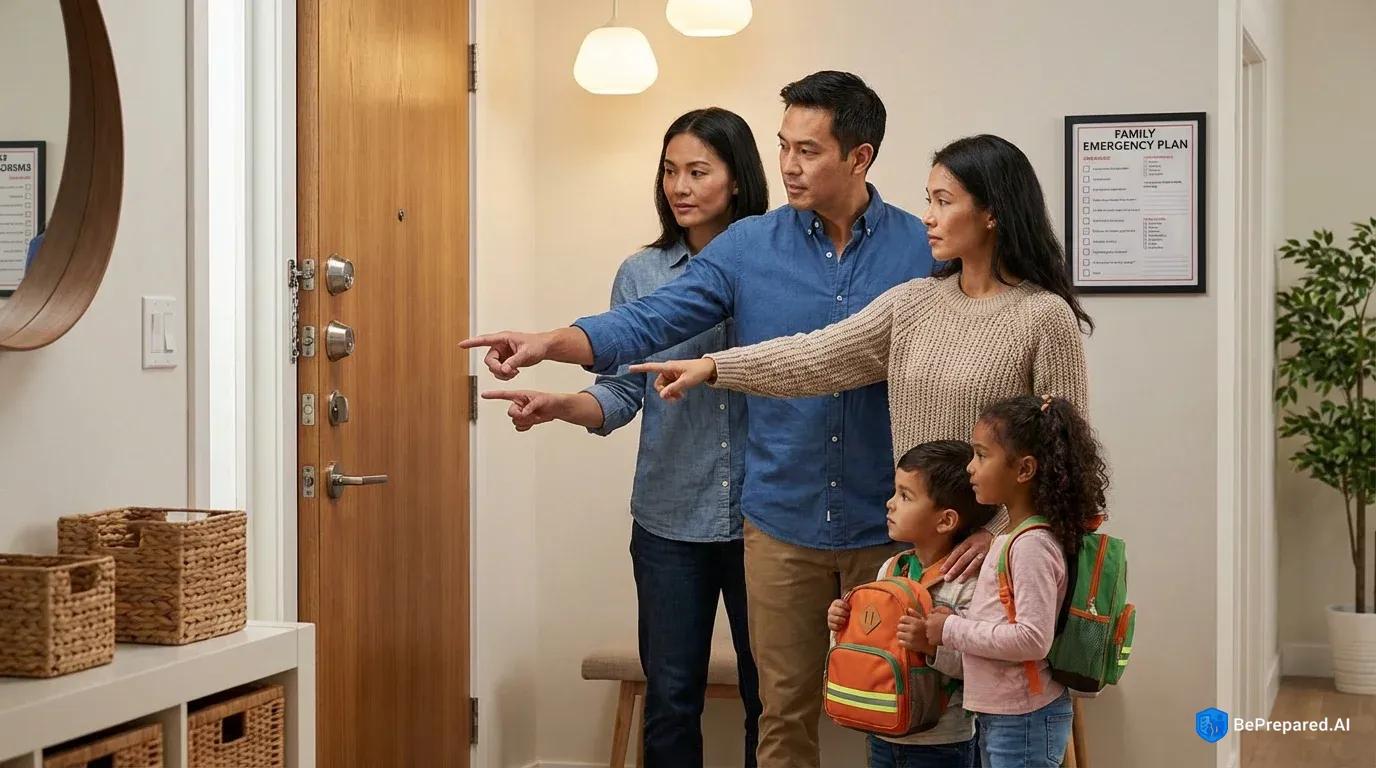
Understanding Safe Room Fundamentals
Picture this: protests have erupted three blocks from your home. What started as peaceful demonstrations has devolved into scattered violence. Windows are breaking. Fires are burning. You can hear shouting and the crack of projectiles hitting buildings. Your family huddles in the living room, watching news coverage on their phones, when someone throws a brick through your front window. Where do you go? What do you do?
This scenario illustrates why understanding safe room fundamentals isn't just about having a designated space—it's about having a properly designed refuge that accounts for the unique challenges civil unrest presents. Unlike natural disasters where you're primarily protecting against environmental forces, civil unrest requires protection from human threats while maintaining the ability to escape if those threats breach your perimeter.
A safe room, in its most technical definition, is a hardened structure designed to provide near-absolute protection during life-threatening events. According to FEMA's Safe Room Construction Guidelines, these spaces must meet specific engineering standards to withstand extreme forces . The safe room you need for civil unrest differs substantially from a tornado shelter or panic room designed for home invasion. During civil unrest, you're not just sheltering from immediate violence—you're creating a defensible position that allows you to monitor the situation, maintain communications with authorities, and evacuate if conditions deteriorate.
The fundamental requirements for an effective civil unrest safe room center on three core principles: adequate space, strategic positioning, and appropriate fortification. FEMA recommends a minimum of 3 square feet per person for short-term shelter situations . This might sound cramped, and it is—imagine a space roughly two feet by eighteen inches per person. That's why planning for 5-7 square feet per person creates a more sustainable environment where your family can remain for extended periods without psychological deterioration. Some families have sheltered in place for 48-72 hours continuously during urban unrest. In those situations, the difference between 3 square feet and 7 square feet per person can mean the difference between maintaining composure and experiencing claustrophobic panic.
Interior rooms without windows provide optimal protection during civil unrest . This isn't just about preventing projectiles from entering—it's about eliminating sight lines that could make you a target and preventing the observation of your position. Windows represent structural weak points, informational vulnerabilities, and psychological stress factors. When protesters or rioters can see into your home, they can assess whether it's occupied, what valuables might be inside, and how you're responding to their presence. An interior room eliminates these vulnerabilities entirely.
The effectiveness of your safe room depends on how well it integrates these fundamentals with your specific home layout, family size, and local threat profile. A properly designed space becomes more than just a room—it transforms into a tactical asset that provides security, maintains situational awareness, and preserves your ability to make critical decisions under pressure. The difference between a hastily chosen closet and a thoughtfully prepared safe room could mean the difference between riding out a crisis safely and being forced into a dangerous evacuation during the worst possible moment.
Selecting the Ideal Location
Choosing where to establish your safe room requires methodical evaluation of your home's layout, structural characteristics, and relationship to external threats. This decision will fundamentally shape every other aspect of your preparation, so approach it with the same care an architect applies to designing a building's foundation.
Start by walking through your home with a floor plan in hand, marking every interior room—spaces that don't have exterior walls or windows. These form your candidate pool. Your first major decision point involves the ground floor versus basement question, and the answer isn't as straightforward as you might think.
Basements offer excellent concealment and structural protection. The earth surrounding a basement provides natural fortification against projectiles, fire, and observation. Basements present a critical vulnerability during civil unrest: limited escape options. If your home is set on fire—either deliberately or as collateral damage from nearby buildings—a basement can transform from a refuge into a trap. Smoke rises, but it also fills structures from top to bottom, and basement egress typically involves a single stairwell that could become impassable.
Ground floor interior rooms offer the optimal combination of security and escape options for civil unrest scenarios. A ground-floor location provides multiple advantages: easier access to different exit points, reduced risk of being trapped by fire or structural collapse, and the ability to evacuate quickly if the situation escalates beyond sheltering in place. Families who sheltered in ground-floor interior spaces during past urban riots have successfully evacuated through back doors or side windows when threats approached their homes, while those in basements or upper floors faced more challenging escape scenarios.
Optimal safe room location is interior ground floor with minimum two exit paths . This standard, designed primarily for fire safety, becomes even more critical during civil unrest. Your safe room location must provide access to at least two different paths out of your home, and ideally these paths should lead to different sides of the building. Walk through these escape routes at night, in darkness, to ensure you can navigate them without vision. Time yourself. Can you reach both exits in under 30 seconds from your safe room? If not, reconsider your location choice.
Size considerations extend beyond the simple square footage calculation. A space that technically accommodates your family based on FEMA's minimum might prove psychologically unsuitable for extended occupation. Families who sheltered during prolonged urban unrest reported that larger safe rooms—master bedroom closets, interior bathrooms with adjacent spaces, or interior hallways with multiple rooms—produced significantly less stress and better decision-making capability than minimal spaces.
Accessibility factors matter more than most people realize during the initial selection phase. Your safe room needs to accommodate not just people but also the supplies and equipment that make extended sheltering viable. Can you fit water containers, food supplies, communication equipment, and first aid materials while still leaving room for your family? Does the space have electrical outlets for charging devices and powering communications equipment? Is there ventilation that doesn't compromise security? A windowless interior bathroom might seem ideal until you realize that four people occupying it for 12 hours will quickly deplete oxygen and create humidity issues without some form of air circulation.
The ideal location balances these sometimes competing factors. For most single-family homes, this typically means an interior bathroom, walk-in closet, or interior hallway on the ground floor with clear access to both front and rear exits. For apartments or condos, the calculation shifts—you might prioritize a location near your primary exit with a secondary escape route through a window using a rope ladder or similar device. Multi-story homes present additional complexity, potentially requiring multiple safe room locations depending on where family members are when an event begins.
Test your chosen location by conducting a family drill. Gather everyone in the space with the supplies you plan to store there. Spend an hour together. How does it feel? Can you communicate? Can you access supplies easily? Can you hear what's happening outside well enough to maintain situational awareness? These practical tests reveal issues that theoretical planning misses, and they're far better conducted during a drill than during an actual emergency.
- Multi-Point Locking System
- Reinforced deadbolt configuration with minimum 1-inch throw and hardened steel pins engaging door frame at 3+ points
- Threshold Security
- Hardened steel threshold plate with anti-pry design, secured with tamper-resistant fasteners into concrete substrate
- Emergency Release Mechanism
- Single-motion egress hardware meeting fire code requirements while maintaining security integrity from outside force
Essential Fortification Measures
The structural integrity of your safe room determines whether it provides genuine protection or merely psychological comfort. Fortification isn't about creating an impenetrable fortress—that's neither practical nor necessary for most civil unrest scenarios. Instead, you're establishing layers of resistance that delay unauthorized entry long enough for you to escape, for authorities to respond, or for the threat to move on to easier targets.
Door security forms your primary defensive layer. Standard residential doors—those hollow-core slabs that most builders install to minimize costs—offer virtually no security. A determined person can kick through a hollow-core door in seconds, and during civil unrest, you're potentially facing multiple determined people. Solid core doors with three heavy-duty hinges provide basic security . The solid core construction, typically made from wood composites or solid wood, resists impact and forced entry attempts far better than hollow alternatives. The three-hinge configuration distributes force across the door frame more effectively, preventing the door from being torn from its mounting during kick attempts.
Upgrading your safe room door represents one of the highest-return investments in your entire preparation strategy. A solid core door costs between $150-$400 depending on size and quality—a modest expense that dramatically improves your security posture. Installation requires removing your existing door, ensuring the frame is properly secured to wall studs, and mounting the new door with three-inch screws that penetrate through the frame into the structural framing. Those longer screws matter tremendously. Standard one-inch screws only grip the door jamb, which can be torn away from the wall. Three-inch screws anchor directly into studs, creating a connection that can withstand hundreds of pounds of impact force.
The locking mechanism deserves equal attention to the door itself. A high-quality door with a weak lock provides false security. Redundant locking systems increase protection effectiveness substantially . This means installing multiple independent locks that must each be defeated separately. A deadbolt provides your foundation—specifically a Grade 1 deadbolt that extends at least one inch into the strike plate. Add a secondary security measure such as a surface-mounted barrel bolt or a door security bar that wedges against the floor. These redundant systems force an intruder to defeat multiple mechanisms, multiplying the time and noise required for entry.
The strike plate—that metal plate on the door frame where the deadbolt extends—represents a critical but often overlooked component. Standard strike plates attach with short screws into the thin door jamb. Replace this with a security strike plate, sometimes called a box strike, that measures at least four inches long and installs with multiple three-inch screws into the wall studs. This seemingly minor upgrade transforms your deadbolt from a device that can be kicked through in one or two impacts into one that requires sustained battering to defeat.
Window security presents unique challenges in safe room design. The ideal solution—having no windows—isn't always achievable depending on your home's layout. If your safe room location includes a window, you need layered protection. Security film applied to the glass won't prevent breakage, but it holds shattered glass together, preventing easy entry and reducing projectile penetration. These polyester-based films bond to the glass and frame, creating a membrane that remains intact even when the glass breaks. Professional installation ensures proper adhesion and edge sealing, but DIY installation is feasible for those with patience and attention to detail.
Window bars or security screens provide more robust protection, though they create potential escape route complications. If you install window bars, ensure they include quick-release mechanisms accessible from inside—otherwise you're creating a trap in case of fire. Security screens made from stainless steel mesh offer an alternative that provides protection while maintaining emergency egress capability. These screens resist cutting and impact while allowing the window to function normally for escape purposes.
Pros and Cons of Common Fortification Approaches:
Solid Core Doors
- Pros: Significant impact resistance, relatively affordable, straightforward installation
- Cons: Heavier than hollow doors, may require frame reinforcement, won't stop determined assault indefinitely
Security Film
- Pros: Invisible from outside, maintains natural light, holds glass together during breakage
- Cons: Won't prevent determined entry, requires professional installation for best results, degrades over time
Window Bars
- Pros: Excellent physical barrier, visible deterrent, relatively inexpensive
- Cons: Creates fire escape hazard without quick-release, obvious security measure, may violate local codes
Door Security Bars
- Pros: Extremely effective bracing, portable between locations, no permanent installation
- Cons: Only works on inward-opening doors, must be positioned from inside, can't be deployed remotely
Barricading materials should be pre-positioned near your safe room but not permanently installed. Heavy furniture, pre-cut boards that wedge into door frames, and even sandbags can reinforce your primary door security during an extended situation. The key is having these materials readily accessible without cluttering your safe room or making it obvious to casual observers that you've prepared a defensive position. A bookshelf positioned near your safe room door serves everyday purposes while providing barricade material if needed. Sheets of three-quarter-inch plywood cut to fit your door frame and pre-drilled for quick installation can be stored under a bed or behind furniture.
Consider sight lines and sound transmission as part of your fortification strategy. Can people outside your safe room door determine if it's occupied? Does conversation inside carry into other parts of the house? Sound dampening measures—heavy curtains if you have a window, weather stripping around the door, even acoustic panels disguised as wall art—reduce the information available to potential threats. During civil unrest, appearing unoccupied can be as valuable as actual physical security.
Use our 10-Point Home Security Checklist for Civil Unrest to review key home security steps before an emergency occurs.
The fortification measures you implement should be proportional to your risk assessment and budget, but remember that partial measures provide partial protection. A reinforced door with a weak frame accomplishes little. A strong lock on a hollow door creates false confidence. Approach fortification systematically, addressing the weakest points first and building layers of security that work together as an integrated system.
Communication and Supply Requirements
The most secure safe room becomes a liability if you can't communicate with the outside world or sustain your family for the duration of an emergency. Communication and supplies represent the operational backbone of your safe room strategy—the difference between maintaining control of your situation and becoming isolated and vulnerable.
Communication Systems
Multiple communication methods increase survival chances significantly . Redundancy isn't just recommended—it's essential. Your primary communication will likely be your mobile phone, but civil unrest can disrupt cellular networks either through damage to infrastructure, network overload, or deliberate jamming. Build your communication strategy in layers:
Primary Layer: Mobile phones with contact lists pre-loaded for emergency services, family members, and trusted neighbors. Keep phones charged and store backup battery packs in your safe room. Cellular networks can become overwhelmed in affected areas during crisis periods, with call completion rates dropping substantially.
Secondary Layer: A battery-powered or hand-crank emergency radio capable of receiving NOAA weather alerts and local AM/FM broadcasts. These provide situational awareness even when internet and cellular networks fail. Program local emergency frequencies and news stations in advance.
Tertiary Layer: Two-way radios (FRS/GMRS) for communication with family members in different parts of your home or trusted neighbors. These line-of-sight communications work independently of infrastructure and provide private channels for coordination.
Backup Layer: A corded landline phone if you still maintain traditional phone service. Landlines often remain functional when cellular networks fail, and they don't require electrical power to operate during outages.
Store all communication devices in a small Faraday bag or metal container to protect against potential electromagnetic pulse effects, and test them monthly to ensure batteries remain charged and devices function properly.
Essential Supplies
72-hour minimum supply storage is recommended for civil unrest scenarios , though extending this to one week provides additional security margin. Unlike natural disasters where rescue and restoration efforts begin immediately, civil unrest can create sustained periods where leaving your home remains dangerous even after the initial violence subsides. Organize your supplies in clearly labeled, easily accessible containers:
Water and Food
- Water storage for three days minimum (recommendations vary, but plan for drinking, sanitation, and food preparation needs)
- High-calorie, non-perishable foods requiring no preparation: energy bars, nuts, dried fruit, canned goods with pull-top lids
- Manual can opener if storing canned goods
- Disposable plates, cups, and utensils to minimize cleanup water requirements
Medical and Sanitation
- Comprehensive first aid kit with trauma supplies including tourniquets, pressure bandages, and hemostatic agents
- Prescription medications with at least one week's supply
- Over-the-counter medications: pain relievers, anti-diarrheal, antihistamines
- Sanitation supplies: toilet paper, wet wipes, hand sanitizer, plastic bags for waste disposal
- Feminine hygiene products
- Portable toilet or bucket with lid and plastic bags
Light and Power
- LED flashlights with extra batteries (one per person minimum)
- Headlamps for hands-free lighting
- Chemical light sticks as backup lighting that won't drain batteries
- Battery bank capable of charging multiple devices
- Small solar charger for extended situations
Tools and Protection
- Multi-tool or basic tool kit
- Duct tape and paracord for repairs and improvisation
- Fire extinguisher rated for multiple fire types
- Self-defense tools appropriate to your training and legal restrictions
- Whistle for signaling
Documents and Cash
- Copies of critical documents in waterproof container: identification, insurance policies, property deeds, medical records
- Cash in small denominations (determine amount based on your family's needs and local cost of living)
- List of emergency contacts with phone numbers and addresses
Organization Strategy
How you organize supplies matters as much as what you store. In darkness or under stress, you need to locate items immediately without fumbling through containers. Use a systematic approach: clear plastic bins labeled by category, with the most frequently needed items positioned for easiest access. Create a laminated inventory list attached to each container so you can identify contents without opening them.
Position water containers on the floor where they won't fall during chaos. Store food in airtight containers to prevent odors that might attract attention. Keep communication devices and flashlights in a designated spot that every family member can locate by touch alone. Practice accessing your supplies in complete darkness—you'll quickly discover organizational flaws that daylight conceals.
Rotate perishable supplies every six months, consuming and replacing food and water before expiration dates pass. This rotation schedule also provides regular opportunities to reassess your supplies, update medications, and adjust quantities based on changing family needs. Many families discover during rotation that their children have outgrown clothing sizes, dietary needs have changed, or new family members require additional supplies.
Actionable Recommendations for Supply Management:
- Create a master inventory spreadsheet tracking every item, quantity, expiration date, and storage location
- Set calendar reminders for six-month rotation cycles and quarterly equipment tests
- Designate a family member as supply manager responsible for maintenance and updates
- Photograph your organized supplies so you can verify everything returns to proper position after drills
- Label everything in multiple ways: written labels, color coding, and tactile markers for darkness
- Store supplies in grab-and-go containers that can be moved quickly if you need to relocate your safe room
The psychological value of well-organized, adequate supplies extends beyond their practical utility. Knowing you have the resources to sustain your family for an extended period reduces panic and improves decision-making during crisis situations. This confidence allows you to shelter in place when evacuation would be more dangerous, to wait for authorities to restore order rather than venturing out prematurely, and to focus on security and communication rather than scrambling to meet basic needs.
Your safe room represents a comprehensive system where location, fortification, communication, and supplies work together to provide genuine protection during civil unrest. Each element reinforces the others—the best location loses effectiveness without proper fortification, strong fortification proves insufficient without communication capability, and all the security in the world means nothing if you can't sustain yourself for the duration of the emergency. Approach safe room preparation holistically, building each component to professional standards, and you create a genuine refuge that transforms a terrifying situation into a manageable challenge your family can weather together.