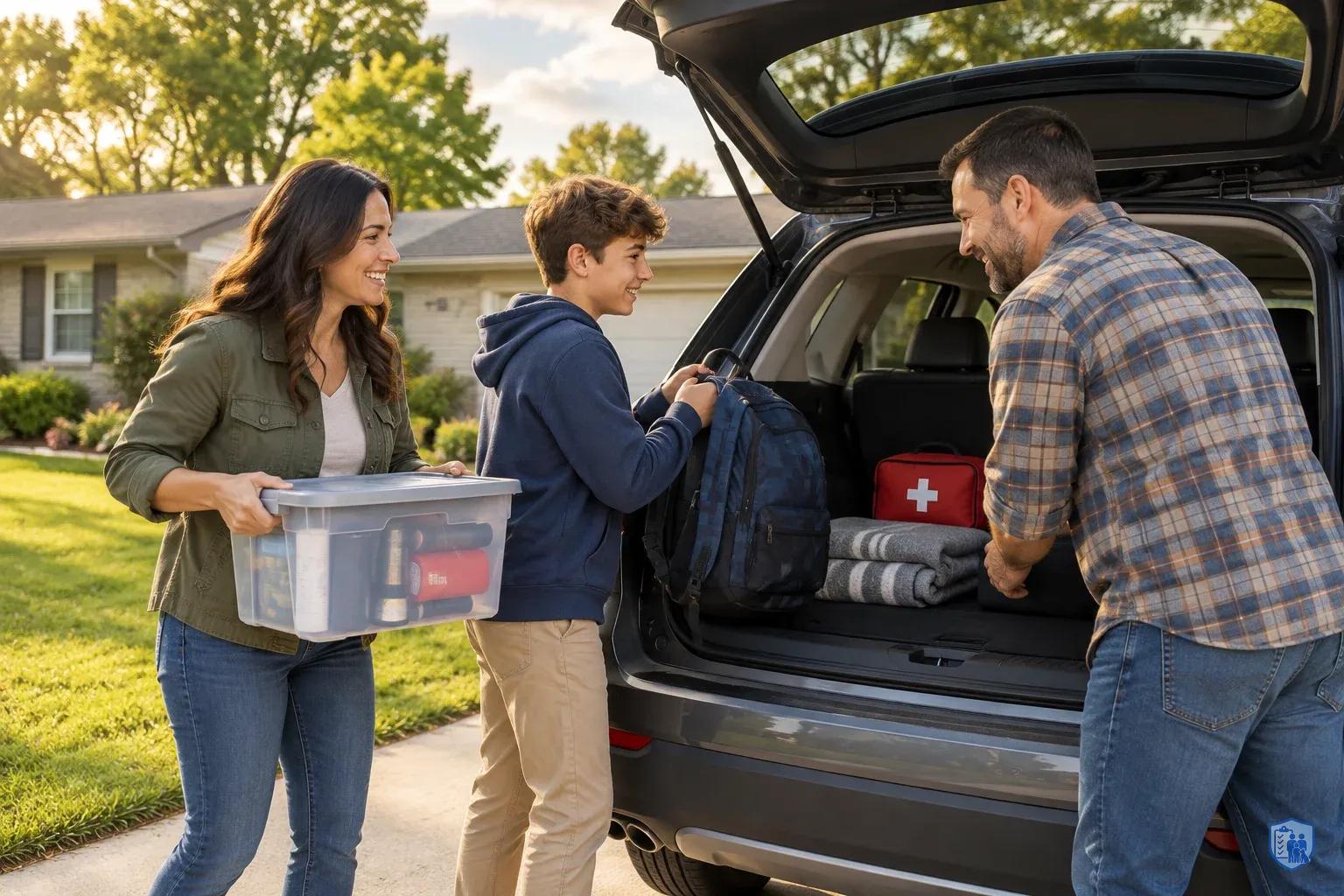
Your Car Is Part of Your Tornado Plan (Just Not the Way You Think)
Maybe you've already tossed a flashlight and a few water bottles in your trunk. Good. That's a great first step, and plenty of people never take it.
Here's the part to know early. In tornado country, your car's main job is to get you to sturdy shelter fast. Many people also find the car handy after a storm, if home is damaged and they need to leave. The National Weather Service says the best option in a vehicle is to drive to the closest sturdy shelter . A car is not a shelter, and Ready.gov advises against trying to outrun a tornado in a vehicle . Vehicles are easily tossed and destroyed in a tornado, which is why they make poor shelters .
Small packing mistakes can eat up minutes when you need to leave quickly, like heading from a mobile home to a sturdy building. Those minutes matter.
If preparing feels like a lot, take a breath. Think of this as a de-overwhelm plan: seven common mistakes, each with one simple fix. You can learn from the neighbors who went before you. No scare tactics, just easy changes you can make one at a time.
Mistakes #1 and #2: Running on Empty and Packing at the Last Minute
- Water and non-perishable snacks
- Keep a few water bottles and non-perishable snacks in the car. Ready.gov lists food and water among the basics for your vehicle. Replace them before they expire so they stay fresh. The car kit is a small backup, and your bigger supply belongs in your go-bag and at home.
- Flashlight with extra batteries
- Keep a flashlight and extra batteries in the car as a low-tech backup. When you check your kit, make sure the flashlight works and the spare batteries are fresh.
- First aid kit and jumper cables
- Ready.gov's vehicle list includes a first aid kit and jumper cables. Keep both in the car along with the other basics.
- Blanket
- Keep a sturdy blanket or coat in the car. Ready.gov includes blankets on its vehicle list. It helps on chilly days. If you are caught on the road and can't reach a building, use it to cover your head and body.
- Car phone charger
- Phone batteries die and service can be spotty, so keep a car phone charger in the car. During your kit check, make sure it is where it belongs.
- Paper map of your area
- Carry a paper map in case your phone stops working. Mark your closest sturdy shelters, your family rally point and a backup route on it so the map is ready when you need it.
Mistake #1: Letting the Gas Tank Drop Low
The Mistake: You coast on fumes. We've all done it.
Why It Matters: If you must leave quickly, you may not have time to fuel up. Ready.gov notes that gas stations may be closed during emergencies and can't pump gas during power outages .
The Easy Fix: Build a half-tank habit. Fill up whenever the gauge hits half. Ready.gov recommends keeping at least a half tank at all times , and a full tank if an evacuation seems likely . When severe weather is in the forecast, top off.
Mistake #2: Waiting for a Warning to Pack
The Mistake: You start packing once the sirens sound, and you grab the wrong things. Bulky suitcases, laptops, jewelry boxes, and "just in case" extras pile up by the door.
Why It Matters: Extra bags can slow you down. Think of a fire drill at school. Nobody stops to pack their backpack.
The Easy Fix: Keep a small kit in the car all the time, and a go-bag by the door. Treat anything replaceable as low priority. Here's my suggestion for what comes first: people, pets, medications, and documents. Everything else can wait, and most of it can be bought again.
Mistakes #3 and #4: Skipping the Basics and Trusting Your Phone for Everything
It's easy to pack the fun, high-tech stuff and forget the boring essentials. Let's fix both of these at once.
- Gas tank at half or more
- Check that the tank is at least half full. Ready.gov recommends keeping at least a half tank at all times, because gas stations may be closed or unable to pump during power outages. Top off when severe weather is in the forecast.
- Flashlight tested
- Turn the flashlight on to make sure it works, and check that the spare batteries are fresh.
- Water and snacks rotated
- Swap the car's water bottles and non-perishable snacks for new ones before they expire so they stay fresh.
- Document pouch in go-bag
- Make sure the waterproof pouch is in your go-bag with current copies of IDs, insurance information, medication lists and emergency contacts.
- Phone charger in car
- Confirm the car phone charger is where it belongs. Phone batteries die and service can be spotty, so keep this backup ready.
- Plan reviewed: shelter, rally point, backup route
- Make sure you still know your closest sturdy shelter, your family rally point and a backup route in case the first road is blocked. A car is not a shelter, so do not try to outrun a tornado.
Mistake #3: Gadgets Without Water and Food
If debris blocks a road or you're stuck waiting, a fancy gadget won't help your thirst. Basic supplies matter most.
- In the car: Keep a few water bottles and non-perishable snacks. Ready.gov lists food and water among the basics for your vehicle .
- In your home go-bag: Keep your fuller supply. Ready.gov's basic kit guidance calls for one gallon of water per person per day for several days, for drinking and sanitation, plus at least a several-day supply of non-perishable food . The Red Cross suggests a 3-day supply if you evacuate and a 2-week supply at home .
- Good habit: Replace the car water and snacks before they expire so they stay fresh. Checking every few months is my own tip, and it's an easy rhythm to remember.
The car kit is a smaller backup. The bigger supply lives in the go-bag and at home.
Mistake #4: Relying Only on Your Phone
Phones do a lot, but batteries die, and service can be spotty at times. It helps to have other ways to get alerts, such as NOAA Weather Radio or your local alerting system . Here are a few low-tech backups for the car:
- Flashlight with extra batteries
- Car phone charger
- Paper map of your area
- Jumper cables, which round out the basics
Ready.gov includes all of these on its vehicle list, along with a first aid kit and blankets . Once you have a paper map, try marking your shelter locations on it. That part is my own idea, but it makes the map much more useful.
Want a head start? Our beginner's go-bag guide walks you through what to pack, one easy step at a time.
Mistakes #5 and #6: Leaving Documents Behind and Forgetting Head Protection
Picture a family who gets the call to leave. Everyone is ready, the car is fueled, and then someone says, "Where's the insurance folder?" Suddenly precious minutes slip away in a drawer search. That's Mistake #5, and it's an easy one to fix.
Keep copies of IDs, insurance information, and medication lists in your go-bag . The Red Cross and Ready.gov both suggest this, and Ready.gov also suggests keeping some cash in small bills . As a neighborly tip, add your emergency contacts and put everything in a waterproof pouch. When it's time to go, you grab the bag and the papers come along.
Mistake #6 is quieter: packing no blanket or cushion. Keep a sturdy blanket or coat in the car. It's useful on any chilly day, and it has one more job.
Your main plan is always to reach a sturdy building. But if extreme winds or flying debris catch you on the road, the NWS says to park out of traffic lanes, stay in the car with your seat belt on, and put your head below the windows . Cover your head with your hands and a blanket, coat, or other cushion if possible . The NWS also notes that if you can safely get noticeably lower than the roadway, you can leave the car, lie in that area, and cover your head . Ready.gov gives similar advice: if you can't get to a building, cover your head and neck with your arms and your body with a coat or blanket .
Think of those steps as a last resort, not a plan. Having a blanket in the car just means you're covered either way.
Mistake #7: Packing the Car but Not the Plan
This is the biggest one. A well-packed car feels like readiness, but supplies don't help if you don't know where you're going.
Let's talk about a common idea. Some people think, "I'll just drive away from the tornado." Ready.gov is clear: do not try to outrun a tornado in a vehicle . The NOAA Storm Prediction Center notes that in rare cases, such as when a tornado is visible, far away, and traffic is light, you may be able to drive out of its path at a right angle . Even then, a sturdy building is far safer. The NWS says the best option is to drive to the closest sturdy shelter . Highway overpasses are not shelter, so don't plan on them. The NWS agrees and says to avoid seeking shelter under bridges or overpasses .
Here's how to turn your packed car into a real plan:
- Find your closest sturdy shelters ahead of time. This matters most if you live in a mobile home.
- Pick a family rally point so everyone knows where to meet. This is a general planning tip that many families find helpful.
- Choose a backup route in case the first road is blocked.
- Mark these spots on your paper map.
- Practice the drive once on a calm day. Time it, and notice any turns that could confuse you.
A practice run makes the trip more familiar. When you need to make a quick decision, you won't have to invent the plan on the spot.
Your 15-Minute Car Kit Check
You don't need a giant to-do list. Here's a quick routine I suggest doing once a month, about 15 minutes. The timing is just a friendly suggestion. Ready.gov's guidance is to review your needs every year and replace expired items , so do what fits your life.
- Gas: Is the tank at half or more? Ready.gov recommends at least a half tank at all times .
- Flashlight: Does it work? Are the spare batteries fresh?
- Water and snacks: Rotate them out for new ones.
- Documents: Is the waterproof pouch in your go-bag, with current copies?
- Charger: Is the car phone charger where it belongs?
- Plan: Do you still know your shelter, rally point, and backup route?
Small, steady steps beat a perfect kit. Starting today with just one fix counts. And now that you've learned from other people's mistakes, you don't have to make them yourself.
This weekend, take 15 minutes to open your trunk and check off just one fix from this list. You'll feel the difference right away.