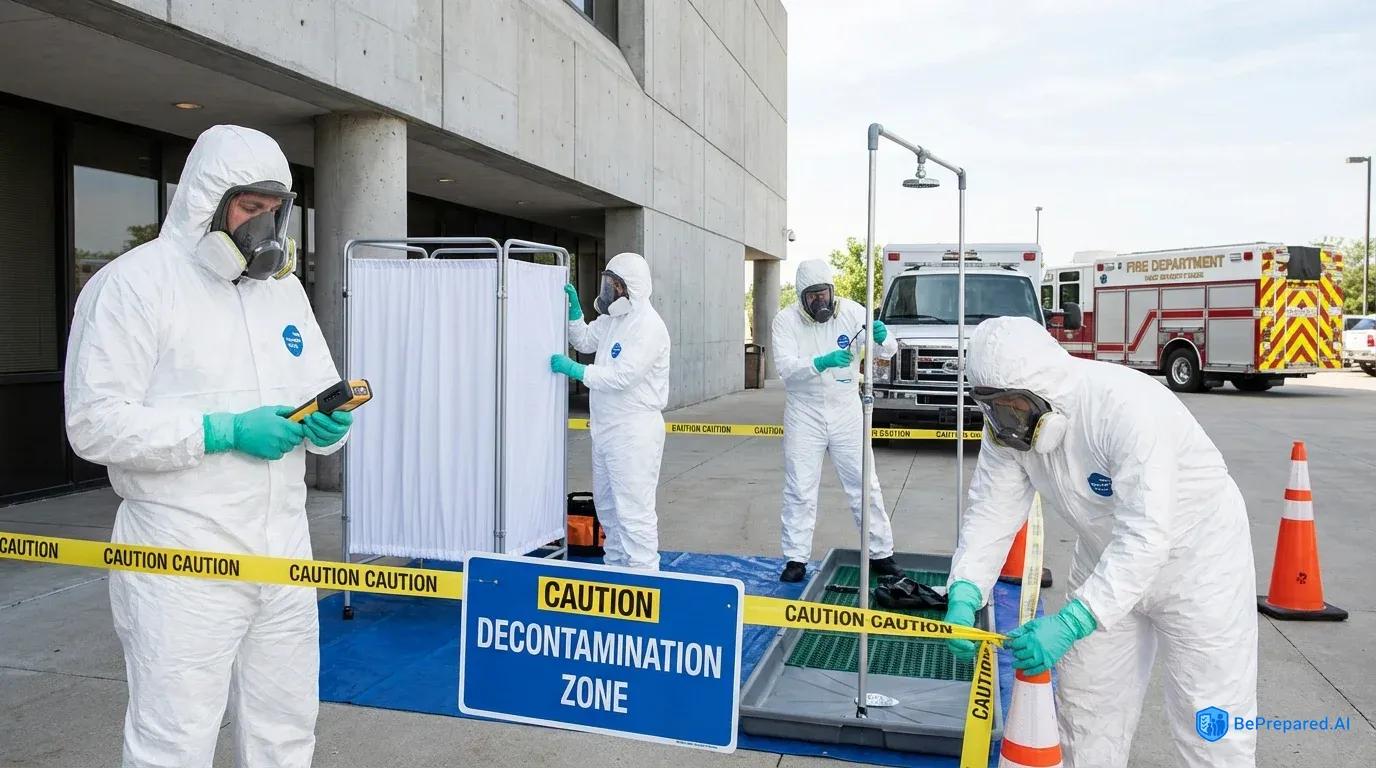
Understanding Nuclear Fallout Decontamination: Critical Concepts
When the Chernobyl reactor exploded in 1986, first responders arrived without proper decontamination protocols. Many suffered acute radiation syndrome not just from external exposure, but from radioactive particles that remained on their skin and clothing for hours after initial contact. Their experience demonstrates a fundamental principle of nuclear emergencies: radioactive contamination persists when you leave the hot zone. Understanding how nuclear fallout behaves and how to systematically remove it from human surfaces determines whether exposure remains manageable or becomes life-threatening.
Nuclear fallout consists of microscopic particles of radioactive material that become airborne following a nuclear detonation or reactor accident. These particles range from fine dust to larger debris fragments, carrying radioactive isotopes including cesium-137, strontium-90, and iodine-131. The critical characteristic that makes decontamination both possible and essential: fallout represents external contamination—radioactive material sitting on surfaces rather than integrated into tissue. This distinction proves crucial because external contamination can be removed through mechanical and chemical processes, while internal contamination from inhalation or ingestion requires entirely different medical interventions .
Radioactive particles follow predictable physical patterns. Fallout settles on surfaces through gravity and precipitation, adhering to skin, hair, and clothing through static electricity, moisture, and natural body oils. Heavier particles settle quickly—within minutes to hours—while finer particles remain airborne for extended periods. Contamination concentrates in specific areas: the crown of your head, shoulders, outer clothing layers, and exposed skin surfaces. This distribution pattern allows strategic decontamination that addresses the highest-risk areas first, maximizing effectiveness while minimizing time in contaminated conditions.
Time windows for decontamination operate on an unforgiving scale. The first hour after contamination exposure represents your most critical intervention period. During this window, radioactive particles remain primarily on surface layers where removal achieves maximum effectiveness. Research from radiation emergency medicine demonstrates that removing outer clothing within the first hour eliminates approximately 90% of radioactive contamination . This single action—requiring no special equipment or training—provides more protection than any other intervention available to the average person.
As time progresses beyond this initial hour, contamination begins migrating. Particles work into hair follicles, beneath fingernails, and into skin creases. Moisture from perspiration creates pathways for contamination to spread across skin surfaces. Decontamination effectiveness decreases measurably with each passing hour, though significant benefits remain achievable up to 24 hours post-exposure. The biological clock starts at contamination contact, not when you decide to act.
Radiation exposure manifests in three distinct forms, each requiring different decontamination considerations. Alpha radiation consists of relatively large, heavy particles that cannot penetrate clothing or the outer layer of dead skin cells. Alpha-emitting contamination poses minimal external threat but becomes extremely dangerous if ingested or inhaled. Decontamination focuses on preventing transfer from surfaces to mucous membranes—you must avoid touching your face, eating, or drinking until thorough decontamination is complete.
Beta radiation penetrates more deeply, passing through clothing and into living skin tissue. Beta-emitting particles cause localized radiation burns when they remain in contact with skin for extended periods. Decontamination must remove these particles quickly to prevent tissue damage. The skin lesions from beta burns appear hours to days after exposure, making immediate removal essential even when no visible damage exists.
Gamma radiation penetrates deeply through all materials and represents the most serious immediate threat. Gamma-emitting contamination on clothing and skin continues contributing to total dose until removed . Unlike alpha and beta radiation, gamma rays deliver dose from contamination anywhere on the body, not just at contact points.
The scope of what decontamination can and cannot accomplish requires realistic understanding. Properly executed decontamination procedures can achieve substantial reduction of external radioactive contamination from skin and hair . This dramatic reduction in contamination translates directly to reduced radiation dose, potentially preventing acute radiation syndrome in borderline exposure cases and significantly decreasing long-term cancer risk.
However, decontamination cannot reverse radiation exposure that has already occurred. The dose you received while contaminated, even if only for minutes, remains part of your total exposure. Decontamination also cannot address internal contamination from inhaled or ingested radioactive material—this requires medical intervention with chelating agents and blocking medications that fall outside the scope of field decontamination.
The limitations extend to practical considerations as well. Decontamination requires substantial quantities of clean water per person for thorough procedures . In post-nuclear scenarios, clean water becomes a precious resource that may be unavailable or severely limited. Decontamination also generates contaminated waste—clothing, towels, water runoff—that itself becomes a radiation hazard requiring proper handling and disposal.
The procedures demand time per person for complete decontamination, during which personnel conducting the decontamination face their own exposure risks. These practical limitations mean that decontamination planning must account for resource availability, personnel safety, and the reality that perfect decontamination may be impossible in austere conditions. The goal shifts from achieving zero contamination to reducing contamination to levels that minimize health risk within available resources—a pragmatic approach that acknowledges the messy reality of actual emergency response.
Setting Up a Professional-Grade Decontamination Station
The difference between an effective decontamination station and a contamination-spreading disaster lies entirely in the planning and setup that occurs before the first contaminated person arrives. During the Fukushima nuclear accident response, hastily assembled decontamination points initially created secondary contamination problems because responders failed to establish proper zone controls. Contaminated water ran into clean areas, personnel tracking through contaminated zones carried particles into supposedly clean spaces, and the lack of proper monitoring equipment meant people left the decontamination area still carrying significant radioactive material.
Learning from these failures, professional-grade decontamination stations follow rigorous design principles that control contamination flow and protect both victims and responders. The foundation of any effective decontamination station is the three-zone system: hot, warm, and cold zones separated by clearly marked boundaries and controlled access points.
The hot zone encompasses the contaminated area where victims first arrive. This zone is considered fully contaminated, and all materials within it—including the ground surface, any equipment, and all personnel—are treated as contaminated. The warm zone serves as the actual decontamination area where contamination removal occurs. This transitional space must accommodate decontamination stations, monitoring equipment, and the personnel conducting procedures.
The cold zone represents the clean area where decontaminated individuals proceed for medical evaluation, rest, and further care. No contaminated materials or personnel in contaminated protective equipment may enter the cold zone under any circumstances . This absolute barrier prevents the entire operation from becoming compromised through cross-contamination.
Zone boundaries require physical demarcation that remains visible even in darkness or adverse weather. Professional setups use brightly colored barrier tape, traffic cones, or temporary fencing to create unmistakable visual boundaries. The critical element is the contamination reduction corridor (CRC) that connects the hot zone to the cold zone through the warm zone.
This corridor establishes a one-way flow pattern: contaminated individuals enter from the hot zone, proceed through sequential decontamination stations in the warm zone, and exit into the cold zone only after monitoring confirms acceptable contamination levels. The corridor should measure at least 6 feet wide to allow passage of individuals who may require assistance or mobility aids, with sufficient length to accommodate multiple decontamination stations in sequence.
Essential equipment for a professional-grade station begins with radiation detection instruments. A complete monitoring setup requires multiple device types because different instruments detect different radiation types. Survey meters capable of detecting beta and gamma radiation provide the primary monitoring capability, with instruments like the Ludlum Model 3 or Thermo Scientific RadEye series offering the sensitivity needed for contamination detection.
These instruments require calibration before use—a step that many amateur setups overlook but which determines whether your readings bear any relationship to actual contamination levels. Alpha contamination requires specialized detectors with thin windows that allow alpha particles to reach the sensor, such as gas proportional counters or scintillation detectors. A minimum professional setup includes two survey meters (one for initial screening, one for final verification) and one alpha detector if alpha-emitting isotopes are a concern .
Water supply represents the single most critical resource for decontamination operations. Each decontamination station requires access to substantial quantities of clean water, with professional installations providing adequate reserves to allow for multiple victims and potential re-washing if initial decontamination proves inadequate. The water delivery system must provide controlled flow at proper pressure—too high and you risk driving contamination into skin or creating aerosols that spread contamination; too low and washing becomes ineffective.
Temperature control matters more than many realize: lukewarm water provides optimal decontamination effectiveness by opening pores and improving surfactant action without causing burns or excessive discomfort that might cause victims to resist thorough washing . Cold water reduces washing effectiveness by limiting soap action and causing muscle tension. Excessively hot water can cause burns and create steam that may spread contamination through aerosols.
The physical decontamination stations themselves require specific design features. A basic station consists of a raised platform or grating that keeps individuals off the contaminated ground surface while allowing contaminated water to drain away from the clean area. Professional designs use modular plastic platforms with drainage channels that direct runoff into containment systems—55-gallon drums or portable containment pools that prevent contaminated water from spreading into soil or groundwater.
Overhead structures provide weather protection and privacy, essential for maintaining dignity during procedures that require complete disrobing. Pop-up canopy tents serve adequately for temporary installations, while more permanent setups might use rigid-frame structures with waterproof coverings. Privacy considerations aren't merely courtesy—they directly impact compliance and thoroughness of decontamination procedures.
Personnel conducting decontamination require their own protective equipment that balances protection against contamination with the practical reality that they must work for extended periods in potentially hot, humid conditions. Level C personal protective equipment provides appropriate protection for most decontamination operations: chemical-resistant coveralls (Tyvek or equivalent), double nitrile gloves (inner surgical gloves plus outer heavy-duty gloves), rubber boots or boot covers, face shields or goggles, and respirators rated for particulate filtration (N95 minimum, P100 preferred).
The critical element is ensuring that all skin surfaces remain covered and that protective equipment layers overlap to prevent gaps—gloves must extend over coverall sleeves, boot covers must extend over coverall legs. Each person conducting decontamination must have a partner who can monitor them for protective equipment failures and assist with their own decontamination after operations conclude . Solo decontamination operations inevitably result in contaminated responders.
Supply staging within the warm zone follows a contamination-control principle: items move from clean storage through progressive contamination to final disposal, never reversing direction. Clean supplies—soap, towels, monitoring swabs—remain in sealed containers in the cleanest part of the warm zone, opened only as needed. Contaminated waste moves immediately into designated containers that are sealed and moved to the hot zone for temporary storage. This unidirectional flow prevents cross-contamination that could recontaminate already-cleaned individuals or contaminate clean supplies.
Documentation equipment must be protected from contamination while remaining accessible for recording critical information. Waterproof notebooks or laminated data sheets allow recording of monitoring readings, victim identification, time stamps, and contamination levels without creating contaminated paper that spreads radioactive material. Many professional operations now use tablets in waterproof cases that allow digital documentation while remaining decontaminable.
The documentation station should be positioned at the boundary between the warm and cold zones, allowing personnel in clean protective equipment to record information from decontamination staff without entering contaminated areas. This positioning creates a communication interface that maintains zone integrity while ensuring information flows to medical and command personnel.
Proper decontamination planning requires details you can prepare before the crisis. Create a personalized preparedness plan based on your location and family needs.
Systematic Decontamination Procedures
The moment a contaminated individual arrives at your decontamination station, a precise sequence of actions begins—a choreographed process where each step builds on the previous one and skipping or reversing steps can actually worsen contamination. Emergency medicine protocols developed through decades of radiation accident response have refined these procedures into a systematic approach that maximizes contamination removal while minimizing exposure to both the victim and responders.
Initial survey and documentation establish the baseline against which you measure decontamination effectiveness. Before any clothing removal or washing begins, conduct a thorough radiation survey using your calibrated detection equipment. Begin the survey at a distance of approximately 1 meter from the individual, checking for extremely high radiation levels that might indicate intense contamination or even activated materials that require specialized handling.
Assuming readings fall within manageable ranges, proceed with a systematic survey pattern: start at the head, work down the front of the body, then the back, then each limb individually. Hold the detector probe approximately 1 inch from the surface being surveyed, moving at a rate of about 2 inches per second—slow enough for the instrument to respond to contamination but fast enough to complete the survey in a reasonable timeframe. The survey technique requires practice to maintain consistent speed and distance, both of which affect reading accuracy.
Document the survey results using a body map that records contamination locations and intensity. This documentation serves multiple purposes: it identifies high-contamination areas that require focused attention during washing, it provides a legal record of exposure levels for potential compensation claims or medical follow-up, and it allows you to verify decontamination effectiveness by comparing before and after readings. Note the specific readings at the highest contamination points, typically the head, shoulders, and hands. These readings become your target values for measuring decontamination success.
Clothing removal follows a specific protocol designed to minimize contamination transfer during the disrobing process. The fundamental principle: contaminated outer surfaces must never contact clean inner surfaces or skin. Begin by having the individual remove outer garments—jackets, coats, or protective gear—by grasping the inside of the garment and pulling it away from the body while turning it inside out.
This technique traps contamination within the folded garment rather than allowing it to brush against skin or hair during removal. Each removed item goes immediately into a designated contaminated waste container—typically a heavy-duty plastic bag labeled with radiation warning symbols—without being set down on any surface where it might spread contamination. The bag handler must maintain clean gloves by avoiding contact with contaminated surfaces.
Shirt or top removal requires careful technique to avoid pulling contaminated fabric across the face. The proper method involves grasping the hem of the shirt, pulling it away from the body, then rolling it upward while keeping the contaminated outer surface folded inward. When the rolled shirt reaches the shoulders, the individual ducks their head forward and down, allowing the shirt to be pulled over the head from behind without contacting the face.
An assistant should perform this step for individuals who lack the flexibility or strength to execute it themselves. Elderly victims, those with shoulder injuries, or people with limited mobility require hands-on assistance that maintains the contamination-control principle while accommodating physical limitations.
Pants or lower garments are removed by sitting on a clean surface (a folding chair or bench positioned specifically for this purpose), then pushing the pants down to the ankles while remaining seated, stepping out of them one foot at a time while an assistant supports balance. This seated technique prevents the balance problems that often occur when people attempt to remove pants while standing, which can result in falls or uncontrolled contact with contaminated surfaces.
Footwear presents a special challenge because shoes are typically heavily contaminated from walking through fallout yet removing them risks contaminating hands. The solution: shoes remain on until all other clothing is removed, then are removed last using a technique where the individual steps out of the shoe by pressing down on the heel with the opposite foot, avoiding hand contact entirely. If hand contact is necessary, hands are immediately washed before proceeding to the next step.
This simple sequence—removing contaminated clothing before washing—eliminates approximately 90% of radioactive contamination , making it the single most effective decontamination action possible. The dramatic effectiveness of clothing removal alone underscores why proper disrobing technique deserves careful attention and practice.
Washing procedures follow a head-to-toe progression that prevents contaminated water from running over already-cleaned areas. Begin with the head and hair, which typically carry heavy contamination from fallout settling on these elevated surfaces. Use lukewarm water and mild soap or shampoo—avoid harsh detergents that might damage skin and create pathways for contamination to penetrate deeper.
The washing technique matters: use gentle pressure with soft cloths or bare hands, working in small circular motions that lift contamination rather than scrubbing vigorously, which can drive particles into skin or cause abrasions that increase absorption risk. Pay particular attention to areas where contamination concentrates: the hairline, behind the ears, the neck creases, and under the chin. These anatomical crevices trap particles that resist simple rinsing.
Rinse thoroughly after washing each area, using clean water that washes contamination away from the body rather than over uncontaminated areas. The rinsing pattern should direct water from the head downward and outward—never allow rinse water from the head to run down the torso or limbs. After completing the head and neck, proceed to the torso, then arms (starting at shoulders and working toward hands), then legs (starting at hips and working toward feet).
Hands receive special attention because they serve as contamination vectors that can transfer radioactive material to mucous membranes. Wash hands using the surgical scrub technique: interlace fingers to clean between them, rotate each finger individually to clean all surfaces, clean under and around fingernails using a soft brush, and wash wrists and forearms to at least 4 inches above the wrist . The nail beds and cuticles harbor contamination that resists casual washing.
Water temperature and delivery specifications reflect both effectiveness and safety considerations. Lukewarm water provides optimal surfactant action for soap while remaining comfortable—cold water reduces washing effectiveness by limiting soap action and causing muscle tension that makes thorough washing difficult, while excessively hot water can cause burns and create steam that may spread contamination through aerosols. Controlled water flow provides adequate rinsing force without creating high-velocity streams that might aerosolize contamination or cause physical discomfort .
Special considerations apply to individuals with wounds, medical devices, or specific vulnerabilities. Open wounds must be covered with waterproof dressings before decontamination begins to prevent radioactive material from entering the bloodstream directly. If contamination has already entered a wound, irrigation with sterile saline takes priority over general body decontamination because contamination in wounds poses immediate internal exposure risk.
Medical devices like pacemakers, insulin pumps, or colostomy bags require protection during washing—waterproof covers prevent contamination from entering device interfaces while allowing decontamination of surrounding skin. Pregnant women receive priority decontamination because fetal tissue is highly radiosensitive, but procedures remain identical to standard protocols—no special techniques are required, only expedited processing.
Post-washing monitoring determines whether decontamination achieved acceptable results. Conduct a complete radiation survey using the same systematic pattern as the initial survey, comparing readings at each body location to the baseline measurements. Successful decontamination substantially reduces contamination levels from initial readings. If any area shows inadequate reduction, rewash that specific area and resurvey.
Areas that resist decontamination despite repeated washing may harbor contamination in hair follicles or skin creases—these areas may require specialized techniques like adhesive tape application (pressing tape against the skin then removing it to lift embedded particles) or, in extreme cases, hair removal from the affected area. Clipping hair close to the scalp removes contamination that has worked into the hair shaft where washing cannot reach.
The final step before releasing an individual from the warm zone is a comprehensive whole-body survey with particular attention to the areas most likely to retain contamination: scalp, ears, hands, and feet. Only when monitoring confirms that contamination levels have been reduced to acceptable limits—typically defined as readings approaching background radiation levels—can the individual proceed to the cold zone. This final verification prevents the cold zone from becoming contaminated, which would compromise the entire decontamination operation and potentially contaminate medical personnel, supplies, and other victims.
Documentation of the final survey readings creates a permanent record of decontamination effectiveness and residual contamination levels. This information guides medical follow-up, supports dose reconstruction for long-term health monitoring, and provides legal documentation for compensation claims or liability determinations. The few minutes spent on thorough documentation can prove invaluable months or years later when memory has faded but health consequences or legal questions emerge.
Handling and Disposing of Contaminated Materials
The contaminated clothing, towels, and wash water generated during decontamination operations don't simply disappear—they represent a continuing radiation hazard that requires systematic handling, proper storage, and legally compliant disposal. The mishandling of contaminated waste has created secondary contamination incidents in numerous radiation emergencies, including cases where improperly stored contaminated clothing exposed family members to radiation doses exceeding those received by the original victim.
Understanding the legal requirements and practical techniques for contaminated waste management is not optional—it's a regulatory obligation that carries both civil and criminal penalties for violations. Federal and state regulations governing radioactive materials apply to contaminated waste from decontamination operations, regardless of whether the contamination resulted from an accident, attack, or natural disaster.
Containment protocols begin the moment contaminated material is removed from a victim. Each item of contaminated clothing goes immediately into a heavy-duty plastic bag, ideally 6-mil polyethylene or heavier, that provides adequate puncture resistance and contamination barrier properties. The single-bag approach, however, provides insufficient protection for anything beyond minimal contamination levels.
Professional protocols require double-bagging: place the contaminated item in the first bag, seal it securely, then place that sealed bag into a second bag that is also sealed. This double-barrier system substantially reduces external contamination on the bag surface, preventing contamination transfer when bags are handled or moved . The redundancy also provides protection against bag failure from punctures, tears, or degradation.
The bagging technique matters as much as the bag material. When placing contaminated items into the first bag, avoid touching the outside of the bag with contaminated gloves—have an assistant hold the bag open while you place items inside, keeping the exterior clean. Seal the first bag by twisting the top, folding it over, and securing it with tape or a zip tie.
Wipe down the exterior of the sealed first bag with a damp cloth to remove any surface contamination before placing it into the second bag. The second bag is sealed using the same technique, creating a double barrier with a clean outer surface that can be safely handled by personnel in clean protective equipment. This methodical approach prevents the common error of contaminating the outside of waste bags during the bagging process itself.
Labeling requirements are specified by federal regulations and vary depending on contamination levels, but all contaminated waste should be labeled at minimum with the radiation trefoil symbol, the words "CAUTION: RADIOACTIVE MATERIAL," the date of contamination, and the isotopes involved if known. More detailed labeling includes the estimated radiation level at the bag surface, the name of the contaminated individual, and the location where contamination occurred.
This documentation creates a chain of custody that allows tracking of contaminated materials and ensures proper handling throughout the storage and disposal process . Labels must be durable enough to remain legible throughout the storage period, which may extend for months or years depending on isotope decay rates and disposal facility availability.
Storage considerations for contaminated materials address both radiation safety and practical logistics. Contaminated waste must be stored in a designated area that is clearly marked, secured against unauthorized access, and positioned to minimize radiation exposure to occupied areas. The EPA and Nuclear Regulatory Commission provide specific guidance on storage arrangements that account for radiation levels, shielding requirements, and distance-based exposure reduction.
The storage area itself requires contamination control features. A concrete pad or other impermeable surface prevents contamination from leaching into soil if bags leak. A covered structure protects bags from weather that might degrade plastic and allow contamination release. Ventilation prevents buildup of radon or other radioactive gases that might off-gas from contaminated materials. Access control—locks, fencing, or other barriers—prevents unauthorized handling that might spread contamination or create exposure to unprotected individuals.
Duration of storage before disposal depends on the specific isotopes involved and their decay rates. Short-lived isotopes like iodine-131 (half-life 8 days) decay to negligible levels within 80 days (ten half-lives), potentially allowing disposal as ordinary waste after this period. Longer-lived isotopes like cesium-137 (half-life 30 years) require disposal as radioactive waste regardless of storage duration.
Many decontamination scenarios involve mixed isotopes with varying half-lives, complicating disposal decisions. When isotope identification is uncertain, the conservative approach treats all contaminated materials as long-lived waste requiring specialized disposal. This precautionary principle protects against the consequences of underestimating contamination persistence.
Legal disposal requirements vary by jurisdiction but generally fall under either Nuclear Regulatory Commission regulations for licensed radioactive materials or EPA regulations for naturally occurring or technologically enhanced radioactive materials. In either case, disposal of radioactive waste by unlicensed individuals is prohibited—contaminated materials must be transferred to licensed disposal facilities or, in the case of declared emergencies, to designated government collection points.
Attempting to dispose of contaminated materials through normal trash collection, burial on private property, or other unauthorized methods violates federal law and creates liability for cleanup costs that can reach millions of dollars . The legal consequences extend beyond fines to include potential criminal prosecution for knowing violations that endanger public health.
Documentation requirements for contaminated waste extend beyond simple labeling. Federal regulations require maintaining records that include: the date and time contamination occurred, the source of contamination if known, the names of contaminated individuals, the estimated radiation levels of contaminated materials, the storage location, and the eventual disposal method and date. These records must be maintained for at least five years and must be made available to regulatory authorities upon request.
In litigation scenarios—personal injury claims, property damage suits, or regulatory enforcement actions—these records become critical evidence that demonstrates compliance with legal requirements or, alternatively, provides proof of negligence. The discipline of maintaining detailed records throughout the decontamination and waste management process protects against both regulatory sanctions and civil liability.
The contaminated water generated during decontamination operations presents special handling challenges because liquid waste is more difficult to contain and more likely to spread contamination through leakage or overflow. Professional decontamination stations collect wash water in dedicated containment systems—portable pools, drums, or bladders designed for liquid containment.
The collected water requires monitoring to determine contamination levels, which dictates disposal options. Low-level contaminated water may be released to sanitary sewer systems in some jurisdictions, though this requires specific authorization and monitoring. Higher-activity water requires treatment to remove or concentrate radioactive materials before disposal, or direct disposal as liquid radioactive waste through licensed facilities .
Practical considerations for waste management in austere post-disaster conditions acknowledge that ideal procedures may be impossible. When proper containment materials are unavailable, improvise using multiple layers of whatever barriers you can obtain—trash bags inside trash bags, wrapped in plastic sheeting, sealed with duct tape. When designated storage areas are impossible, create distance and shielding using whatever materials are available—earth berms, concrete blocks, or even stacks of books or water containers that provide mass between the contaminated materials and occupied spaces.
When licensed disposal is unavailable because infrastructure has collapsed, focus on containment and isolation that prevents contamination spread until proper disposal becomes possible. The goal shifts from perfect compliance to harm reduction—preventing contaminated materials from creating additional victims while maintaining the best contamination control possible under the circumstances.
The psychological dimension of contaminated waste management deserves recognition. Contaminated clothing represents personal property with both monetary and sentimental value—a wedding ring, a family heirloom, a child's favorite toy. The requirement to treat these items as radioactive waste and potentially never recover them creates emotional distress that compounds the trauma of radiation exposure.
Handling these situations with sensitivity—acknowledging the loss, explaining the necessity, offering documentation that might support insurance claims—represents the human dimension of decontamination operations that technical procedures alone cannot address. The contaminated materials you're sealing in bags represent pieces of people's lives, and treating them with appropriate respect even as you isolate them from the living environment demonstrates the professionalism that distinguishes expert response from mechanical procedure-following.
The intersection of technical requirements and human needs defines the challenge of contaminated waste management. You must maintain rigorous contamination control that protects public health while acknowledging the personal losses that contamination creates. You must enforce regulatory requirements that may seem bureaucratic or excessive while explaining their necessity to people experiencing crisis. You must balance the urgency of removing contamination from people with the long-term responsibility of preventing that contamination from harming others.
These competing demands require judgment that extends beyond technical knowledge into the realm of practical wisdom—understanding not just what the regulations require, but why they require it, and how to implement those requirements in ways that maintain both safety and humanity. The contaminated materials you handle represent not just radiation hazards but human stories, and managing them effectively requires honoring both dimensions of that reality.
- Initial Contamination Survey
- Conduct thorough radiological/chemical detection sweep; document hot zones; PPE required; use calibrated meters
- Triple Rinse Protocol
- 3-stage rinse with decreasing solution concentrations; verify pH neutralization; collect/contain all runoff
- Equipment Processing
- Segregate equipment by contamination level; UV sterilization; chemical-specific neutralization; document chain of custody
- Verification Testing
- Multi-point sampling; ATP testing; wipe tests; air quality verification; third-party lab confirmation if needed