Before the lights go out: why your backup heat choice matters
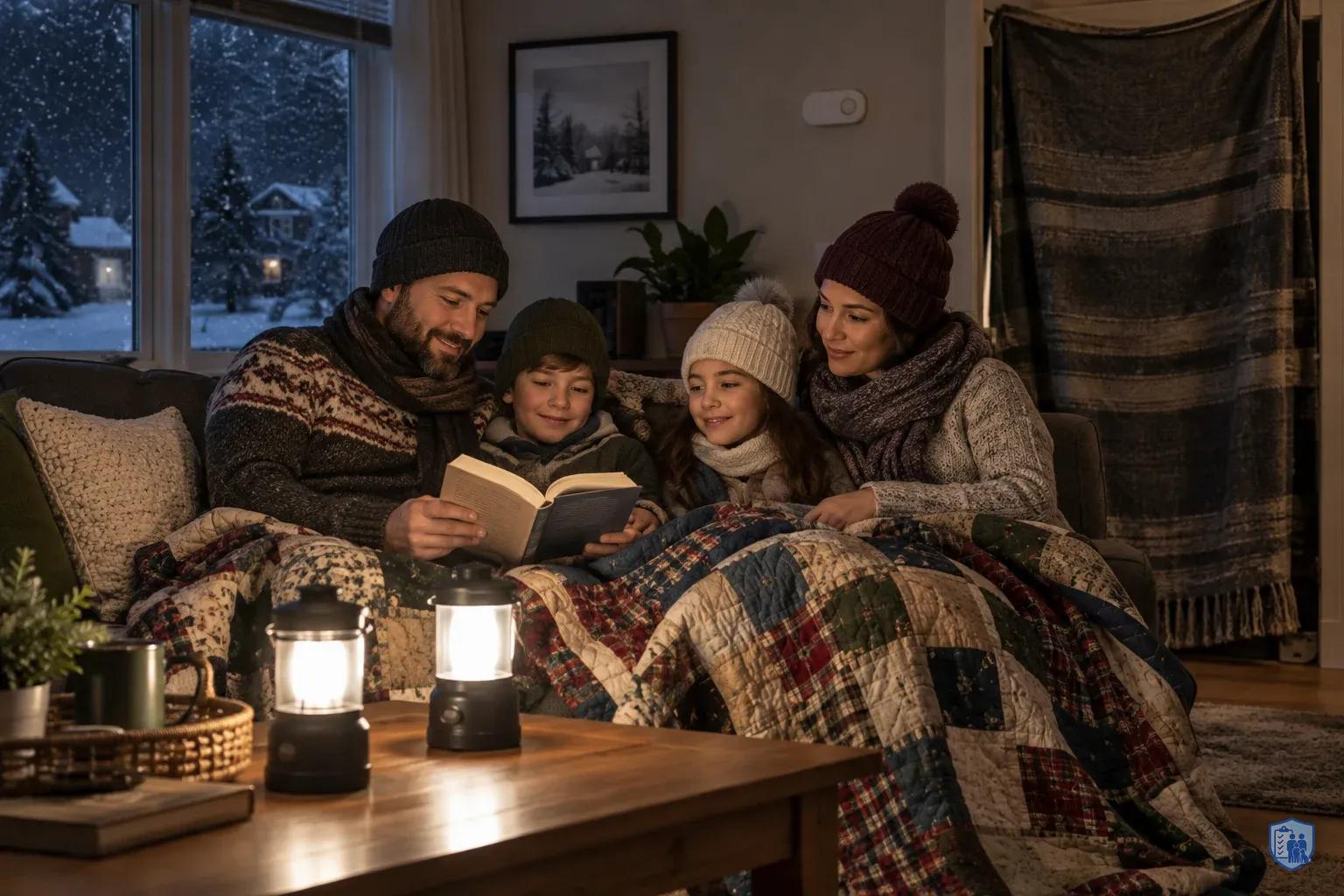
It's 9 p.m., and the freezing rain has been coming down since noon. A limb cracks, the lights die, and the furnace fan winds down. By morning the roads are glazed, the gas station two miles away has no power to pump, and the house is losing a degree every hour or so. You're not going anywhere, and you need heat that doesn't depend on the grid.
A winter storm rarely hands you one problem. It stacks three. The grid goes down, so you have no electricity. The roads close, so you're sheltering in place. Fuel gets scarce or unreachable, so you can't resupply. Whatever you pick for backup heat has to work under all three conditions. You need to know what it burns, how much you have, and how safely it runs in a closed-up house.
Cheap no-electric DIY heaters are spreading online, and the appeal is obvious. This guide compares them with purpose-built backup heaters, and safety is the deciding factor. Here's the bottom line: improvised open-flame alcohol burners are not indoor home heaters. Listed heaters, paired with a warm-room plan, are the defensible choice.
The stakes are real. Carbon monoxide (CO) can't be seen or smelled, and it can build up when people run fuel-burning heaters or generators during an outage . The New York State Department of Health also warns against heating a home with a gas stove or oven .
We'll compare options on fuel, listing or certification, ventilation, tip-over and low-oxygen protection, refueling, storage, and cost. Start with the DIY option, because that's the one drawing the most attention.
The viral DIY alcohol burner: what it is and what it's missing
The concept is simple. A metal can holds a fuel-soaked filler, a mesh surface on top glows as a radiant element, and alcohol burns in the open. I'm describing it only at that high level. There are no build steps here, and there won't be.
The channel Zen Garden Oasis demonstrates the idea for a small greenhouse in "UNLIMITED Heat For Your Home Or Greenhouse | No Electric Needed". To the creator's credit, the video appears to include cautions about keeping the can on a metal sheet away from flammable surfaces, having CO detection and fire extinguishers on hand, and trying a kerosene-type fuel as an alternative. Watch the video yourself before you rely on any of those details. Even if they hold up, sensible instincts don't turn a homemade burner into a home heater.
Here is what a listed heater has that a homemade burner lacks:
- No tip-over shutoff. If a pet, a child, or your own foot bumps it, nothing cuts the flame.
- No oxygen-depletion sensor. Nothing warns you or shuts the burner down as the room's air changes.
- No tested clearances. A listed heater's manual tells you how far it must sit from walls and furniture because someone tested it. A DIY burner has no such number.
- No enclosed burner. The flame and fuel are exposed.
- No third-party listing. No independent lab has evaluated it.
Pooled liquid alcohol adds its own hazards. Alcohol flames may be hard to see, especially in bright light, so you may not realize a flame is still burning. A spill can spread fire across a surface in seconds. Open-flame products that burn pooled liquid fuel are also known for flare-ups when someone refills them near a flame. Check the U.S. Consumer Product Safety Commission (CPSC) website for its current alerts on these products. A burner sitting in your living room is even less forgiving than one on a patio.
Keeping an extinguisher nearby is good practice, but it doesn't make an improvised heater safe. It's a backup for the moment your plan fails.
Greenhouse sidebar: if the real goal is saving plants, cut heat loss before adding any flame. University of Wisconsin Extension reports that greenhouse energy curtains can reduce nighttime heat loss by 20% to 75% . For a small structure, that can shrink your heating problem dramatically. Colorado State University Extension also covers low-tech frost protection methods .
- DIY alcohol burner: not a home heater
- Burns liquid alcohol and has no third-party listing, no tested ventilation guidance, no tip-over shutoff, and no oxygen-depletion sensor. Refueling pooled liquid risks flare-ups, the fuel is stored as a flammable liquid, and the flame may be hard to see. Upfront cost is low, but it is not recommended as a home heater.
- Listed kerosene heater
- Use only water-clear 1-K kerosene, never gasoline or other fuels. Choose a listed model, ventilate as the manual says, and check the specific model for tip-over and low-oxygen protection. Refuel outdoors with the heater off and cool, and store fuel in a labeled kerosene container. Cost is moderate. Check whether local rules restrict indoor use.
- Indoor-rated propane heater
- Buy only a model the manufacturer explicitly rates for indoor use, and check its manual for an oxygen-depletion sensor and tip-over shutoff. Ventilate and refuel as the manual says, with the heater off. Keep cylinders out of the living space. Cost is moderate. Never bring outdoor or patio propane heaters inside.
- Electric heater on backup power
- Puts no combustion in the room, so it needs no room ventilation and no oxygen-depletion sensor. Look for a recognized lab mark and check for a tip-over shutoff. Run the generator outdoors, away from doors, windows and vents, and refuel it outdoors when it is off and cool. Use approved fuel containers or charged batteries. Cost is moderate to high.
- Do the power math first
- Many space heaters draw about 1,500 watts. Running one for five hours uses roughly 7.5 kilowatt-hours. A 1,000 watt-hour battery station would power it for only about 40 minutes, before counting conversion losses. Match the heater's wattage to what your generator or battery station can deliver.
- Rules for any fuel-burning heater
- Ventilate exactly as the manual requires, install battery-backed CO alarms and test them before winter, and keep anything that can burn at least 3 feet away. Refuel only outdoors with the heater off and fully cool. Never heat your home with a gas stove or oven.
Side-by-side: your real backup heat options
Four options are worth comparing: the DIY alcohol burner, a listed kerosene heater, an indoor-rated propane heater, and an electric heater on generator or battery power. I've kept cost relative because prices and fuel use vary widely. Check the specs for any model you're considering.
| DIY alcohol burner | Listed kerosene heater | Indoor-rated propane heater | Electric heater on backup power | |
|---|---|---|---|---|
| Fuel | Liquid alcohol | 1-K kerosene only | Propane | Electricity |
| Listing | None | Look for a listed model | Must be explicitly rated for indoor use | Look for a recognized lab mark |
| Ventilation | No tested guidance | Per the manual | Per the manual | None needed in the room; generator stays outdoors |
| Tip-over / low-oxygen protection | None | Check the model's features | Look for oxygen-depletion sensor and tip-over shutoff | Check for tip-over shutoff |
| Refueling | Pooled liquid, flare-up risk | Outdoors, heater off and cool | Per the manual, heater off | Generator refueled outdoors, off and cool |
| Storage | Flammable liquid | Labeled kerosene container | Cylinders kept out of living space | Approved fuel containers, or charged batteries |
| Cost | Low | Moderate | Moderate | Moderate to high |
Kerosene. CPSC says to use only water-clear 1-K kerosene in kerosene heaters, never gasoline or other fuels, because wrong or contaminated fuel can cause fire and dangerous emissions . Keep the heater away from combustibles and ventilate per the manual . The New York State Department of Health says to use alternative heaters only as the manufacturer directs, with proper ventilation . Refuel outdoors once the unit is off and cool . Local rules may restrict indoor use, which Section 5 covers.
Pros: Strong heat output, and no electricity needed.
Cons: Fuel storage, emissions, and possible local restrictions.
Propane. Buy a model the manufacturer explicitly rates for indoor use. Then check its manual for an oxygen-depletion sensor and tip-over shutoff. Outdoor and patio propane heaters must never come inside, however cold it gets.
Pros: Convenient fuel, and many indoor-rated models include safety shutoffs.
Cons: Cylinders need careful storage, and supply can vanish in a regional storm.
Electric on backup power. An electric heater puts no combustion in the room, but a portable space heater draws a lot of power. Many models draw about 1,500 watts. Run that for five hours and you've used roughly 7.5 kilowatt-hours. A 1,000 watt-hour battery station would power it for only about 40 minutes, before counting conversion losses. Match the heater's wattage to what your generator or battery station can deliver, and check the labels on both. A generator must run outdoors, well away from doors, windows, and vents, because generator exhaust carries CO. The New York State Department of Health warns about this risk .
Pros: No fumes or open flame in the room, and no fuel in the living space.
Cons: It depends on a generator or battery bank, and the power math is unforgiving.
DIY burner. It has the lowest upfront cost and none of the protective features in the table. The cost savings vanish after one bad night. It's not recommended as a home heater.
Non-negotiable rules for any fuel-burning heater
Think of these rules as the seat belt, airbag, and brakes of backup heating. Run through this checklist before the first cold night, not during the outage.
-
Ventilate exactly as the manual requires. Don't improvise by cracking a window "about right." The manual states what that heater needs.
-
Install battery-backed CO alarms and test them before winter. Both NFPA and the New York State Department of Health support having working alarms . Many safety guides suggest an alarm on every level and outside sleeping areas. Confirm the placement rules in your alarm's manual and in local code.
-
Keep anything that can burn at least 3 feet away. NFPA recommends keeping anything that can burn at least 3 feet from heating equipment, and a three-foot kid-free zone around space heaters . That includes curtains, bedding, cardboard, and stored fuel. Extend the zone to pets.
-
Refuel only outdoors, with the heater off and fully cool. Never trust your eyes alone, because some flames are hard to see. Confirm that nothing is still burning.
-
Set the heater on a stable, level, noncombustible surface away from foot traffic. Don't put it on a rug, a couch cushion, or a wobbly table. As a rule, turn the heater off when you leave the room or go to bed, and never leave it running unattended unless the manual explicitly allows it.
-
Use flashlights and battery-powered lights, not candles. NFPA recommends flashlights and battery-powered lighting during a power outage . Use flashlights, not candles. A flame in a dark, stressful house is one more thing to knock over.
Now audit your own setup. A heater with a short cord, an alarm with a dead battery, or a fuel can parked next to the unit can each break one of these rules. Fix those problems today, while the weather is calm.
Download our printable Winter Heater Safety Checklist and tape it next to your backup heater. It takes five minutes, and it could save your family's night.
- Use only water-clear 1-K kerosene
- Fuel kerosene heaters only with water-clear 1-K kerosene. Never use gasoline or any other fuel, because wrong or contaminated fuel can cause fire and dangerous emissions.
- Keep fuels in separate, labeled containers
- Store each fuel in its own labeled, approved container. Never put kerosene in a gasoline can, or gasoline in a kerosene can. Mixed-up fuel is how wrong-fuel accidents begin.
- Store fuel away from the living space
- Keep fuel containers and propane cylinders out of living spaces. Keep them away from ignition sources, children and pets. Keep stored fuel at least 3 feet from heating equipment.
- Calculate fuel needs with a formula
- Find the heater's rated fuel consumption in its manual. Multiply it by the realistic hours you'll run it per day, then by the number of outage days you expect. Add a buffer, because storms linger and cold snaps follow. Running the heater only in a warm room for part of the day uses less fuel. Include generator fuel in the same math.
- Confirm local rules and storage limits
- Some areas restrict indoor kerosene or propane heater use. Ask your local fire department or code office about the rules and about propane and kerosene storage limits. Store only what you can store safely and legally, and check your lease and insurance terms.
- Stock and rotate fuel before storm season
- Buy fuel early, because stations may close or run dry and roads may be impassable during a storm. Rotate kerosene, since it can pick up water or debris over time, and check the supplier's shelf-life guidance. Map nearby suppliers in advance, plus a backup in case your first choice is out of stock or out of reach.
Fuel, storage, local rules, and planning for a multi-day outage
A heater with no fuel is just furniture. Planning for the supply side matters as much as picking the unit.
Check local law first. Some states and municipalities may restrict indoor kerosene or propane heater use. Call your local fire department or code office before you buy, and read your lease and insurance terms. A renter who skips this step can find out after a fire, which is the worst possible time.
Store fuel safely.
Use labeled, approved containers, and keep them away from living spaces, ignition sources, children, and pets. Never store kerosene in a gasoline can, or the reverse. Mixed-up fuel is how wrong-fuel accidents begin, and CPSC states that only water-clear 1-K kerosene should be used, since contaminated or wrong fuel can create fire and emission hazards . Keeping separate, clearly labeled containers is a sensible way to prevent that mistake. Rotate your kerosene as a general practice. Fuel can pick up water or debris over time, so check the supplier's guidance on shelf life. Store only what you can store safely and legally. Ask your local fire code office about propane and kerosene storage limits.
Plan quantities with a formula, not a guess. Find the heater's rated fuel consumption in its manual. Multiply it by the realistic hours per day you'll run it. Then multiply that by the number of outage days you expect. Add a buffer, because storms linger and cold snaps follow them. A heater that runs only in your warm room for part of the day will use less than one you run around the clock, so decide that plan first.
Face the no-fuel-transport reality. In a big storm, stations may close or run dry. Roads may be impassable even if the stations have fuel. You can't count on a quick run for more supply. Buy and rotate fuel before storm season, and map nearby suppliers in advance. Include a backup in case your first choice is out of stock or out of reach. If your plan includes a generator, include its fuel in the same math and the same safe-storage rules.
Choose your heater and pair it with a warm-room plan
Picture two households after the same storm. The Ortegas rent an apartment where fuel-burning heaters aren't allowed. They run a listed electric heater from a battery station and a generator kept safely outdoors. They also hung blankets over the doorway of their smallest interior room. The Whites own their home, where local code permits it, and they run a listed indoor-rated propane heater with CO alarms on every level. Both are warm. Neither built a burner from a can.
That's the decision guide:
- Renters or homes with restrictions: lean on an electric heater with a safely run outdoor generator or battery station, plus heat retention.
- Owners where it's permitted: consider a listed kerosene or indoor-rated propane heater, plus CO alarms.
- Everyone: skip DIY burners.
Whatever heater you pick, shrink the space it has to warm. For sheltering in place, build a warm room.
Choose one interior room with few windows. Close off unused rooms. Hang blankets over doorways and block drafts. Layer clothing and bedding.
Stock supporting supplies too: CO alarms with spare batteries, a fire extinguisher, flashlights and lanterns, and protective gear for refueling outdoors. Never use a gas stove or oven to heat a home, as the New York State Department of Health warns .
Know when to leave. If you can't keep the home safely warm, go to a warming center. If a CO alarm sounds or anyone develops symptoms such as headache, dizziness, or nausea, get everyone into fresh air immediately and call 911 or your local emergency number. Don't stop to figure out the cause first.
Decision summary: use a listed heater your local rules allow, or electric power run safely. Ventilate per the manual, keep 3 feet of clearance, and refuel outdoors when cool. Stock fuel early, and keep everyone in one warm room.
Build your full winter outage plan today: warm room, fuel quantities, CO alarms, and when to leave. Make the decisions now, while the lights are still on.