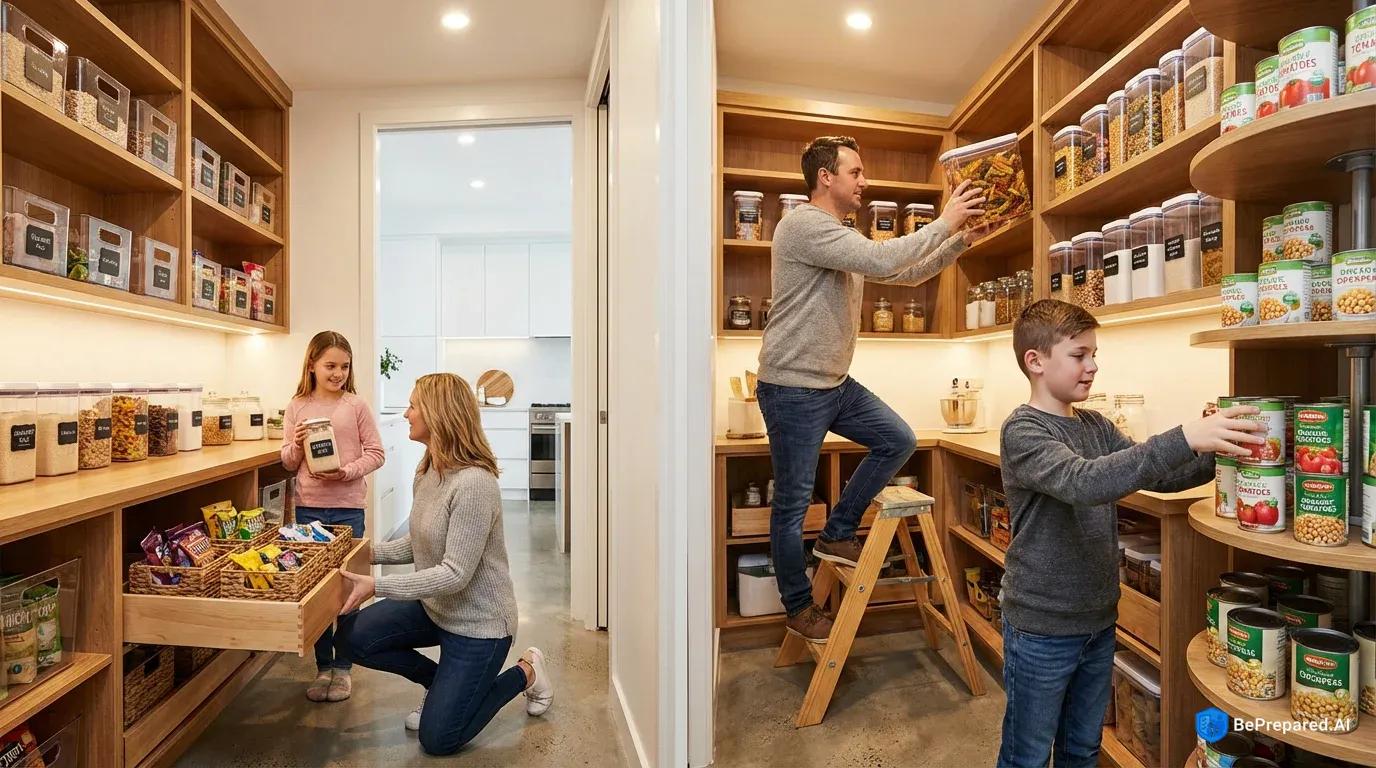
Why Start a Financial Crisis Food Storage Plan?
Picture this: You're standing in the grocery store, staring at a shelf of pasta that's jumped from $1.29 to $2.49 per box in just three weeks. Your neighbor mentioned her family went through their entire pantry during a recent job loss scare, surviving on crackers and canned soup for the last few days before payday. These aren't scenes from a disaster movie—they're real scenarios playing out in communities across the country every time economic uncertainty strikes.
The truth is, most American households are living much closer to the edge than we'd like to admit. The average household only has about three days' worth of food on hand at any given time . Three days. That's one long weekend between your family and empty cupboards if something disrupts your normal shopping routine—whether that's a job loss, a regional disaster, or even just an unexpected illness that keeps you home.
Economic crises have a predictable pattern when it comes to food costs. History shows us that during periods of financial instability, food prices can spike dramatically and quickly. When the 2008 recession hit, rice prices tripled in some areas within months. More recently, supply chain disruptions sent the cost of basic staples soaring while many families were already struggling with reduced income. Having a well-stocked pantry during these times isn't just about survival—it's about maintaining your quality of life and protecting your budget when prices surge.
Here's the good news: building a financial crisis food storage plan isn't about spending thousands of dollars on freeze-dried meals or transforming your basement into a bunker. It's about creating a cushion of peace of mind, one grocery trip at a time. When you know you have weeks or months of food safely stored away, you sleep better at night. You make better financial decisions because you're not operating from a place of fear. And when prices do spike, you can wait it out instead of paying premium costs for basics.
- Shelf Space
- 40 square feet minimum storage area for 3-month supply of dry goods and cans
- Rotation Schedule
- Check dates monthly, rotate canned goods every 2-3 years, dry goods every 5-10 years
Calculate Your Family's Food Storage Needs
Before you buy a single can of beans or bag of rice, you need to understand exactly what you're planning for. This isn't about guessing—it's about creating a realistic roadmap that accounts for your family's actual needs and circumstances.
Start by doing a person-by-person assessment of your household. FEMA recommends maintaining at minimum a three-day supply of non-perishable food , but for financial crisis planning, you'll want to think bigger—at least two weeks to three months depending on your goals and storage capacity. Sit down with a notepad and list every person in your household. Next to each name, write down their typical daily calorie needs.
An average adult needs about 2,000 calories per day, but this varies significantly. Your teenage son who plays football might need 3,000 calories, while your elderly parent might need only 1,600. Don't forget to account for pets—they're family members who need to eat too.
Special dietary requirements deserve careful attention during this planning phase. If someone in your family has celiac disease, diabetes, food allergies, or follows a specific diet for religious or health reasons, your storage plan needs to reflect that reality. There's no point stockpiling wheat-based products if your daughter can't eat gluten, or loading up on high-sugar items when you're managing diabetes. Make a separate list of any special dietary needs, including infant formula if you have babies, or specific medical nutrition products anyone requires.
Now comes the practical part: evaluating your actual storage space. Walk through your home with fresh eyes. Look beyond the obvious kitchen pantry. Do you have space under beds? A cool, dry basement corner? A closet that could be reorganized?
Even apartment dwellers can find creative storage solutions—under the stairs, in the back of linen closets, or in stackable containers that double as furniture. Measure your available space and take photos. This prevents you from buying more than you can properly store, which leads to waste and spoilage.
Water storage is equally critical but often overlooked in food storage planning. The standard recommendation is one gallon of water per person per day , and that's truly the minimum—it covers drinking and basic hygiene but not much else. For a family of four planning a two-week supply, that's 56 gallons of water. That might sound overwhelming, but it's manageable when you break it down: seven cases of bottled water, a few five-gallon jugs, and some water purification tablets as backup.
Ready to get specific with your numbers? Create a personalized preparedness plan based on your location and family needs.
Essential Foods for Long-Term Storage
Building a food storage pantry is like creating a culinary insurance policy—you want variety, nutrition, and reliability. The key is focusing on shelf-stable foods that your family actually enjoys eating, because emergency food that sits untouched until it expires isn't really emergency food at all.
Let's start with the foundation: grains and carbohydrates. These form the caloric backbone of any long-term food storage plan. White rice, properly stored in airtight containers with oxygen absorbers, can last 30 years or more . Yes, you read that right—three decades. Pasta, both regular and whole wheat, stays good for years beyond its printed date when kept cool and dry.
Oats, whether steel-cut or rolled, provide versatility for breakfast and baking. Flour has a shorter shelf life than whole grains, but all-purpose flour still lasts a solid year in the pantry, longer if frozen first to kill any potential pests, then moved to airtight storage. Don't overlook less common grains like quinoa, barley, and cornmeal—they add variety and different nutritional profiles.
Proteins are your next priority, and you have more options than you might think. Canned meats including chicken, tuna, salmon, and even beef offer convenient protein sources that store well for extended periods. Dried beans and lentils last indefinitely when stored properly and cost pennies per serving. Peanut butter is a powerhouse—high in protein, calories, and healthy fats, with a shelf life of about two years unopened.
Canned chili, stews, and soups give you complete protein meals in a single can. For those who eat them, eggs can be stored as powdered eggs, which reconstitute surprisingly well for baking and scrambling.
Fruits and vegetables in shelf-stable forms prevent nutritional deficiencies and add crucial variety. Canned vegetables like green beans, corn, peas, and tomatoes (whole, diced, and sauce) provide essential nutrients and last for years. Canned fruits in juice or light syrup provide sweetness and vitamin C. Dried fruits like raisins, cranberries, and apricots pack easily and last 6-12 months, longer if refrigerated.
Tomato paste, sauce, and diced tomatoes are incredibly versatile for creating different meals from the same base ingredients. Don't forget canned or jarred vegetables like pickles, olives, and sauerkraut—they last years and provide important variety.
Fats, oils, and dairy round out your nutritional needs. Vegetable oil, olive oil, and coconut oil are essential for cooking and adding calories. Unopened vegetable oil lasts about two years; coconut oil lasts even longer. Powdered milk solves the dairy dilemma, lasting years unopened and providing calcium and protein.
Canned evaporated and sweetened condensed milk work for cooking and coffee. Butter can be stored in the freezer for months, and there are even shelf-stable butter products designed for long-term storage.
Seasonings and extras transform boring storage food into actual meals. Salt, sugar, honey, and maple syrup last indefinitely—honey literally never spoils. Vinegar, soy sauce, hot sauce, and Worcestershire sauce add flavor and last for years. Dried herbs and spices lose potency over time but remain safe to eat. Baking essentials like baking powder, baking soda, and yeast (store yeast in the freezer) let you make bread and baked goods.
Here's a crucial fact many people don't know: freezer foods remain safe for 48 hours if the freezer door stays closed during a power outage . This means your frozen vegetables, meats, and meals are actually part of your emergency food supply for short-term crises. A full freezer maintains temperature longer than a partially empty one, so consider filling empty space with containers of water—they'll help keep things frozen and give you extra water if needed.
The rotation system is what prevents waste and keeps your storage fresh. Use a simple "first in, first out" method. When you buy new cans or packages, place them behind the older ones. Once a month, shop your own pantry first before going to the store.
Cook meals using storage items, then replace what you used on your next shopping trip. This way, you're constantly cycling through your supply, and nothing sits forgotten until it expires.
Budget-Friendly Storage Building Strategy
Sarah, a single mom of two, felt overwhelmed when she first considered building an emergency food supply. Her budget was tight, with little room for extra expenses. But then she shifted her thinking: instead of seeing it as one massive purchase, she treated it like a savings account—small, consistent deposits over time. Six months later, she had a three-month food supply, built entirely through strategic shopping and patience.
This is the secret that makes food storage accessible to everyone: you don't build it overnight, and you don't need to spend a fortune. Start with a modest goal—maybe just one extra week of food beyond what you normally keep on hand. Each grocery trip, add a few extra items specifically for storage.
Buy an extra package of pasta, a few extra cans of vegetables, an additional jar of peanut butter. These small additions barely impact your weekly budget, maybe adding $10-15 to your grocery bill, but they accumulate quickly. In just one month of adding $10 worth of storage food per week, you've invested $40 and likely have an extra week's worth of food put aside.
Building a comprehensive food storage supply can be done affordably when approached strategically over several months. The key is patience and planning. Create a master list of the items you need based on your calculation work earlier. Divide that list into categories, and focus on one category at a time.
Month one might be grains and pasta. Month two could focus on proteins. Month three, canned vegetables and fruits. This systematic approach prevents both overwhelm and overspending.
Bulk purchasing becomes your best friend once you understand the rhythm of sales cycles. Grocery stores typically run sales on specific categories every 6-8 weeks. When you see canned goods on sale—say, tomatoes for 50 cents a can instead of the usual $1.29—that's when you stock up. Buying larger quantities during sales can lead to significant savings compared to buying single items at regular price.
Join a warehouse club like Costco or Sam's Club, or shop the bulk bins at grocery stores. A 25-pound bag of rice costs significantly less per pound than buying one-pound boxes. Split bulk purchases with friends or family if the quantities are too large for your household alone.
The generic versus name brand debate matters more for your budget than for your storage. In blind taste tests, most people can't distinguish between name-brand canned vegetables and store brands. For storage staples—rice, beans, pasta, flour, sugar, canned tomatoes, and vegetables—generic brands work perfectly well and typically cost much less.
Save the name-brand budget for items where quality truly matters to your family, like a specific peanut butter your kids will actually eat or a particular type of canned soup you know everyone likes.
One often-overlooked strategy is preserving fresh food when it's abundant and cheap. If you find a great sale on fresh produce, consider canning, freezing, or dehydrating it yourself. A bushel of apples in fall might cost $15 and can be made into dozens of jars of applesauce or dried apple slices.
Summer tomatoes at peak season can become jars of salsa or tomato sauce. You don't need fancy equipment to start—a basic water bath canner costs about $30, and dehydrating can even be done in a low-temperature oven if you don't want to invest in a dehydrator yet.
The beauty of this gradual approach is that it never strains your budget to the breaking point. You're not choosing between paying bills and buying emergency food. You're simply redirecting a small portion of your existing grocery budget toward items that serve double duty—they're there if you need them in a crisis, but they're also available for everyday use.
This makes food storage not an expense, but an investment in your family's security and your own peace of mind. When the next economic uncertainty hits—and it will—you'll face it with full cupboards and a calm mind, knowing you've already taken care of the most basic need: feeding your family.
Taking Your First Simple Steps
The journey to food security doesn't require a dramatic lifestyle change or a massive upfront investment. Think of it as building a new habit, like starting to exercise or learning a new skill. You begin with small, manageable actions that fit naturally into your existing routine.
This week, your only goal is to buy just three extra items during your regular grocery shopping. Pick three things your family already eats regularly—maybe a box of pasta, a can of beans, and a jar of peanut butter. Put them in your cart along with your normal groceries. When you get home, designate a specific spot for these items, separate from your everyday pantry. Label them with the purchase date using a marker.
That's it. You've started your food storage plan. Next week, add three more items. The week after, maybe add five. You're not disrupting your budget or your routine. You're simply being intentional about building a buffer between your family and uncertainty.
As you continue this practice, you'll notice something interesting happens. You start to see sales differently. When chicken broth goes on sale, you'll think, "I could grab a few extra cans for storage." When you're at the store anyway, adding a couple extra items becomes second nature. Before you know it, you've built a two-week supply. Then a month. Then more.
The confidence that comes with this growing stockpile is real and powerful. You'll find yourself less anxious about economic news, less stressed about unexpected expenses, and more able to help others when they face difficulties. You're not preparing for the end of the world—you're preparing for the unexpected moments that happen in everyone's life.
Start small. Stay consistent. Trust the process. Your future self will thank you for the peace of mind you're building today, one can of soup at a time.