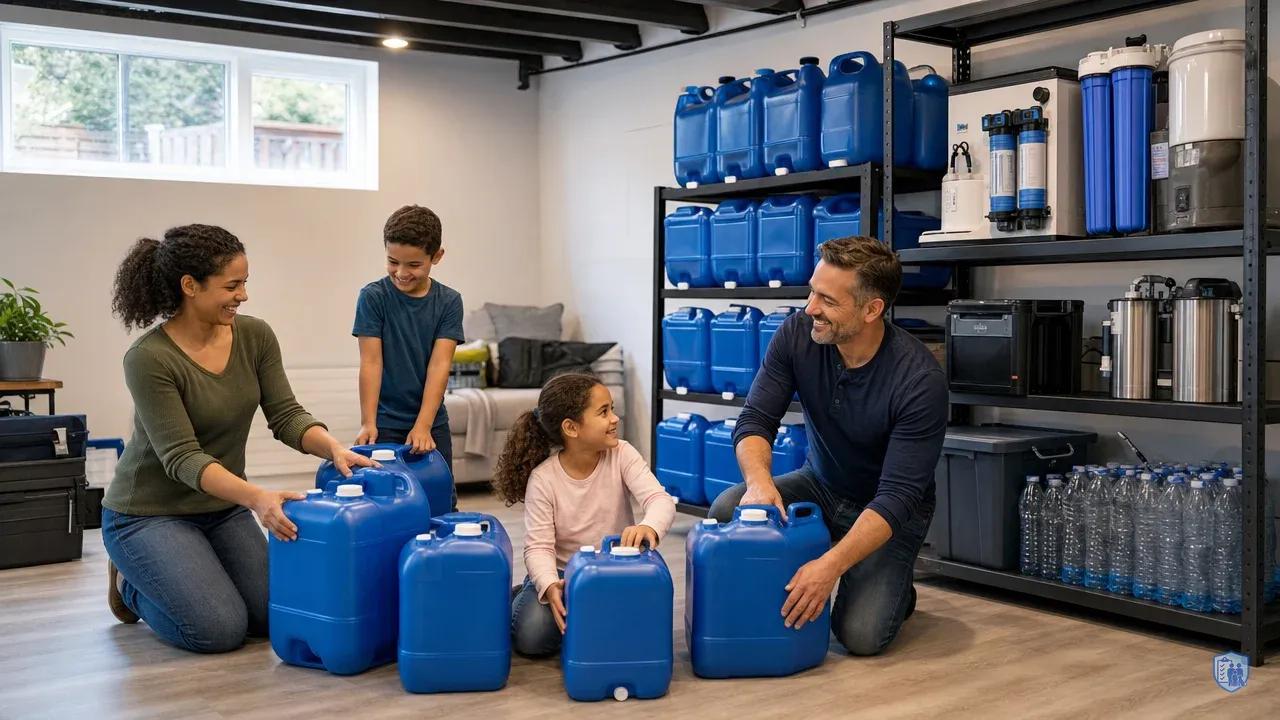
Why water security matters
When intelligence officials recently raised concerns about potential threats to U.S. water infrastructure, it barely registered with most Americans. Yet the concern reveals something important that everyone should understand: our water systems are far more vulnerable than most people realize.
Many of America's water systems operate with security measures that vary widely from place to place. That means the water flowing from your tap right now depends on infrastructure that could be affected by a chemical, biological, radiological, or nuclear event, a cyberattack, or even a natural disaster. When Hurricane Katrina struck, communities struggled without clean water for extended periods. When a chemical spill occurred in Charleston, West Virginia, thousands of residents couldn't use their tap water. These aren't distant possibilities, they're documented realities that have already happened.
A normally active person needs about three quarters of a gallon of fluid daily . Without water, survival becomes a race against time. Yet most families have barely enough bottled water to get through a long weekend. When a chemical, biological, radiological, or nuclear event contaminates municipal water supplies, that contamination can persist for weeks, leaving you entirely dependent on what you've stored and how you can purify additional sources. Understanding these threats isn't about living in fear; it's about taking practical steps that give you control when systems fail.
The good news: with some basic knowledge and preparation, you can protect your family's water security regardless of what happens to the infrastructure around you. You don't need to become an expert overnight or spend thousands of dollars. Start with simple steps, build your knowledge gradually, and you'll have real security that lets you sleep better at night.
Common water contamination threats
Water contamination isn't a single threat. It's actually several distinct dangers, each requiring its own response strategy. Understanding these differences could literally save your life, because the wrong treatment method can sometimes make contaminated water even more dangerous.
Biological contamination comes from living organisms you definitely don't want in your body. Bacteria like E. coli and cholera, viruses including hepatitis and norovirus, and parasites such as giardia can all turn clean-looking water into a serious health hazard. The good news: boiling water kills disease-causing germs including viruses, bacteria, and parasites . A rolling boil for at least one minute eliminates these biological threats completely . This is why boiling has been humanity's go-to water treatment method for thousands of years. It simply works against living contaminants.
Chemical contamination presents a completely different challenge. Industrial spills release heavy metals and toxic compounds into water supplies. Agricultural runoff carries pesticides and fertilizers. During a chemical, biological, radiological, or nuclear event, deliberate chemical releases could poison water sources for miles around. Here's the critical part: chemical contamination cannot be removed by boiling and may actually concentrate chemicals as water evaporates . Boiling chemically contaminated water can make it more dangerous, not less. Chemical threats require activated carbon filters or reverse osmosis systems designed specifically for chemical removal.
Radioactive contamination involves materials called radionuclides that can contaminate drinking water supplies during nuclear incidents. These invisible particles emit radiation that damages living cells. You can't see, taste, or smell radioactive contamination, which makes it particularly insidious. Standard filtration helps with some radioactive particles, but depending on the specific radionuclides involved, you may need specialized treatment or simply need to rely entirely on stored water until authorities declare the supply safe.
Infrastructure failures represent another significant threat that often gets overlooked. When water treatment plants lose power, get flooded, or have their IT systems compromised by cyberattacks, they simply shut down. The water doesn't get contaminated by an outside source. It just stops being treated at all. Whatever biological or chemical contaminants exist in the source water flow straight through to your tap. This has happened in various communities across the country, leaving residents without safe drinking water for extended periods.
Essential water storage: your first line of defense
Building a water storage system sounds complicated, but it's actually one of the most straightforward aspects of emergency preparedness. The key is understanding how much you need and then making sure it stays safe and drinkable when you need it most.
Let's start with the math, because it's simpler than you think. FEMA recommends storing at least one gallon of water per person per day for several days . That gallon breaks down into roughly half for drinking and half for food preparation and hygiene. For a family of four, a three-day emergency supply means 12 gallons total. That's actually not as much as it sounds. Twelve gallon-jugs take up about as much space as a large cooler. For a more comfortable two-week supply, you're looking at 56 gallons, which fits in a corner of most basements or garages.
Container selection matters more than most people realize. Food-grade plastic containers specifically designed for water storage are your best bet. Those blue 5-gallon stackable containers you see at camping stores work perfectly and make storage calculations easy. Avoid using old milk jugs. The plastic breaks down and can leach chemicals into your water. Glass containers work well but break easily during emergencies. If you're storing large quantities, consider 55-gallon food-grade barrels, but remember that water is heavy. A full 55-gallon barrel weighs several hundred pounds and won't be moving anywhere once filled.
Proper storage technique extends your water's shelf life dramatically. Store water in a cool, dark place in clean food-grade containers . Clean your containers with dish soap and water, rinse thoroughly, then sanitize with a solution of one teaspoon unscented bleach per quart of water. Rinse again and let them air dry. Fill containers with tap water, which already contains chlorine that helps preserve it, seal tightly, and label with the date. Store your water in cool, dark places away from direct sunlight, which can degrade plastic containers over time. Keep water containers away from stored chemicals, gasoline, and pesticides to prevent any potential contamination through vapor absorption.
Rotation keeps your supply fresh and your skills sharp. Replace stored water every six months . This practice helps maintain quality and ensures your containers stay in good condition. When rotation day comes, use your stored water for normal household tasks and refill with fresh water. This practice also helps you understand exactly how much water your family actually uses, which might be more than the one-gallon-per-day minimum.
Don't forget to account for pets, special medical needs, and infant formula preparation if applicable. A nursing mother needs significantly more water than the standard recommendation. Someone with diabetes who experiences frequent urination needs extra hydration. Pets also depend on you for their water needs. Build these considerations into your storage calculations from the start so you're not caught short when it matters most.
Water purification methods that actually work
Having water storage solves one problem, but what happens when your stored supply runs low and you need to purify water from questionable sources? Understanding which purification method works for which type of contamination could mean the difference between staying healthy and getting seriously sick.
Boiling remains the gold standard for biological contamination because of its reliability and simplicity. Boiling water kills disease-causing germs including viruses, bacteria, and parasites . A rolling boil for at least one minute eliminates these biological threats completely . At higher elevations, you may need to boil water for longer periods because water boils at lower temperatures in thinner air. The beauty of boiling is that it requires no special equipment beyond a pot and a heat source, and it works every single time for bacteria, viruses, and parasites.
The downside: chemical contamination cannot be removed by boiling and may actually concentrate chemicals as water evaporates . Boiled water also tastes flat because dissolved oxygen escapes. You can improve the taste by pouring it back and forth between containers to re-aerate it.
Chemical disinfection with bleach offers a portable solution for biological threats when boiling isn't practical. Adding 1/8 teaspoon of unscented liquid bleach per gallon of water provides emergency disinfection . Use regular household bleach with no added scents, cleaners, or other additives. Mix thoroughly, let it stand for 30 minutes, and you should detect a slight chlorine odor. No chlorine smell means the water didn't have enough chlorine. Add another small dose and wait 15 more minutes. This method works well for clear water but may require adjustment for cloudy water. Like boiling, bleach kills living organisms but does nothing for chemical or radioactive contamination.
Water filters come in countless varieties, and understanding their capabilities prevents dangerous assumptions. Basic mechanical filters remove sediment and some bacteria but often miss viruses, which are much smaller. Activated carbon filters excel at removing chemicals, bad tastes, and odors, making them essential for chemical contamination scenarios. Ceramic filters with small enough pores can remove bacteria and protozoa.
For comprehensive protection, look for filters rated for all three categories: bacteria, protozoa, and viruses. Many quality camping filters achieve this through a combination of mechanical filtration and chemical treatment. The key specification to check is the micron rating. Smaller ratings catch more contaminants, with the tiniest pores needed for virus removal.
UV purification uses ultraviolet light to damage the DNA of microorganisms, rendering them unable to reproduce and cause infection. Battery-powered UV purifiers work quickly, typically 90 seconds per liter, and add nothing to the water, leaving no taste or chemical residue. They're excellent for biological contamination in clear water but become less effective in cloudy water where particles can shield microorganisms from UV light. UV does nothing for chemical contamination, and the devices require batteries or charging, making them less reliable for extended emergencies.
The bottom line: no single method handles everything. A comprehensive water security plan includes multiple purification methods. Boiling capability handles biological threats, activated carbon filters address chemical contamination, and stored water serves as your foundation when you can't safely treat what's available. This layered approach means you're never stuck with just one option.
Creating your family water emergency plan
Knowledge without a plan is just interesting trivia. Turning what you've learned into a practical, personalized water security strategy means sitting down with your family and working through the specifics of your situation. Don't let this overwhelm you. Break it into small steps and tackle one piece at a time.
Start by calculating your family's actual water needs, not just the minimums. Each person needs at least 1 gallon per day for drinking and sanitation , but that's survival-level rationing. For realistic planning, consider 1.5 to 2 gallons per person daily. Write down each family member's name and any special needs. Does someone take medications that increase thirst? Do you have an infant who needs water for formula? Are there pets who depend on you? Add it all up, then multiply by 14 days for a solid two-week supply. That's your target storage number.
Next, identify every potential water source within walking distance of your home. Your hot water heater may contain drinkable water if you know how to drain it safely. Toilet tanks (not bowls) hold several gallons of clean water if you don't use chemical tank cleaners. Ice cubes in your freezer are stored water. Outside your home, where's the nearest stream, pond, or pool? These aren't drinking water sources without treatment, but knowing where water exists gives you options. Map these sources and discuss with your family which would be accessible during different emergency scenarios.
Planning for combined scenarios separates adequate preparation from truly resilient preparation. You may need to avoid tap water completely while simultaneously being unable to leave home to find alternative sources. This is why having both stored water and filtration capabilities isn't redundant. It's essential. Your stored water provides immediate security, while your purification methods extend your supply if the emergency lasts longer than anticipated.
Practice this scenario: pretend your tap water is contaminated and you cannot leave your home. How long does your stored water last? What's your plan when it runs low?
Assign specific responsibilities so everyone knows their role when an emergency hits. Who's in charge of monitoring water levels? Who knows how to operate the water filter? Which family member will track daily consumption to ensure supplies last? Even young children can help by understanding water conservation rules during emergencies: shorter bathroom visits, using hand sanitizer instead of washing when appropriate, and never wasting drinking water.
Finally, practice your plan at least twice a year. Pick a weekend and actually live on your stored water for 24 to 48 hours. Don't cheat by using the tap. You'll quickly discover what you forgot, what works well, and what needs adjustment. Maybe you stored water in the garage but forgot how heavy those containers are to carry upstairs. Perhaps you have a great filter but no one except you knows how to use it.
These practice runs reveal gaps while there's still time to fix them. Keep both in-home water storage and filters as well as portable filtration systems for grab-and-go situations. A quality personal water filter in each family member's emergency bag means you have options even if you're separated or forced to evacuate unexpectedly.
Special considerations for CBRN events
Chemical, biological, radiological, and nuclear emergencies create unique water security challenges that require specific knowledge and responses. These scenarios are less common than natural disasters, but the consequences of handling them incorrectly can be severe and long-lasting. Understanding what to do ahead of time removes the panic from decision-making.
During radioactive plume events, authorities may advise avoiding tap water completely . Radioactive particles can settle into reservoirs and water sources, and while some filtration helps, the safest approach is relying entirely on water that was stored before the incident. This is one scenario where your stored water becomes absolutely critical. There's no "make do" option with radioactive contamination. Bottled water or water stored in covered containers will be safe to drink because they were sealed before the contamination occurred.
If you're caught without adequate stored water during a radiological event, sealed containers of any beverage become valuable: bottled juice, soda, or other drinks contain water that was bottled before the contamination occurred.
Shelter-in-place situations require relying entirely on stored water supplies and whatever you can purify from uncontaminated sources inside your home. When authorities issue shelter-in-place orders due to a chemical release, your first action should be sealing your home. Close windows, shut off ventilation systems, and create a protected interior space. Before sealing, fill every available container with tap water: bathtubs, sinks, pots, and pitchers. If the chemical hasn't yet reached your water supply, you've just captured dozens of additional gallons. Once sheltered, that stored and captured water is all you have until the all-clear is issued, which could take days or even weeks depending on the incident.
Protecting your stored water from contamination during a chemical, biological, radiological, or nuclear event means understanding how different contaminants travel. Radioactive particles settle on surfaces and can contaminate open containers. Chemical vapors can penetrate some plastics over time. Biological agents might contaminate water through direct contact. This is why proper storage matters so much. Water stored in a basement or interior closet has far more protection than water in a garage with potential air exchange. During an active event, move your stored water to the most interior, protected room of your shelter-in-place space.
Signs that water may be contaminated aren't always obvious, which makes this particularly dangerous. Biological contamination rarely changes water's appearance, taste, or smell until it's severely polluted. Chemical contamination might create unusual odors or colors, but many toxic chemicals are imperceptible. Radioactive contamination is completely invisible and undetectable without specialized equipment. You cannot rely on your senses. You must rely on official guidance from authorities who have testing equipment. When officials say the water is unsafe, believe them even if it looks fine. When they say it's safe again, that's based on actual testing, not guesswork.
Different types of contamination require different response strategies, and using the wrong approach can make things worse. For biological contamination from disease outbreaks, boiling or chemical disinfection works well. For chemical spills, activated carbon filtration is necessary, and boiling is counterproductive. For radioactive contamination, stored water is your best option, with some help from filtration for specific radionuclides.
The most important strategy is staying informed through official channels: NOAA weather radio, local emergency management, and CDC guidance. They'll tell you specifically what type of contamination exists and what treatment methods are appropriate.
Understanding how long contamination may last helps you plan supply needs realistically. Biological contamination in water systems typically resolves within days to weeks once treatment plants are operational and the system is flushed. Chemical contamination duration depends entirely on the chemical involved and how it entered the water supply. Some chemicals flush out quickly, while others persist or bond to pipes and infrastructure. Radioactive contamination follows decay curves specific to each radionuclide. Some become safe within days, while others remain hazardous for extended periods.
This uncertainty is exactly why maintaining both adequate stored water and multiple purification capabilities gives you the flexibility to handle whatever duration the emergency actually lasts. You're not trying to predict the future perfectly. You're building flexibility to adapt to whatever actually happens.
Taking your first steps today
Water security isn't about paranoia. It's about taking practical steps that give you control when infrastructure fails. You've learned that different threats require different solutions, that storage and purification work together to create true water security, and that planning ahead makes all the difference.
Start with storage, add purification capabilities, create your family plan, and practice it. The water flowing from your tap right now might seem infinite and reliable, but as we've seen, that reliability depends on systems more fragile than most people realize.
You don't need to do everything at once. Pick one action to complete this week: buy your first case of bottled water, research water storage containers, or identify your home's water sources. Next week, take another small step. Small actions compound into real security over time.
Ready to build your complete emergency preparedness plan? Explore our other essential guides to protect your family in any situation. Each guide breaks down complex topics into simple, actionable steps you can start today.