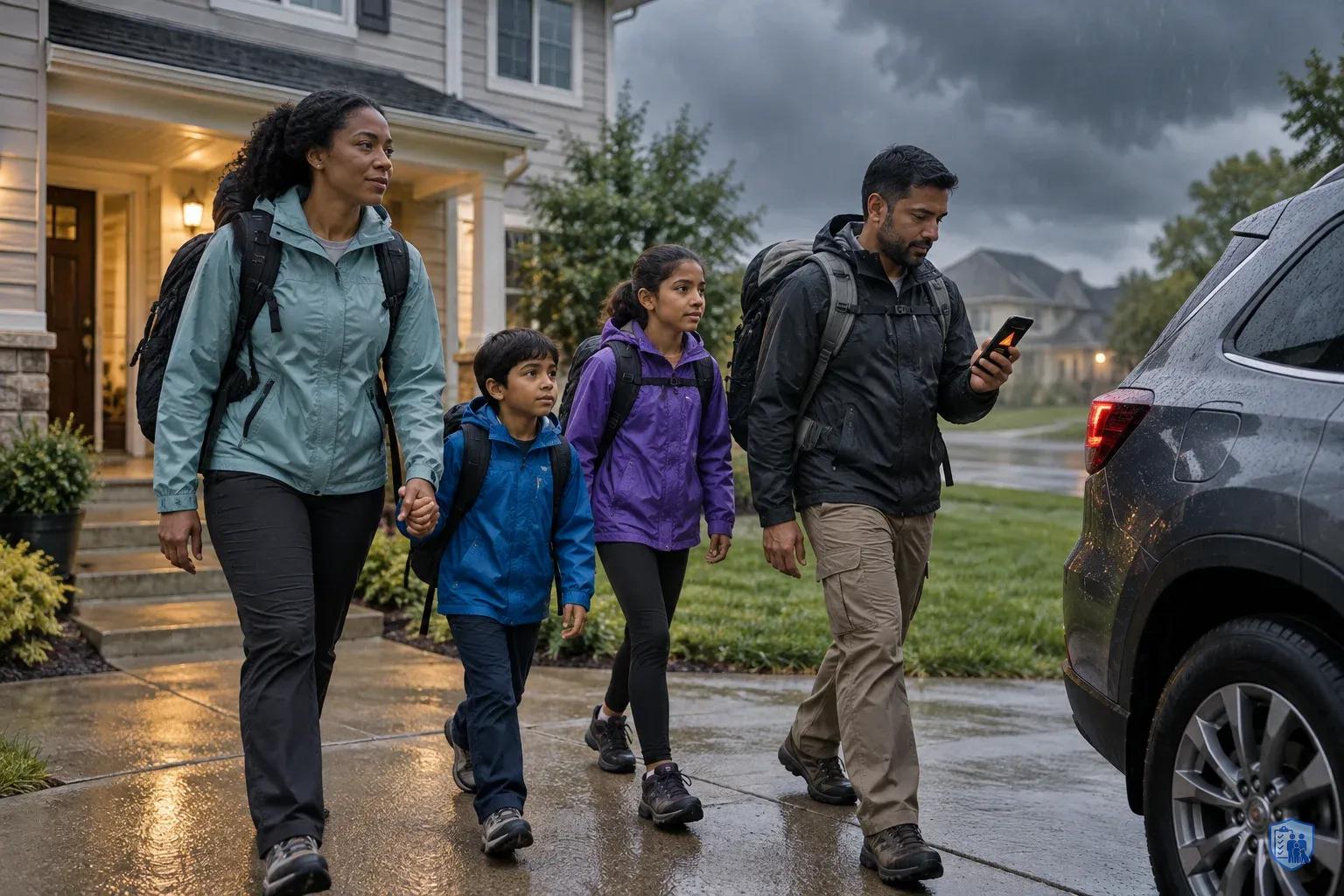
1. Why Flash Floods Call for Fast Action
The rain has been pounding your roof for an hour. The street looks like a shallow creek, and the storm drain at the corner is gurgling. You tell yourself it will stop soon.
Sometimes it does. Sometimes it doesn't, and that's where flash floods come from. A flash flood is caused by heavy rain falling in a short time, generally less than six hours . Water can rise fast, sometimes with little warning .
This hazard is serious. Each year, flooding kills more people than any other thunderstorm-related hazard . The main reason is simple: people underestimate the force of water, especially water that's moving .
Here's the good news. You don't need special training to stay safe. You need a few simple habits, learned now, while the sky is clear. If preparedness feels like a giant to-do list, take a breath. This guide is a de-overwhelm plan: small steps, one at a time. By the end, you'll know what the alerts mean, how to leave, and what never to do.
- Remember: Watch = Get Ready, Warning = Go
- The two alerts sound alike but call for different actions. A watch means prepare. A warning means leave.
- Flash Flood Watch: Flooding Is Possible
- Conditions are right for flash flooding. A watch doesn't mean flooding will happen, but it could.
- During a Watch: Get Ready
- Use the extra time to check your go-bag, fill your gas tank, and review your evacuation route.
- Flash Flood Warning: Flooding Is Here or Coming
- A flash flood is happening or about to happen. Water can rise fast, sometimes with little warning.
- During a Warning: Go Now
- If you're in a flood-prone area, move to high ground right away. Grab your go-bag, medications, and pets, then leave. Don't wait to see the water yourself.
- Get Alerts From at Least Two Sources
- Use at least two: phone emergency alerts, a battery or hand-crank NOAA Weather Radio, or local news. If one source fails, the other is your backup.
2. Know the Alerts: Flash Flood Watch vs. Warning
Two phrases come up again and again in a storm. They sound alike, but they call for different actions. Here's a trick to keep them straight: Watch = Get Ready, Warning = Go.
Flash Flood Watch (Get Ready). Conditions are right for flash flooding. A watch doesn't mean flooding will happen, but it could. Use this time to check your go-bag, fill your gas tank, and review your route. That's our friendly advice, and it's a calm way to use the extra time.
Flash Flood Warning (Go). A flash flood is happening or about to happen . If you're in a flood-prone area, move to high ground right away . Don't wait to see the water yourself.
You can't act on an alert you never receive, so set up a few ways to hear one:
- Phone emergency alerts, which are built to get your attention quickly
- NOAA Weather Radio, which runs on batteries if the power goes out . A hand-crank model works too.
- Local news, on TV, radio, or an app
Use at least two. Phones can lose signal, and radios often sit in drawers. Two sources give you a backup.
- Check your risk
- Find out whether your home, workplace, and your kids' school are in a flood-prone area. Your local emergency management office is a good place to start asking.
- Pick two routes
- Learn the recommended evacuation routes in your area, then choose a backup. Follow recommended routes, because shortcuts may be blocked.
- Choose a meeting place
- Pick a spot on higher ground where your household will gather if you get separated.
- Name an out-of-area contact
- Choose a relative or friend in another region as a check-in point for when local phone lines are jammed.
- Pack a go-bag
- Get a go-bag ready. Many people include copies of important documents in a waterproof bag or container.
- Sign up and practice
- Join your local emergency alert system, then walk through the plan with everyone in your home.
3. Build Your Flood Evacuation Plan Before You Need It
A plan is a gift you give your stressed-out future self. In the middle of a storm, you won't want to make choices. You'll want to follow a plan you already made. Set aside one evening, and you can cover it all.
- Check your risk. Find out whether your home, workplace, and your kids' school sit in a flood-prone area. Your local emergency management office is a good place to start asking.
- Pick two routes. Learn the recommended evacuation routes in your area, then choose a backup. Ready.gov says to follow recommended routes, because shortcuts may be blocked . Plan them ahead of time.
- Choose a meeting place. Pick a spot on higher ground where your household will gather if you get separated.
- Name an out-of-area contact. A relative or friend in another region can be a check-in point when local phone lines are jammed.
- Pack a go-bag. Many people include copies of important documents in a waterproof bag or container. Our guides on emergency kits and document storage cover the full list.
- Sign up and practice. Join your local emergency alert system, then walk through the plan with everyone in your home.
Don't try to do it all tonight. Take 20 minutes this week to map your main and backup evacuation routes and pick a meeting spot on high ground. That one small step puts you ahead, and your future self will thank you.
4. Step-by-Step: How to Evacuate When a Flash Flood Hits
The most common mistake people make is waiting to "see how bad it gets." By the time the answer is clear, the road may be gone. Your plan works best when you start moving early. Here's the sequence.
- Act the moment you get a warning or an evacuation order. Don't wait for water to reach your door. Ready.gov says to evacuate if told to do so and move to higher ground .
- Grab your go-bag, your medications, and your pets. Keep these items near the door so you can pick them up fast. Then leave.
- Leave early. Leave early enough to avoid being trapped by severe weather . A road that's open now can be underwater within minutes . Leaving early may also mean lighter traffic and less stress.
- Follow the recommended evacuation routes, and skip the shortcuts. Shortcuts may be blocked . That back road might look faster, but it could dead-end at a flooded dip or a washed-out bridge.
- Head to higher ground, then text your out-of-area contact to say where you are. A short message is enough. Texts may go through when calls don't.
Picture a family who hears the warning at dinner. Because the bag is by the door and the route is already chosen, they're in the car within minutes. That calm speed is exactly what your plan buys you.
5. Turn Around, Don't Drown: Never Walk or Drive Through Floodwater
Turn Around, Don't Drown! Do not walk, swim, or drive through flood waters .
If you remember one line from this guide, make it that one. Moving water is far stronger than it looks. Just six inches of moving water can knock you down, and one foot of moving water can sweep your vehicle away . A car feels heavy and solid, but water can lift it like a toy boat.
Bigger vehicles aren't immune. Two feet of rushing water can carry away SUVs and trucks, and more than half of flood drownings involve vehicles . That's why the rule is the same for everyone: don't test it.
There's also what you can't see. Muddy water hides washed-out pavement, open manholes, and debris. A road that looks fine may have collapsed underneath . So when you see water across the road, turn around and find another way, even if you're late.
Now for last-resort guidance. You'll likely never need it, but it's smart to know.
- If you're trapped in a building, go to the highest level . Avoid climbing into a closed attic, where rising water could trap you.
- If your car is trapped in rapidly moving water, stay inside the vehicle. If water starts rising inside, get onto the roof. Ready.gov's Floods page has the full details.
These tips are for emergencies only. The best plan is to avoid the situation completely by leaving early and never testing a flooded road.
6. After You're Safe: What to Do Next
Once you reach high ground, stay put and keep listening to official updates. The rain may stop long before the danger does. Return home only when authorities say it is safe.
Resist the urge to check on your street, even for a quick look. Avoid walking or driving through floodwater, even after the storm passes . It may hide debris and downed power lines, and it can be contaminated. None of that shows up from the curb.
When things settle down, use what you learned. Which route worked? What did you forget? Update your plan while it's fresh. This is also a good time to look into flood insurance and other flood prep steps for your home.
Here's something to feel good about. You now know the essentials: the alerts, the routes, and the rule that saves lives. Ready for your next small step? Check out our beginner's guide to building a flood-ready go-bag, and start with just one item today.