Flooded Basement Recovery: A Calm, Step-by-Step Guide
- 1. Power: Shut It Off Only From a Dry Spot
- Never stand in water to reach the breaker panel. Assume power lines and electrical equipment are live. If you can't reach the panel while dry, call the utility, the fire department, or an electrician. Water and electricity together can kill.
- 2. Protection: Gear Up Before Going In
- Wear rubber boots, waterproof gloves, and eye protection. Add an N95 or better respirator if mold or dust is present. Floodwater can carry sewage, chemicals, and sharp debris, so wash well afterward.
- 3. Fuel-Burning Equipment: Keep It Outside
- Never run generators, gas-powered pumps, pressure washers, or grills in your home, basement, or garage. Keep them well away from windows and doors. They give off carbon monoxide, a gas you can't see or smell.
- 4. Pumping: Go Slowly in Deep Floods
- If the ground outside is soaked and the basement is deeply flooded, remove about one-third of the water per day. Pumping too fast can let outside pressure crack or collapse walls.
- 5. Hands Off: Let a Pro Check Wet Equipment
- Leave wet appliances, gas valves, wiring, breakers, and heating and cooling equipment alone. Don't relight pilot lights yourself. Have a professional or your utility check anything that was underwater before you use it.
1. Take a breath: you don't have to fix everything today
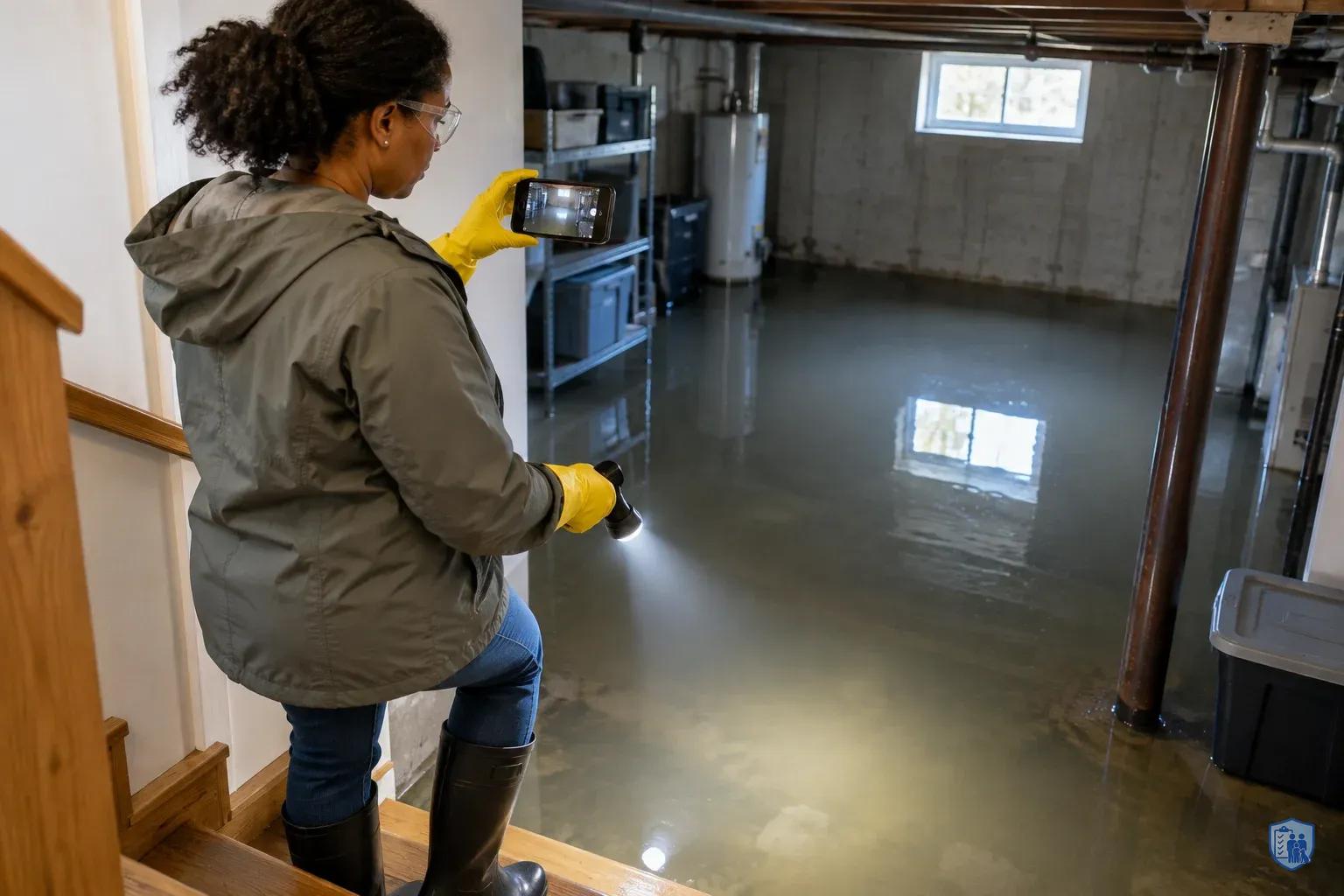
Maybe you're standing at the top of the basement stairs, looking at water where your floor used to be. Your stomach drops. Take a breath. You don't have to fix everything today. Recovery works best when you move through it one small step at a time, starting with what matters most in the next hour.
This guide splits recovery into three phases: first hour, first day, and first week. Each phase tells you what you can handle yourself and when to call a professional. Calling a pro for electrical, gas, structural, sewage, or major mold problems is the right choice, not a failure.
You also aren't starting from scratch. The CDC, EPA, FEMA, and the National Flood Insurance Program all publish free cleanup guidance . A flooded basement can also mean living without power or safe tap water while you stay home. This checklist covers that too.
First, the safety rules.
2. Stop first: 5 safety rules before you touch anything
Power. Stay out of standing water when reaching for a breaker panel. Assume power lines and electrical equipment are energized . Shut off power only from a dry spot. If you can't reach the panel while dry, call the utility, the fire department, or an electrician. Water and electricity can be deadly together .
Protection. Wear rubber boots, waterproof gloves, and eye protection. Add an N95 or better respirator when mold or dust is present, and wash well afterward . Floodwater can carry sewage, chemicals, and sharp debris .
Fuel-burning equipment. Keep generators, gas-powered pumps, pressure washers, and grills out of your home, basement, and garage. Park them well away from windows and doors too. Fuel-burning equipment gives off carbon monoxide, a gas you can't see or smell .
Pumping. Go slowly when the ground outside is soaked and the basement is deeply flooded. University of Minnesota Extension suggests removing about one-third of the water per day . Pumping too fast lets outside pressure crack or collapse walls .
Hands off. Leave wet appliances, gas valves, wiring, breakers, and HVAC equipment alone. Don't relight pilot lights yourself. Have a professional or your utility check anything that went under water before you use it.
Think of these rules as the seatbelt you buckle before you drive. They take a minute and help you avoid the worst outcomes.
3. The first hour: make it safe, stop the water, take pictures
Your first hour is about safety and information, not scrubbing. A woodworker who has recovered from basement floods starts by making the basement safe and shutting off power before going in. He then checks the sump pump, gutters, and drains to see where the water is coming from. Follow the same order, using the safety rules above.
Take photos and video before you move anything. FloodSmart advises documenting damage before you throw items away . Capture the water line on the walls too. These pictures will make your insurance conversation much easier later.
You can do this yourself
- Check power and gas from a dry spot
- Put on boots, gloves, and eye protection
- Look for the source: sump pump, gutters, drains, pipes
- Slow the water only if it's safe
- Photograph and video all damage
- No electricity: Use flashlights or headlamps instead of candles, which can start fires. Charge phones with power banks.
- No clean water: Use bottled, boiled, or treated water until local officials say tap water is safe. Use stored water for drinking, cooking, and handwashing.
- Flooded well: Don't drink from it until it's been tested or disinfected. Your local health department can point you to the right steps.
Stop and call a professional if:
Stop and call a professional if you smell gas, see sparks, walls are bowing or cracking, or sewage is backing up .
- You smell gas
- You see sparks
- Walls are bowing or cracking
- Sewage is backing up
4. The first day: get the water out and start drying
Once a professional or your utility confirms the power is safe, you can start removing water. A wet/dry vacuum often works well for shallow water. An electric submersible pump can handle more. One experienced homeowner clears a large basement with a wet/dry vacuum, then switches to fans, dehumidifiers, and ventilation. Electric equipment runs only after that safety confirmation. Any gas-powered pump stays outdoors . For a deep flood, pump gradually.
Pull out what traps moisture: wet carpet, padding, baseboards, underlayment, and soaked boxes or furniture . Run fans and dehumidifiers continuously . Speed matters here. The EPA says to assume mold is growing if a flooded home or its contents can't be dried within 24 to 48 hours . You don't need to finish in a day. Just get the drying started.
Then call your insurer. Start a simple log of hours worked, receipts, and discarded items. FloodSmart advises keeping small samples of damaged carpet, drywall, or insulation for the adjuster when possible .
If you must stay home, set up your living space upstairs, away from fumes and wet areas. Keep your water, flashlights, and chargers within reach. A small, dry "home base" makes a long day feel manageable.
- You can do it: Remove shallow water and dry the space
- Use a wet/dry vacuum on shallow water, then run fans and dehumidifiers continuously. Start electric equipment only after a professional or your utility confirms the power is safe.
- You can do it: Pull out carpet and baseboards, clean hard surfaces
- Remove wet carpet and baseboards. Clean hard surfaces with clean water and detergent first, then disinfect following the label. Never mix bleach with ammonia or any other cleaner.
- You can do it: Take photos and keep records
- Photograph and video all damage before moving anything, including the water line on the walls. Keep a log of hours worked, receipts, and discarded items for your insurer.
- Call a pro: Wet electrical panels, wiring, or gas problems
- If you smell gas, see sparks, or wiring, panels, or gas appliances got wet, leave them alone and don't relight pilot lights. Have a professional or your utility check them before you use them.
- Call a pro: Cracked or bowing walls, or sewage backup
- Stop work and call a professional if walls are bowing or cracking or sewage is backing up or has touched your home.
- Call a pro: Large mold areas or a flooded HVAC system
- Get professional help when mold covers a large area. Don't run a flooded or mold-contaminated HVAC system until it has been inspected and cleaned.
5. The first week: tear out, clean, and watch for mold
Now you work on what the water left behind. Cut out soaked drywall (wallboard) to at least 12 inches above the water line, and remove wet insulation . One homeowner recovery video explains why baseboards come off and drywall gets cut above the visible line. He also shows cleaning and treating the concrete afterward.
Clean hard surfaces with clean water and detergent first. Then disinfect, following the label . Throw away porous items you can't fully clean and dry, such as mattresses, upholstered furniture, and cardboard . It's hard to toss things, but this step protects your home and your health.
Never mix cleaning products. Don't combine bleach with ammonia or any other cleaner . The fumes can be dangerous. Open windows and ventilate while you work.
Keep watching for moisture. Monitor humidity and check hidden spots like under cabinets and tubs. Dust and mold may bother some people more than others. Keep children, older adults, and anyone with asthma or a weakened immune system away from the cleanup area.
Stop and call a pro if mold covers a large area or sewage touched your home. Call one too if your HVAC system flooded. The EPA advises against running a flooded or mold-contaminated system until it's been inspected and cleaned .
6. DIY or call a pro? A quick sort
Not sure which side of the line a job falls on? This quick sort helps.
| You can do it | Call a pro |
|---|---|
| Wet/dry vacuuming shallow water | Wet electrical panels or wiring |
| Removing carpet and baseboards | Gas smell or wet gas appliances |
| Running fans and dehumidifiers | Cracked or bowing walls |
| Cleaning hard surfaces | Sewage backup |
| Taking photos and keeping records | Large mold areas or a flooded HVAC system |
Wet electrical and gas equipment should be checked by a professional or your utility before you use it. Knowing your limits is what experienced preppers do. They handle what they safely can and hand off the rest.
7. Next steps: make the next flood easier
Once your basement is dry, use what you learned to get ahead of the next storm. Pick one item below to start with. You don't need to do them all this month.
Review your insurance. NFIP flood coverage may limit what it pays for basement contents and finishes. Read your policy details now, not after the next flood.
Plan upgrades. A battery backup for your sump pump, better grading and gutters, and water leak alarms can all help. These are practical steps that prevent or reduce the next flood's damage.
Protect your papers. Keep important documents in waterproof containers above basement level.
Stock your tie-ins. Store drinking water for no-clean-water days. Keep flashlights and power banks ready for no-electricity days. Keep a shelter-in-place kit upstairs.
You got through this one, and each small upgrade makes the next one easier. When you're ready, read our beginner guide to storing drinking water. It's an easy first project, and it means a flood never leaves you without clean water.