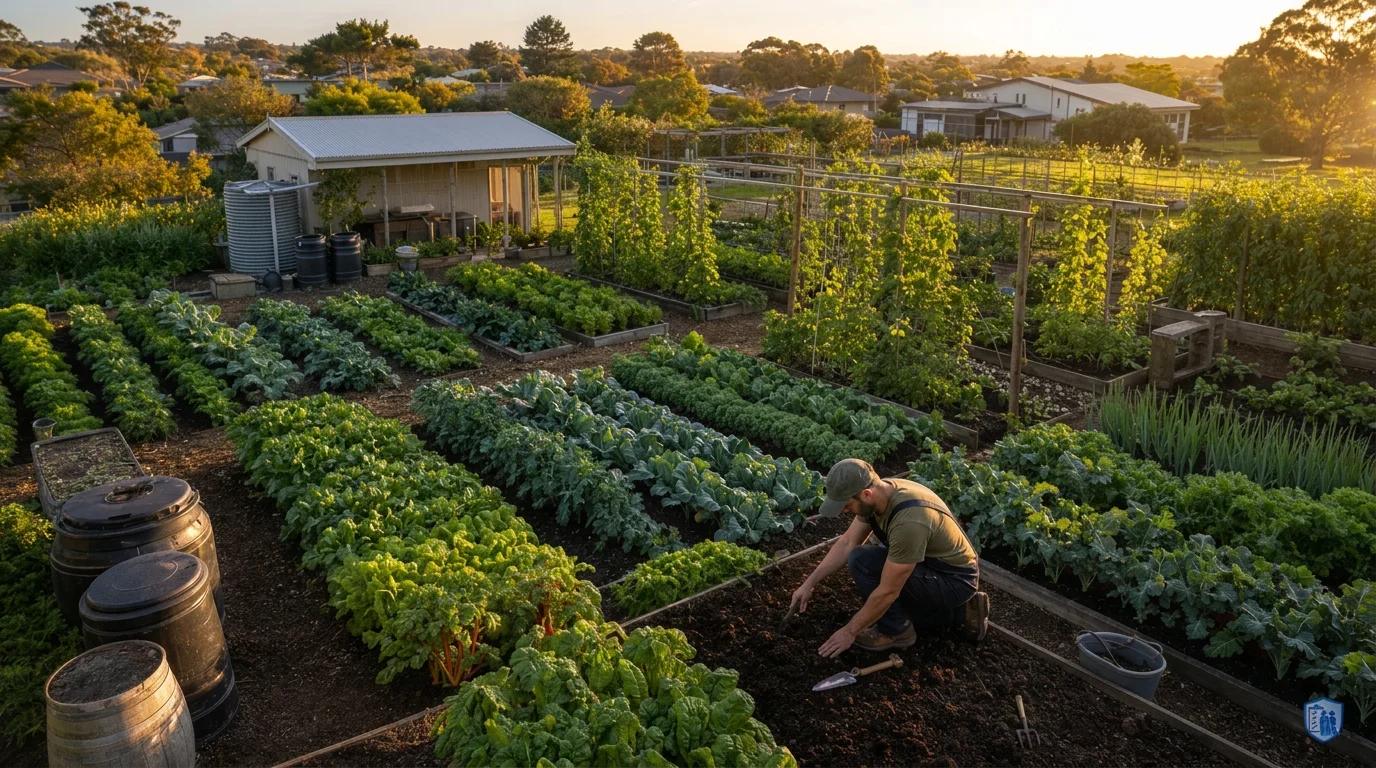
Building Food Security Through Soil: Your Foundation for Crisis Resilience
Maria watched the news with growing unease as another bank announced withdrawal limits. Grocery store prices had doubled in three months, and her neighbors whispered about empty shelves at the supermarket across town. But as she looked out at her backyard, she felt something different than panic, she felt prepared. Two years ago, she'd started building her soil, and now that investment was about to pay dividends she never imagined she'd need.
When financial systems falter and supply chains fracture, the distance between your dinner table and productive soil becomes the most important measurement in your life. Your bank balance might shrink, currency might devalue, and store shelves might empty, but properly managed soil continues producing food regardless of economic conditions. This isn't just gardening advice. It's a financial hedge against systemic instability that you can literally dig your hands into.
The numbers tell a clear story about self-sufficiency. One acre of properly managed soil can produce between 15,000 and 20,000 pounds of vegetables annually . That's enough to feed a family of four for an entire year with substantial surplus for preservation, bartering, or community sharing. Compare that productivity to the fragility of just-in-time delivery systems, and the strategic value of productive soil becomes obvious.
Soil quality directly determines your food production capacity during supply chain disruptions. Poor soil might yield a few tomatoes and some struggling lettuce. Rich, biologically active soil transforms the same space into an abundant production system that operates independently of transportation networks, distribution centers, and retail infrastructure. The difference between these outcomes isn't luck or climate. It's preparation, knowledge, and the willingness to invest time in building your soil's productive capacity before crisis conditions demand it.
Understanding your soil baseline marks the first step toward genuine food independence. You're not just growing a hobby garden anymore. You're building a production system that could mean the difference between dependence and resilience when economic uncertainty turns into genuine hardship. Healthy soils can sequester 0.4 to 1.2 tons of carbon per acre annually while maintaining food production , creating a living system that improves with proper management rather than degrading over time. This long-term investment pays dividends during economic uncertainty, turning your property into a productive asset that functions regardless of market conditions.
Essential soil testing: know what you're working with
You wouldn't invest in a business without examining the books, and you shouldn't invest time and resources in soil improvement without understanding what you're working with. Soil testing removes guesswork from the equation, replacing assumptions with data that guides every subsequent decision. The difference between adding the wrong amendments and applying exactly what your soil needs can mean the difference between mediocre yields and the 15,000-20,000 pounds per acre that proper management delivers .
Start with a professional soil test from your local extension office or a reputable agricultural laboratory. These comprehensive analyses reveal your soil's pH level, macronutrient content (nitrogen, phosphorus, and potassium), micronutrient status, and organic matter percentage. Professional testing provides information that guides years of improvement efforts. Submit samples from different areas of your property if you notice variations in soil color, drainage, or existing plant performance. What works in your well-drained south-facing slope might be completely wrong for the clay-heavy depression near your property line.
The testing process itself requires attention to detail. Collect samples from the top six to eight inches of soil where most vegetable roots concentrate their feeding. Take multiple cores from each testing area, at least ten samples mixed together, to create a representative composite. Avoid sampling immediately after fertilizer application or during extremely wet conditions, as these factors skew results. Most laboratories provide detailed instructions with their testing kits, and following these protocols ensures accurate results that reflect your soil's true condition.
DIY test kits serve a different purpose in your testing strategy. These options, available at most garden centers, provide quick feedback for monitoring pH and major nutrients between professional tests. They're perfect for checking pH before planting or verifying that your amendment program is moving in the right direction. However, they lack the precision and comprehensive analysis that professional labs deliver. Use DIY kits for ongoing monitoring, but base your major amendment decisions on professional testing.
Soil testing should be conducted every two to three years to monitor nutrient levels and pH changes . Your soil isn't static. It responds to your management practices, weather patterns, and cropping intensity. Regular testing reveals whether your improvement program is working or if adjustments are needed. Keep records of all test results, creating a history that shows trends over time. This longitudinal data becomes increasingly valuable as you develop experience with your specific soil conditions and learn how different amendments affect your unique situation.
Interpreting test results requires understanding what the numbers mean for plant growth. Soil pH between 6.0 and 7.0 is optimal for most vegetable crops and nutrient availability . Nutrient levels are typically reported as parts per million or pounds per acre, with recommendations categorized as low, medium, or high. Pay special attention to limiting factors, the nutrients or conditions that most restrict plant growth. Your soil might test high in phosphorus but critically low in nitrogen, making nitrogen supplementation your first priority regardless of other nutrient levels. Professional test reports usually include amendment recommendations, but understanding the underlying principles allows you to adapt these suggestions to your specific goals and available resources.
Download our comprehensive soil testing checklist and amendment calculator to start building your food security foundation today.
- Field Sampling Protocol
- Collect samples using sterile tools at consistent depths, composite multiple subsamples per location, and maintain chain of custody with proper labeling
- Sample Preparation & Processing
- Air-dry samples, remove debris, sieve to appropriate mesh size, and homogenize before splitting into analytical portions
- Laboratory Analysis Selection
- Choose appropriate test methods based on research objectives, including physical properties, chemical composition, and biological indicators
- Quality Control & Validation
- Implement duplicate samples, blanks, and reference standards to ensure analytical accuracy and identify potential contamination or errors
- Data Management & Documentation
- Establish systematic record-keeping protocols with digital databases, metadata standards, and backup procedures for long-term data integrity
pH management: the gateway to nutrient availability
Soil pH functions as a gatekeeper for nutrient availability, controlling whether plants can access the minerals present in your soil. Even soil rich in essential nutrients becomes unproductive if pH levels lock those nutrients into chemical forms that plant roots cannot absorb. Understanding and managing pH represents one of the most powerful interventions in your soil improvement program, often delivering dramatic results with relatively simple amendments.
The pH scale runs from 0 to 14, with 7.0 representing neutral. Numbers below 7.0 indicate acidic conditions, while numbers above 7.0 indicate alkaline conditions. Most vegetable crops thrive in the 6.0 to 7.0 range, where nutrient availability reaches optimal levels . In this sweet spot, nitrogen, phosphorus, potassium, and essential micronutrients exist in forms that plant roots readily absorb. Move outside this range in either direction, and nutrient availability declines sharply even when total nutrient levels test adequate.
Acidic soils, common in regions with high rainfall and forest-derived parent materials, present specific challenges. Below pH 6.0, aluminum and manganese become increasingly soluble, sometimes reaching toxic levels for sensitive crops. Phosphorus availability declines as it binds with iron and aluminum. Calcium and magnesium, both essential plant nutrients, become less available. Beneficial soil bacteria slow their activity, reducing organic matter decomposition and nitrogen cycling. Your soil might contain adequate nutrients, but plants essentially starve because pH conditions prevent access.
Raising pH in acidic soils requires alkaline amendments. Agricultural lime (calcium carbonate) serves as the standard solution, providing calcium while neutralizing acidity. Apply lime based on your soil test recommendations, which account for your soil's buffering capacity and target pH. Dolomitic lime adds both calcium and magnesium, valuable in soils deficient in both minerals. Wood ash from clean-burning hardwoods raises pH more rapidly than lime but should be applied cautiously based on soil test recommendations. Crushed eggshells provide a slow-release calcium source for small-scale applications, though quantities needed for large areas make this approach impractical beyond garden beds.
Alkaline soils, typical in arid regions with limited rainfall, require opposite interventions. Elemental sulfur represents the most reliable pH-lowering amendment, though results develop slowly as soil bacteria convert sulfur into sulfuric acid. Plan for six months to a year for sulfur applications to show full effect. Organic matter additions gradually lower pH while improving soil structure and biology, a double benefit that makes compost and aged manure valuable in alkaline soil management. Pine needles, oak leaves, and other acidic organic materials contribute to pH reduction, though large quantities are needed for significant changes.
Timeline expectations matter critically in pH management. Soil chemistry changes slowly, and dramatic pH swings can damage soil biology and plant roots. Plan for gradual adjustments over multiple growing seasons rather than attempting rapid corrections. Test pH again six months after major lime or sulfur applications to evaluate progress. Most soils require ongoing pH maintenance as natural processes gradually shift pH back toward regional baseline conditions. This isn't a one-time fix but an ongoing management consideration in your long-term soil fertility program.
Different crops tolerate different pH ranges, giving you flexibility in managing challenging soils. Blueberries and potatoes thrive in acidic conditions that would stunt tomatoes. Asparagus and brassicas tolerate alkaline soils that cause iron deficiency in beans. Understanding these preferences allows you to match crops to existing conditions while working toward broader pH optimization. This strategic approach maintains production while soil chemistry gradually improves.
Organic matter and composting: building soil biology
Walk into a forest and examine the soil beneath the leaf litter. It's dark, crumbly, rich with life, and smells like earth rather than dirt. That's what organic matter does. It transforms mineral particles into living soil that supports abundant plant growth. In a crisis scenario where commercial inputs become unavailable or unaffordable, your ability to generate organic matter on-site becomes the foundation of sustained food production.
Organic matter serves multiple critical functions in productive soil. It improves soil structure, creating aggregates that resist compaction and allow air and water movement. It increases water-holding capacity, reducing irrigation needs and buffering plants against drought stress. It provides slow-release nutrients as it decomposes, feeding plants throughout the growing season. Most importantly, it feeds soil biology, the bacteria, fungi, protozoa, and larger organisms that drive nutrient cycling and plant health. Healthy soils can sequester 0.4 to 1.2 tons of carbon per acre annually , and that carbon storage represents organic matter accumulation that builds long-term soil fertility.
Soil organic matter should comprise 3-5% of total soil composition for optimal vegetable production . This target provides the biological activity and physical properties needed for intensive food production. Most degraded soils start well below this range, requiring sustained organic matter additions to reach productive levels. Testing reveals your starting point and tracks progress toward this goal.
Composting transforms raw organic materials into stable humus that benefits soil without introducing weed seeds, pathogens, or phytotoxic compounds. The process requires balancing carbon-rich "brown" materials (dried leaves, straw, wood chips) with nitrogen-rich "green" materials (fresh grass clippings, food scraps, fresh manure). Pile these materials in layers, maintain moisture like a wrung-out sponge, and turn the pile periodically to introduce oxygen. Thermophilic bacteria drive temperatures above 131°F in properly managed piles, killing weed seeds and pathogens while breaking down organic materials into stable compounds.
The USDA organic standards specify that compost must be produced through a process that maintains temperatures between 131°F and 170°F for a minimum of 15 days, with the materials turned at least five times during this period . These requirements ensure pathogen destruction and weed seed devitalization, producing safe, effective compost for food production. Even if you're not pursuing organic certification, these standards provide proven guidelines for producing high-quality compost that builds soil health rather than introducing problems.
Alternative organic matter sources expand your options beyond traditional composting. Aged manure from herbivores (horses, cattle, sheep, chickens) provides both organic matter and nutrients, though fresh manure requires aging before application to prevent nitrogen burn and pathogen issues. Leaf mold, created by allowing fallen leaves to decompose in piles or bins for one to two years, produces excellent soil conditioner with neutral pH. Cover crops, plants grown specifically to be tilled back into soil, generate organic matter while living roots feed soil biology and prevent erosion during off-season periods.
Compost applications of 2-4 inches annually can improve soil structure and water retention by 25-40% . This improvement develops gradually as soil organisms process organic materials and create stable aggregates. The benefits compound over time. Each year's additions build on previous improvements, creating increasingly productive soil that requires less intervention to maintain high yields.
Building soil biology through diverse inputs creates resilience in your soil ecosystem. Different organic materials feed different microbial communities. Woody materials feed fungi. Fresh green materials feed bacteria. Diverse inputs create diverse soil biology, which translates to more efficient nutrient cycling, better disease suppression, and more resilient plant growth. In crisis conditions where you can't run to the garden center for solutions, this biological diversity becomes your production insurance policy.
Vermicomposting offers another pathway for processing organic materials, particularly kitchen scraps and paper waste. Red wiggler worms consume organic matter and produce castings rich in plant-available nutrients and beneficial microorganisms. A modest worm bin processes several pounds of food waste weekly, producing premium soil amendment while diverting waste from landfills. The process works year-round indoors, providing continuous compost production regardless of weather.
Nutrient management: NPK and beyond
Plants require nitrogen, phosphorus, potassium, and fourteen other essential elements for healthy growth. Your soil must supply most of them in available forms. The primary nutrients, nitrogen, phosphorus, and potassium (N-P-K), receive the most attention because plants consume them in large quantities and deficiencies quickly limit growth. Understanding these nutrients and their management separates subsistence gardening from the intensive production that can yield 15,000 to 20,000 pounds of vegetables per acre annually .
Nitrogen drives vegetative growth, producing the green leaves and stems that capture sunlight and build plant biomass. It's also the most dynamic nutrient in soil systems, constantly cycling through organic matter decomposition, plant uptake, and various loss pathways. Nitrogen deficiency shows as pale, yellowing leaves and stunted growth. Organic nitrogen sources include composted manure, blood meal, feather meal, and legume cover crops that fix atmospheric nitrogen through symbiotic bacteria. In crisis scenarios, establishing nitrogen-fixing plants like beans, peas, clover, and vetch becomes critical for maintaining soil fertility without purchased inputs.
Green manure crops can add 100-200 pounds of nitrogen per acre equivalent when incorporated into soil . This substantial contribution reduces or eliminates the need for purchased nitrogen sources when properly integrated into crop rotations. Legume cover crops work year-round. Plant crimson clover or hairy vetch in fall, allow growth through winter, then terminate in spring before planting warm-season crops. The decomposing cover crop releases nitrogen throughout the growing season, feeding subsequent crops without additional inputs.
Phosphorus supports root development, flowering, and fruit production. Unlike nitrogen, phosphorus moves very little in soil, staying near where you apply it. Deficiency symptoms include purplish leaves and poor root development. Bone meal provides 15-27% phosphorus and should be applied at 5-10 pounds per 1000 square feet . Rock phosphate offers long-term phosphorus supply, though availability depends on soil pH and microbial activity. In established systems with good organic matter content, phosphorus often accumulates to adequate levels and requires minimal supplementation.
Potassium strengthens plant tissues, improves disease resistance, and enhances fruit quality. It's highly mobile in soil, leaching readily in sandy soils with high rainfall. Deficiency appears as browning leaf edges and weak stems. Wood ash provides readily available potassium along with pH-raising calcium carbonate, valuable in acidic soils but problematic in alkaline conditions. Kelp meal supplies potassium plus trace minerals from ocean sources. Greensand, though slow-acting, provides long-term potassium supply along with iron and other micronutrients.
Secondary nutrients, calcium, magnesium, and sulfur, receive less attention but prove equally essential for plant health. Calcium strengthens cell walls and supports various metabolic processes. Magnesium forms the core of chlorophyll molecules and activates numerous enzymes. Sulfur contributes to protein synthesis and disease resistance. Most organic matter additions supply these secondary nutrients, and lime applications address calcium and magnesium in acidic soils. Sulfur deficiency rarely occurs in soils receiving regular organic matter additions.
Micronutrients, iron, manganese, zinc, copper, boron, molybdenum, and chlorine, are required in tiny quantities but cause severe problems when deficient. Micronutrient deficiencies often relate to pH imbalances rather than actual absence from soil. Maintaining optimal pH and building organic matter content usually prevents micronutrient problems. Kelp meal provides a broad spectrum of micronutrients in naturally balanced ratios, making it valuable insurance against deficiencies in intensive production systems.
Creating nutrient management plans based on crop rotation prevents depletion and builds soil fertility over time. Heavy feeders like tomatoes, corn, and squash extract large quantities of nutrients. Follow them with light feeders like carrots, beets, and herbs. Incorporate nitrogen-fixing legumes into rotations to rebuild nitrogen levels. This systematic approach maintains soil fertility while reducing purchased input requirements, critical when economic conditions limit access to commercial amendments.
- High-Nitrogen Organic Amendments
- Blood meal, fish emulsion, and composted manure with N-P-K ratios and application rates for nitrogen-deficient soils
- Phosphorus-Rich Natural Sources
- Bone meal, rock phosphate, and bat guano with bioavailability timelines and soil pH considerations
- Potassium Organic Boosters
- Kelp meal, wood ash, and greensand with release patterns and compatibility with other amendments
- Balanced NPK Compost Systems
- Comparative analysis of finished compost, worm castings, and aged manure for complete nutrition profiles
- Soil Testing Integration Matrix
- Decision tree linking soil test results to specific organic amendment combinations and seasonal timing
- Application Rate Calculator
- Reference charts for amendment quantities per square foot based on current soil fertility and target crop requirements
Pros and cons of organic nutrient management
Advantages:
- Builds long-term soil health and biological activity
- Reduces dependence on purchased inputs
- Improves soil structure while providing nutrients
- Creates resilient systems that function during supply disruptions
- Minimizes environmental impact from synthetic fertilizers
Disadvantages:
- Requires more planning and lead time than synthetic fertilizers
- Nutrient release rates vary with temperature and moisture
- Bulky materials require more storage and handling
- Initial soil building takes multiple seasons
- Requires knowledge of diverse materials and their properties
Understanding these trade-offs helps you build realistic expectations and timelines. Organic nutrient management demands more knowledge and patience than buying a bag of synthetic fertilizer, but it creates the independent, resilient production systems that function when conventional supply chains fail.
Soil structure and water management
Two gardens can have identical soil test results, same pH, same nutrient levels, same organic matter content, yet produce vastly different yields because of differences in soil structure. Structure determines how water moves through soil, how roots penetrate and explore soil volume, and how air reaches root zones to support plant respiration. Managing structure separates adequate production from the intensive yields that build genuine food security.
Soil texture, the proportion of sand, silt, and clay particles, is essentially permanent. You can't change the fundamental particle size distribution without importing massive quantities of different soil. But you can dramatically improve soil structure, how those particles aggregate together, through management practices that build organic matter and protect soil biology. Clay soils naturally form dense, heavy masses that shed water, resist root penetration, and remain cold and wet in spring. Sandy soils drain rapidly, hold minimal moisture, and provide little nutrient buffering. Both extremes limit productivity, but both respond to structure improvement.
Soil compaction reduces crop yields by 10-25% . Compaction destroys aggregation, reduces pore space, and limits root growth. Avoid walking on growing beds. Use permanent paths to access plants without stepping on production areas. Never work soil when wet enough to form a ball in your hand. Compaction damage can take years to reverse, making prevention far easier than cure.
Improving drainage in heavy clay soils requires patience and consistent organic matter additions. Compost, aged manure, and other organic materials create aggregation as soil organisms bind mineral particles together with biological glues. These aggregates create pore spaces that allow water drainage and air movement. Compost applications of 2-4 inches annually can improve soil structure and water retention by 25-40% . Results develop gradually over several seasons as soil biology establishes and aggregation improves. Avoid working clay soils when wet, as compaction destroys the structure you're trying to build.
Increasing water retention in sandy soils follows similar principles with different mechanisms. Organic matter acts like a sponge in sandy soils, holding moisture that would otherwise drain beyond root reach. It also provides nutrient buffering that sandy soils naturally lack. Apply generous organic matter additions until organic matter content reaches the 3-5% target for optimal vegetable production . Sandy soils consume organic matter more rapidly than clay soils because superior aeration accelerates decomposition, requiring ongoing additions to maintain gains.
Creating raised beds provides ultimate control over soil conditions in challenging situations. Beds raised eight to twelve inches above surrounding grade drain better than clay soils while retaining more moisture than sandy soils. You're creating ideal conditions by blending native soil with imported compost and other amendments in proportions that deliver desired structure. Raised beds warm earlier in spring, extend growing seasons, and allow intensive planting that maximizes production per square foot. The initial investment in materials and labor pays dividends through increased yields and easier management.
Mulching strategies conserve moisture, moderate soil temperature, suppress weeds, and feed soil biology as organic mulches decompose. Apply two to four inches of straw, leaves, grass clippings, or wood chips around plants after soil warms in spring. Mulch significantly reduces irrigation requirements, critical when water access becomes limited or expensive. It prevents soil crusting that blocks water infiltration and seedling emergence. As mulch decomposes, it feeds surface-dwelling organisms that build soil structure and nutrient cycling.
Deep watering practices encourage root systems to explore greater soil volume, improving drought tolerance and nutrient access. Water less frequently but more thoroughly, encouraging roots to follow moisture deeper into the soil profile. Shallow, frequent watering creates shallow root systems vulnerable to drought stress. Install drip irrigation or soaker hoses that deliver water directly to root zones without wetting foliage, reducing disease pressure while conserving water. These systems operate at low pressure, making them compatible with gravity-fed water sources when grid-dependent pumps become unreliable.
- Year 1-2: Foundation & Assessment
- Comprehensive soil testing, baseline establishment, initial organic matter incorporation, and infrastructure development for long-term monitoring systems
- Year 2-3: Biological System Development
- Microbial community establishment, cover crop integration, composting systems implementation, and beneficial organism habitat creation
- Year 3-4: Structural Improvements
- Soil aggregation enhancement, water retention optimization, erosion control measures, and root zone development through diverse plantings
- Year 4-5: Production Optimization
- Crop rotation refinement, nutrient cycling efficiency maximization, and yield stability achievement through established soil health metrics
- Continuous Monitoring Protocols
- Quarterly soil health assessments, annual production capacity evaluations, and adaptive management strategies based on data-driven insights
- Risk Mitigation & Resilience Building
- Climate adaptation strategies, pest management through ecosystem balance, and emergency production protocols for food security assurance
Long-term soil fertility planning for food security
James started his soil improvement program during the economic boom years when money flowed easily and grocery stores overflowed with cheap food. His neighbors thought he was paranoid, investing time and resources in building productive soil when everything seemed fine. Three years later, when the financial system shuddered and supply chains fractured, those same neighbors watched with new appreciation as James harvested abundant vegetables from soil he'd patiently prepared. His three-year head start meant the difference between resilience and dependence.
Developing three to five-year soil improvement plans aligns expectations with reality. You're not preparing a garden bed for next weekend's planting. You're building a production system that reaches full potential over multiple growing seasons. Year one focuses on baseline assessment through soil testing, initial pH adjustments, and organic matter additions that begin structural improvement. Year two continues organic matter building while addressing nutrient deficiencies revealed by testing. Year three typically shows dramatic productivity increases as soil biology establishes and structure improves. Years four and five refine the system, maintaining gains while optimizing production through experience with your specific conditions.
Crop rotation strategies build soil health while maximizing production across your growing space. Divide production areas into at least four sections, rotating crop families through each section on a four-year cycle. Solanaceae (tomatoes, peppers, eggplants) extract heavy nutrients and benefit from rich soil. Follow them with Fabaceae (beans, peas) that fix nitrogen and require less fertility. Next rotate to Brassicaceae (cabbage, broccoli, kale) that benefit from the nitrogen legacy. Complete the cycle with Cucurbitaceae (squash, cucumbers, melons) or root crops that tolerate lower fertility. This systematic approach prevents disease buildup, balances nutrient extraction, and maintains productivity without continuous heavy fertilization.
Cover cropping for off-season soil protection prevents erosion, suppresses weeds, and builds organic matter when production beds would otherwise sit empty. Winter rye, crimson clover, hairy vetch, and field peas grow during cool seasons, protecting soil while adding organic matter and fixing nitrogen. Cover crops can increase soil nitrogen availability by 40-60 pounds per acre when properly managed . Summer cover crops like buckwheat and Sudan grass occupy beds between spring and fall plantings. Terminate cover crops by mowing or cutting before seed set, allowing material to decompose in place or composting for later use. The living roots feed soil biology year-round, maintaining the microbial communities that drive nutrient cycling and plant health.
Monitoring and adjusting fertility programs requires ongoing observation and record-keeping. Soil testing should be conducted every two to three years to monitor nutrient levels and pH changes , providing objective data about program effectiveness. But observation matters equally. Note which crops thrive and which struggle, where yields exceed expectations and where production disappoints. These observations reveal patterns that testing might miss, like drainage problems in specific areas or microclimate variations that affect plant performance. Adjust your program based on both data and experience, recognizing that every property presents unique conditions requiring customized approaches.
Building resilience against climate variability becomes increasingly important as weather patterns shift and extremes intensify. Soil with high organic matter content buffers against both drought and excessive rainfall, maintaining more consistent moisture availability across varying conditions. Deep-rooted cover crops improve water infiltration and subsoil condition, allowing roots to access moisture during dry periods. Diverse crop selection spreads risk. When one crop fails due to weather extremes, others may thrive. This biological and strategic diversity creates production stability regardless of seasonal variations.
Creating sustainable input sources for long-term independence separates temporary food production from genuine security. Establish on-site composting systems that recycle all organic waste from kitchen, garden, and landscape. Develop relationships with local sources of manure, leaves, and other organic materials before crisis conditions make them scarce. Grow nitrogen-fixing cover crops that reduce purchased input needs. Save seeds from adapted, productive plants to eliminate dependence on commercial seed sources. Each step toward input independence strengthens your resilience against economic disruption and supply chain failure.
Record-keeping transforms experience into knowledge. Document soil test results, amendment applications, crop varieties planted, planting dates, harvest quantities, and weather patterns. This data reveals what works in your specific conditions, allowing you to refine practices over time. Note failures as carefully as successes. Understanding what doesn't work saves time and resources in future seasons. Your records become a personalized manual for your property, more valuable than any generic gardening guide because they reflect your unique soil, climate, and conditions.
Succession planting extends harvest periods and maximizes production from limited space. Rather than planting all your lettuce at once, plant small quantities every two weeks throughout the growing season. This approach provides continuous harvest rather than feast-or-famine cycles. Quick-maturing crops like radishes, spinach, and bush beans allow multiple plantings per season in the same space. Interplanting fast and slow crops maximizes space utilization. Plant quick-maturing lettuce between slow-growing tomatoes, harvesting the lettuce before tomatoes need the space.
The path from dependence to food security runs through your soil. It's not a quick journey or an easy one, but it's achievable for anyone willing to invest time and attention in building productive capacity before crisis demands it. Your soil improvement program represents more than gardening. It's a strategic investment in resilience, a hedge against economic uncertainty, and a foundation for genuine food independence. Start today, work consistently, and trust the process. The soil you build now becomes the security you depend on when systems fail and supply chains falter. That's not pessimism. It's pragmatic preparation that transforms anxiety into action and vulnerability into strength.
Get our complete crop rotation planning guide to maximize your soil's long-term productivity and resilience.